Category Archives: CA Israel Mission
To be a dream: Shabbat reflections from CA solidarity mission
I want to talk about dreams. The opening line of Psalm 126, our Birkat Psalm, reads “When the LORD restores the fortunes of Zion —we see it as in a dream-a—” Any trip to Israel should be just like that, a dream.
But Israel is in a time of trouble, seemingly far from the dreams of our ancestors. The Hebrew word for nightmare is סיוט, based on a word used in a talmud story about demons that appeared to King Saul in a dream. It shares the same Hebrew root as להסיט, meaning “to divert.” A nightmare hopes to divert our attention, our focus from the hope and potential that help make dreams possible. But if there’s a word to describe this time of year, the Israeli people, it is resilient, even in times of despair.
More telling than anything else is that in times of trouble, we go to the Psalms. Psalm 126, the dreaming Psalm, contains these words, “Those who sow in tears, will reap in joy.” Sowing in tears is not a linear motion- as if once we have planted seeds of sadness we will automatically head to future songs of joy, without any reseeding necessary. When I visited Israel last week, joy and sadness occupied one hand. Frustration and hope, the other.
As we flew over the Atlantic, from Tel Aviv to New York, the mood was changing in Israel. Hamas broke the ceasefire by firing into Israel, by not sending a new list of hostages to be released. Yes, the 7 day ceasefire that saw over 100 hostages released, that had enveloped our entire 5 day journey, was over. It makes this experience unique, a rega b’zman, a moment in time. A country at ceasefire is now filled with sirens in Tel Aviv and Ashkelon, military battling on the ground in Gaza.
The psalmist writes in psalm 121,” Hinei Lo Yanum v’lo Yishan, SHomer Yisrael”, “the guardian of Israel neither slumbers nor sleeps.” Israelis, the literal guardians of Israel, neither slumber nor sleep. The resilience of this country is unbelievable.. While the resiliency was born as an indictment of Israel’s government, the intestinal fortitude of each Israeli to push on, to have open hands and hearts to family and strangers, is something we on this side of the Atlantic can learn a lot from. Israel mobilized, and we CAN do the same- for our own communities and for the state of Israel.
We visited hospitals, military bases, and interacted with those mobilizing volunteer efforts. No one has a moment to breathe…on one end you might imagine that with human resources at an all time low solidarity missions would be a burden- but at no point did it feel like a burden to be there. In fact, the opposite- every Israeli we met with thanked us wholeheartedly for our presence, our “bravery.” They sent US strength with what is going on in the states. No greater example would be when we visited Ashkelon, a city bombarded by 2000 rockets. The community members described their anxieties, but followed with a pitch to move to Ashkelon, the “greatest city. “
Yizhar Hess, who previously served as the Executive Director of the Masorti Movement in Israel and coordinated our last Cantors Assembly leadership mission in the summer of 2022, framed our main responsibility as shlichim, emmisaries, in a discussion we had midway through our mission. Our responsibility was, and is, עדות, witnessing. He shared the following story:
Considered by many the most influential secular Jewish poem of the twentieth century, Bialik’s “B’ir Haharegah (In the City of Slaughter).” was published in 1904 in the aftermath of the Kishinev pogrom of 1903. It influenced the development of a Zionist ethos — looking for an alternative to a place like Kishinev where, Bialik wrote, “the heirs of Hasmoneans lay, with trembling knees, concealed and cowering — the sons of the Maccabees!”
The large Jewish community of Kishinev, a small city in the Russian Empire in what is now Moldova, was attacked over three days, beginning as church services ended on Easter Sunday. Forty-nine Jews were massacred and bodies littered the streets. Many more suffered unspeakable atrocities and homes were torched.
The zionist movement changed, the view of European jewry changed, because Bialik was there to bear witness, and share that story with others. And so this morning, I want to share about 3 stories:
Story #1
Our first stop was the Hadassah rehab unit on Mt Scopus. Most of the patients we met were battling injuries inflicted by Hamas terrorists on October 7. We sang songs of healing, Israeli standards to cheer up the staff and residents. As our group was finishing a set of songs, a gentleman came up to us asking for us to meet his brother, Eden. Eden was shot point blank in the chest just 10 days earlier, as three armed terrorists opened fire at a checkpoint. Eden saw something suspicious. Eden shared many details of that morning-
3:40AM: called avram to be on guard, put on tefillin, put on bulletproof vest and had briefing on checkpoints – between gush and Jerusalem
Finished briefing 4:30AM – went to position
5:30AM- made to checkpoint
Headed to Lane 1- at 7am, Avram relieved him
7:45AM- open another lane (relieved Avram)
Lane 2 was filled with daati, religious individuals
Saw from far – a car caught his eye – license was upside down, had Magein David on dashboard…
He told the car to stop; asked lots of questions – theydidn’t answer. ID papers? didn’t answer; how old? Siblings? 3 people in car said “kol bseder” I’ll come give you a picture…
At point blank one of them takes a gun, opens the door and yells allah akbar, shoots Eden in his chest.
His friend Avram was killed, succumbing to his wounds. Later Eden adds that the sheer force of the bullet ripped the tzitzis underneath.
This soldier’s brother knew how therapeutic it would be to tell his story, just as others tell their stories. Even though Eden kept saying “Sababa,” you could feel how he had yet to process all that had happened. Sababa, an expression of enthusiasm, “cool,” is Eden finding a way to cope with the trauma of that morning and the loss of his friend.
As we find out that this is the first day Eden has walked on his own, Eden says “Avram is with me.”
Story #2
As we enter into Kfar Aza, our guide gives us a little context for this community: 950 members, more than 60 murdered; 10 kidnapped to Gaza, burned houses. The displaced refugees are in the south of Netanya – in hotel rooms or apartments/houses subsidized by the government and friends of the community.
In many ways, visiting a place like Kfar Aza should come across as visiting a concentration camp- the smells, the sights of destruction, paired with the stories of atrocities and war crimes, are so overwhelming that I don’t know when I’ll fully process what I saw. And yet visiting Kfar Aza, led around the Kibbutz by a survivor, Gon, who fought off 40 Hamas terrorists, is so far removed from any trip I ever made to Majdanek, Auschwitz, or Dachau. For in truth, this is the balance of life here- Kfar Aza is the sight of a massacre, a shiva home to those who mourn, and ALSO a Wonderful place “ you should be jealous” our guide tells us that you would be living in a place like Kibbutz Kfar Aza, a privatized kibbutz home to over 900 members with a long waiting list to get in. This is a place that for now is frozen in time (sukkot are still up) and yet it is where the living want to return and will return, a place of loss AND a place, God willing, of life. No one knows what this place will look like tomorrow- a museum, a memorial, a moving tribute AND a place to move forward, to live on.
Seeing so much destruction is sensory overload: images of rubble, toys, trash, bullet holes. An image sticks in my brain- it’s of a single card from the game “Spot it.”All three of my children play this game at home with us. Seeing the card, finding it in our own playing deck, reminds me that Hamas attacked the young, the innocent. It’s a rallying cry for me to continue to share the beauty of the members who were lost and who suffer the trauma of October 7, the hate and premeditated barbarism of Hamas, and the hope of what Kfar Aza may be for generations to come.
We ask Gon how he can walk around this space, so soon after experiencing this trauma. He says, “Many are not with us anymore. Someone needs to tell the story. And one day, we want to come back here (to live).”
Story #3
We visit the Hostage and Missing Families Forum, known through the hashtag #BringThemHomeNow. According to their website, the Hostage and Missing Families Forum was formed by the families of the abductees less than 24 hours after the horrific attack by Hamas on Israel on October 7th. The Forum is volunteer-based and laser-focused on bringing the hostages back home to their families, to us.
Our guide Meirav reiterates the volunteer nature of this NGO as people work around the clock in addition to, in many cases, full time jobs. The two goals are to keep the return of the hostages in the forefront of the political agenda as well as supporting the families of the hostages. We meet members of a number of the teams- the diplomatic team mobilizes awareness in their own governments, the medical team provides mental health resources for families and supplies medical info of the hostages to the Red Cross, whom Meirav describes as acting like a GETT taxi driver, refusing to offer medical attention when needed; the legal department, communication department (think of all the billboards in 90 locations around the world); the social media team who write everything in Hebrew AND in English; and the influencer department.
After the terrors of October 7, Dudi Zalmanovich, a prominent Israeli businessman whose daughter survived the massacre at the Nova music festival and whose nephew was taken captive by Hamas, emptied two floors of his office and gave birth to the forum. We hear Dudi speak about the days immediately after and how the forum is adapting to the reality of some hostages being released. A number of times, he says that it doesn’t matter Israeli or non-Israeli, Jewish or not Jewish, they want all of the hostages home safely and home speedily. After we sing a very emotional Acheinu (a literal prayer for hostages) in our little hallway, Dudi’s statements come into play in real time, as a family member receives a phone call right next to us that Aisha Ziyadne, from the Bedouin community of Ziyadne, is one of the captives being released (if you’re thinking Bedouin – a reminder that Hamas doesn’t want people of all religions living on this land). Later that night, we learn that her brother Bilal is also released. After an embrace, As Dudi puts it, “to see this person so drained yesterday and now today” Even in the joy of the moment there are still other family members in captivity.
Everywhere we looked, from Hadassah hospital to the streets of Tel Aviv to the roads to the southern kibbutzim, we saw the slogan “b’yachad ninatzeach” often translated as “together we will win.” In reality, the slogan reads more like the verb, lehitgabeir, to overcome. Together we shall overcome. Our humanity and caring for eachother will get us through these difficult times. It is the crying call of every Israeli we meet.
For our goal is two pronged- just as we speak of the inhumanity of Hamas, we MUST speak of Israeli expressions of humanity. Facts and figures are important, but human touch points will be what is needed to change the narrative. When our group shared those last moments of gratitude, our videographer Or (you’ll see his work soon thanks to funds we raised at the JJC), said that WE are the hope. WE, the cantors on this mission, and WE Israel’s family and friends in the diaspora. This isn’t something Israelis would’ve said two months ago…Together, Israel and diaspora, are the hope. Just as we can have boundless love, we can always have boundless hope- hope for the return of hostages, for peace, for a people of Israel that thrives for generations to come.
I want to get back to dreaming, dreaming of a beautiful and strong Israel, making dreams become a reality. And that is where we all come in.
By adding light- light to publicize the miracle of Hanukkah, AND to publicize the massacre of October 7.Be the light by engaging in dialogue and by going to Israel (remember, it’s not a burden). Israel needs you. You ARE and will be, the hope. Be the light- the light for the lives taken, the light for those in captivity who need the light to bringthemhomenow -from darkness to light….mei-afeilah l’orah…speedily in our day.
Cantors Assembly Solidarity Mission Day(s) 1
Day(s) 1:
Grateful to be participating in our Cantors Assembly Solidarity Mission representing our officer core and the Jacksonville Jewish Center.


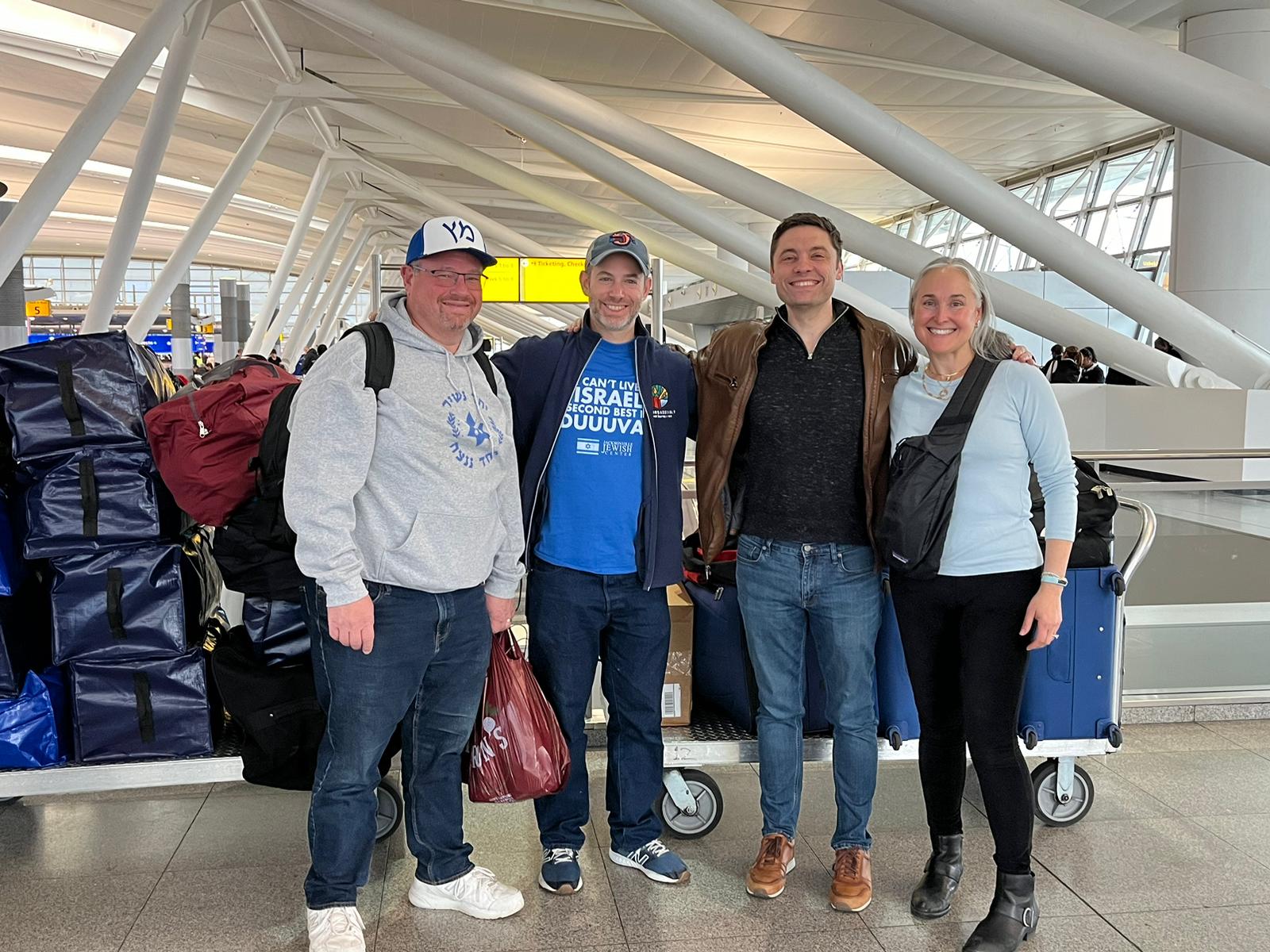
Following a long travel day(s) that began before 5AM Sunday, I boarded an El Al flight to Israel (my first ever flight on El Al). I will say that there is something powerful about having an entire plane of people eating kosher plane food.

The loudness of our flight was met with a deafening silence of Ben Gurion Airport- empty gates, empty customs, but one thing remains- the reminders of war-time Israel: the photos of those still kept hostage in Gaza (a number of those now famous photos have been removed now that 50+ hostages have been returned), signs for shelters…


As we met our guide Carmit, rain began to fall during our drive and for the remainder of the day. As a people who normally pray for rain, she reminded us of the new reality of rain- soldiers, hostages in conditions where rain is not a friend. Just another layer that speaks to this duality of the life Israelis and many Jews are experiencing (this will become more evident as we meet with families of hostages- rejoicing in return while dreading what is to happen to those who remain).

Our first day consists of really two parts – a visit to Hadassah rehab unit on Mt Scopus (always love to our Jacksonville Hadassah ladies!!) and a dinner conversation with Gil Hoffman, former chief political correspondent for the Jerusalem Post and executive director and executive editor of the pro-Israel media watchdog HonestReporting.
For security reasons I can’t share photos of a number of soldiers and police officers that we met with who are rehabbing major injuries. Most of the injuries happened from battling Hamas terrorists on October 7. We sang songs of healing, Israeli standards to cheer up the staff and residents. I will share more of these stories in the coming weeks, but I did want to share a portion of one story. As our group was finishing a set of songs, a gentleman came up to us asking for us to meet his brother. His brother Eden was shot point blank in the chest just 10 days earlier, as three armed terrorists opened fire when Eden saw something suspicious. Today was the first day he had walked on his own since the incident. Eden shared many details of that morning- of losing his friend who succumbed to his wounds. He shared how he put on tefillin that morning, right before he put on his protective gear that saved his life (and I might add, the sheer force of the bullet ripped the tzitzis underneath). This soldier’s brother knew how therapeutic it would be to tell his story, just as others tell their stories. Even though Eden kept saying “Sababa,” you could feel how he had yet to process all that had happened. More on that story another time…


Gil Hoffman, just as he has done twice already at our synagogue, gave a straightforward analysis on the situation we are in, the situation we came from, and possible situations we may be headed towards. His new position at HonestReporting is vital to calling out issues of journalistic integrity- getting your news from Hamas isn’t a reputable source, people. As we were leaving, a group member asked what we could bring back with us. Gil responded, “Mandatory Israel Education, pre-bnei Mitzvah.” An ability to chant a haftarah is great, but if we don’t instill a sense of peoplehood or an understanding of the State of Israel (beyond a religious symbol) then we are in deep trouble. This battle will be fought in the military, on college campuses, and in social media, and it really all begins and ends with honest reporting.

That’s it for Day(s) 1. Tomorrow will be a very heavy day as we head south to do more witnessing and volunteering.
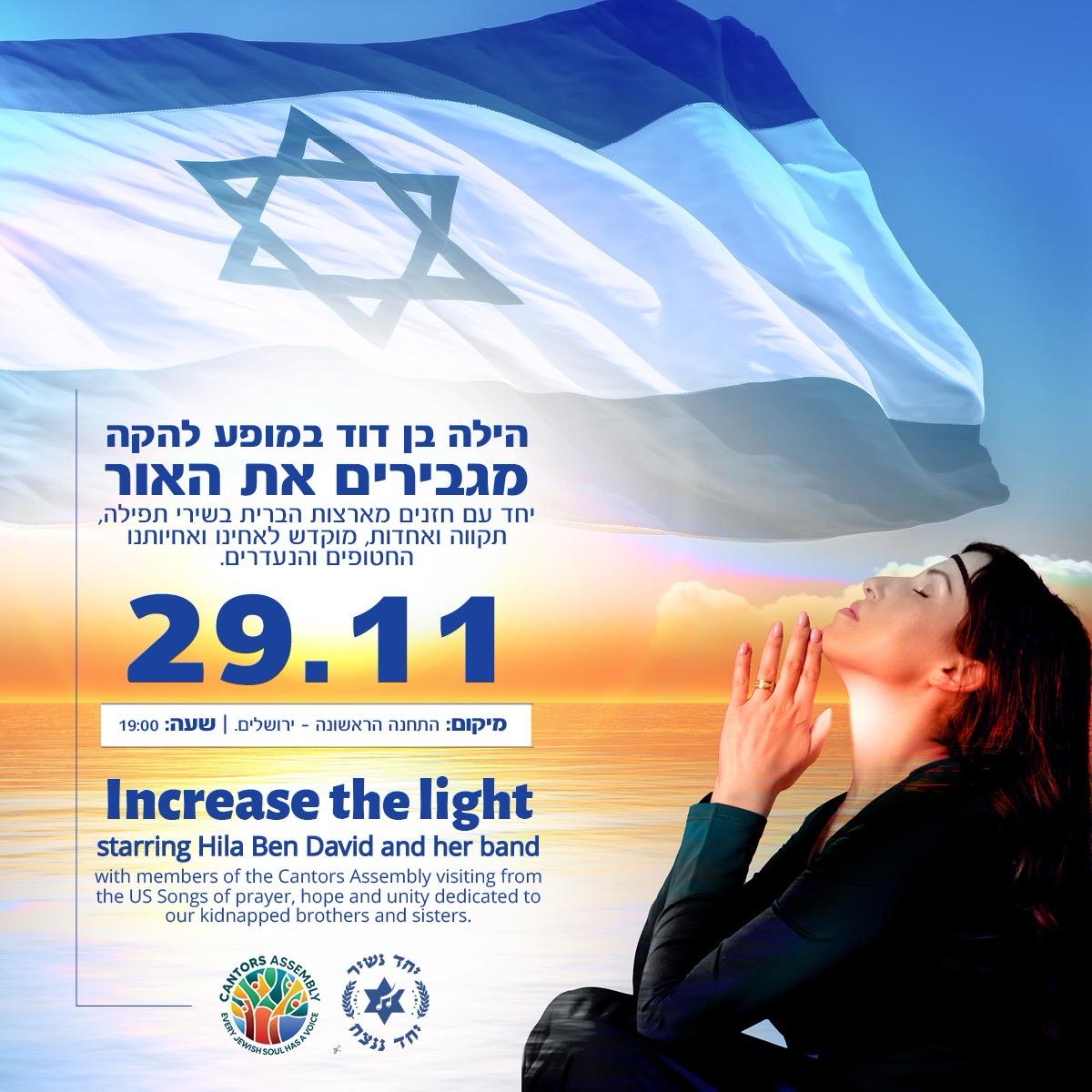
Finally, a plug: if you are in Jerusalem on Wednesday night, join us as I join my cantorial colleagues and Hila ben David for a beautiful concert at the Old Train Station!

Cantors Assembly Solidarity Mission Day 2 Part 1
Day 2
When I sent a note to our congregation, I said that this mission meant “volunteering, sharing music and being a pastoral presence to those affected by the ongoing conflict.” Our day consisted of all of those elements through one important lens of Eidut, witnessing. We spent the majority of our Tuesday in the South (also known as Western Negev) in communities directly impacted by the events of October 7th. My reflections will hopefully be divided in two parts for a number of reasons. The first is the amount that I am still trying to process, and the second is that the pictures of the day reflect two conflicting emotions. So for today, the pictures you’ll see on facebook reflect our moments of learning and of moral boosting ruach. The other pictures serve as an important witness to the atrocities of Kibbutz Kfar Aza. Those reflections come a bit later with a link to my blog (with photos to be found there). There is never a real “trigger warning” on Facebook, so fingers that do not scroll fast enough may see sites that are too confusing or difficult to hold at this time.

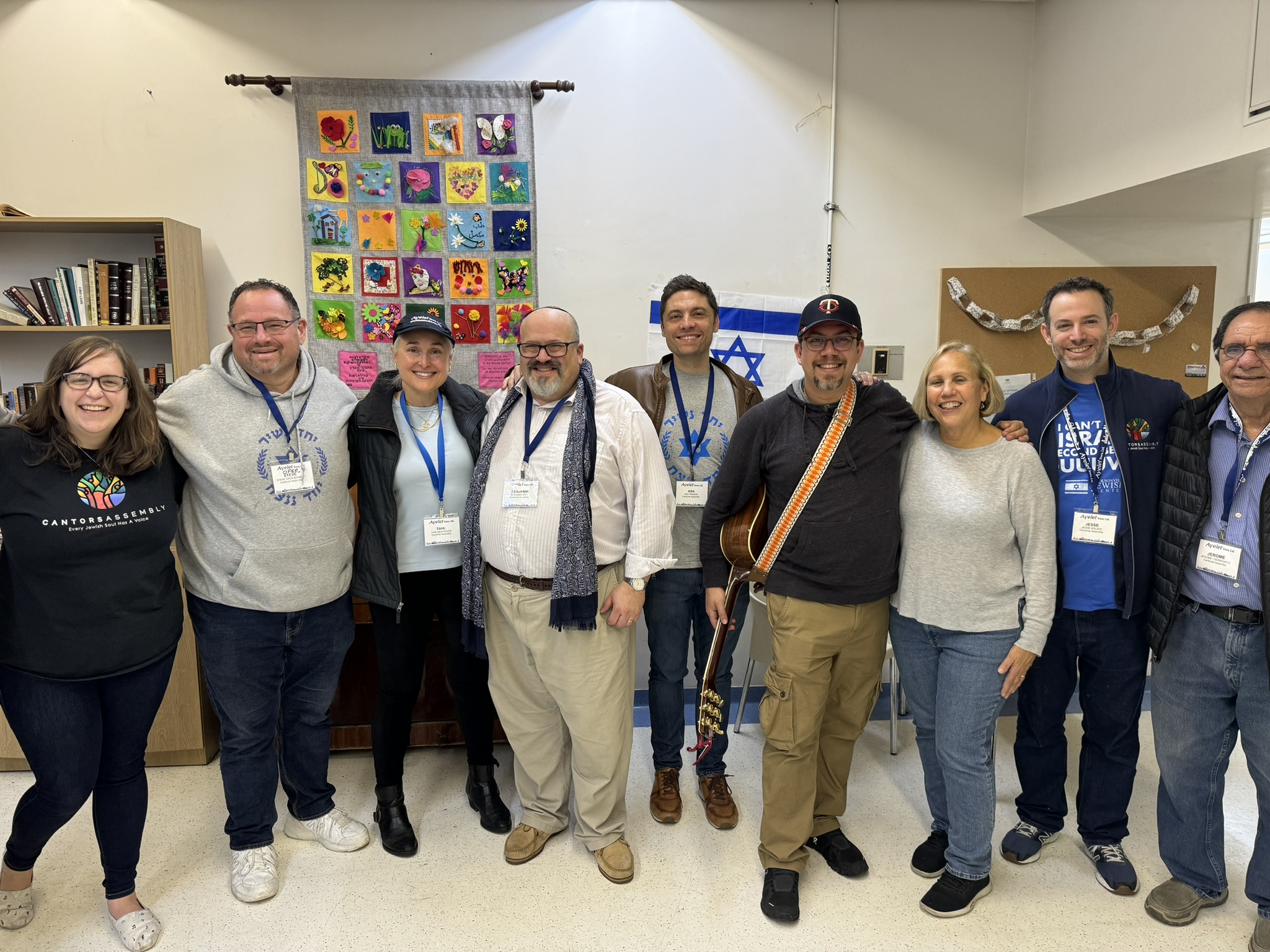
To Tuesday: A beautiful walk around Jerusalem with my friends and colleagues Tahl and Asa followed by a breakfast of all breakfasts (photo below).

We were debriefed on the Gaza situation by Col. Res. Grisha Yaakubovitch, who served in the IDF Civil Adminstration in the Gaza region. Grisha is an immigrant from the former USSR, son of Holocaust survivors.

Grisha paints a dark reality, but like others we will speak to, he speaks of unity through tragedy. The information he provided is important to grasping the “nuance” we often feel isn’t portrayed in Western media. As retired military who worked and befriended Arabs in the West Bank and Gaza, Grisha explains the “Holy Fuel War” as Hamas paints a story far from reality- while Israel provides 12% of water resources and at one point as much as 40% of Gaza’s electricity (the number today isn’t as clear), Hamas as governing body has let its people suffer. Just think of the 500km of tunnels underground to help fighters when they could’ve build shelters. In Hamas’ eye, it’s the UN’s responsibility to help Gazans.
In Grisha’s words, our main takehome was to “believe the unbelievable.” Hamas and Isis ideology go hand in hand – all they get and want is incitement. The plan of October 7 was intentional, horrific, yet simple. As Israelis ran to take cover from rockets, Hamas used that 10 minute window to begin its assault on innocent victims in Israel. Hamas and its leader Sinwar are the heroes of the street. In a raw moment, Grisha shares that he felt betrayed by those enemies who became friends who now became enemies of oct 7, yet “ Revenge” doesn’t make him feel better – it’s just waste of life. He has anger and rage towards those who support Hamas’ aggression and terrorism, BUT he prays and knows that that rage will subside in the days ahead, God willing.
Did I mention this was the lighter part of our day?
After our meeting we hopped on our armored bus with a quick stop to pick up our guest for our trip South. HIla Ben David is a sensational singer who will be leading our concert tomorrow night. She would otherwise have been unable to visit the places we visited today because she does not have any active military in her family. I know her being with us for these difficult hours was important to her and to our group and will only make our concert together that much more meaningful.
Our morning concluded with a visit to Alumim base, where 450 reservists are gathered to watch over kibbutzim that neighbor Gaza. 150 are here on base watching Kibbbutz Alumim.
We are greeted by Ben Hardin, friend of one of our colleagues Ben Tisser.
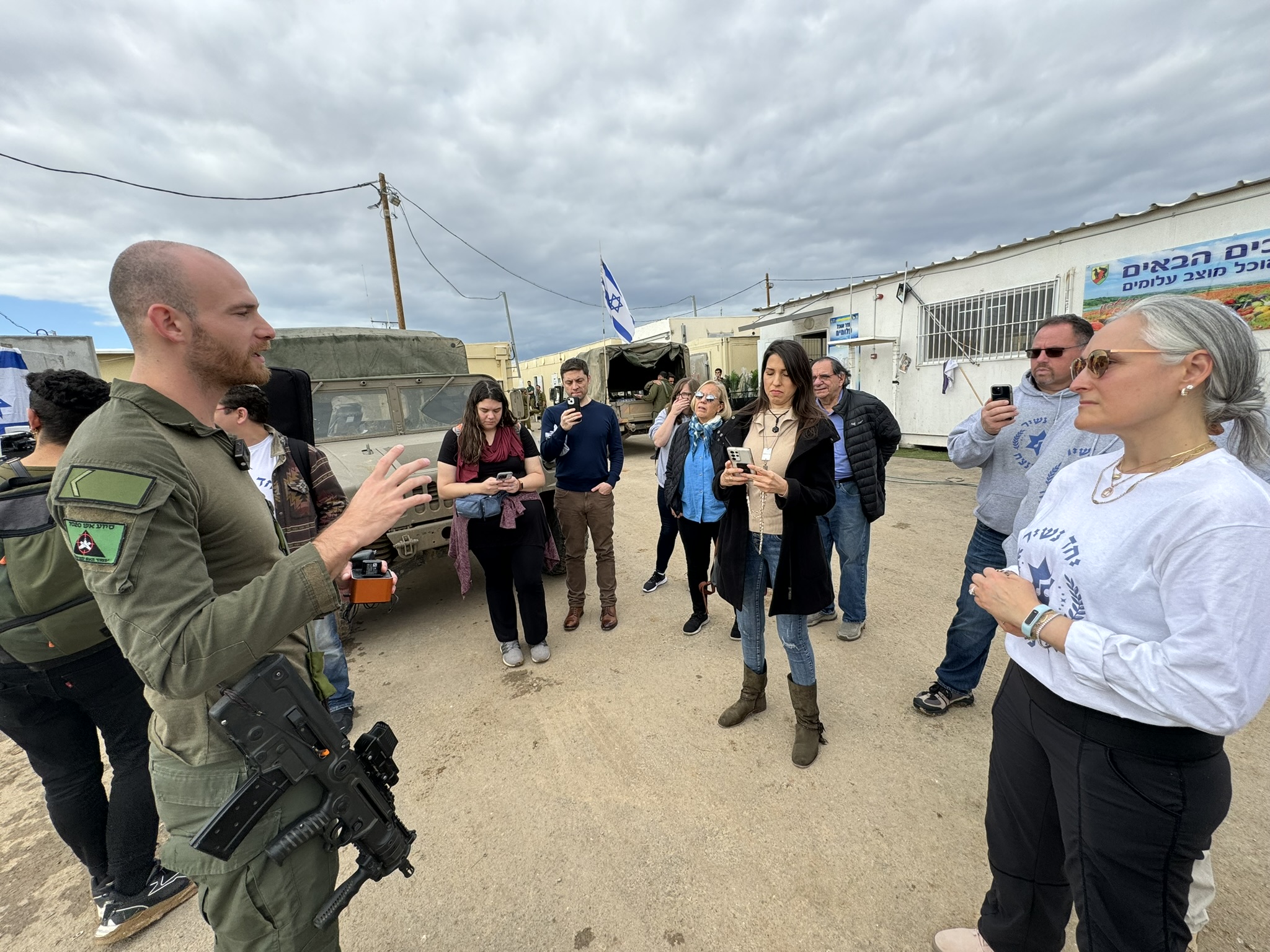

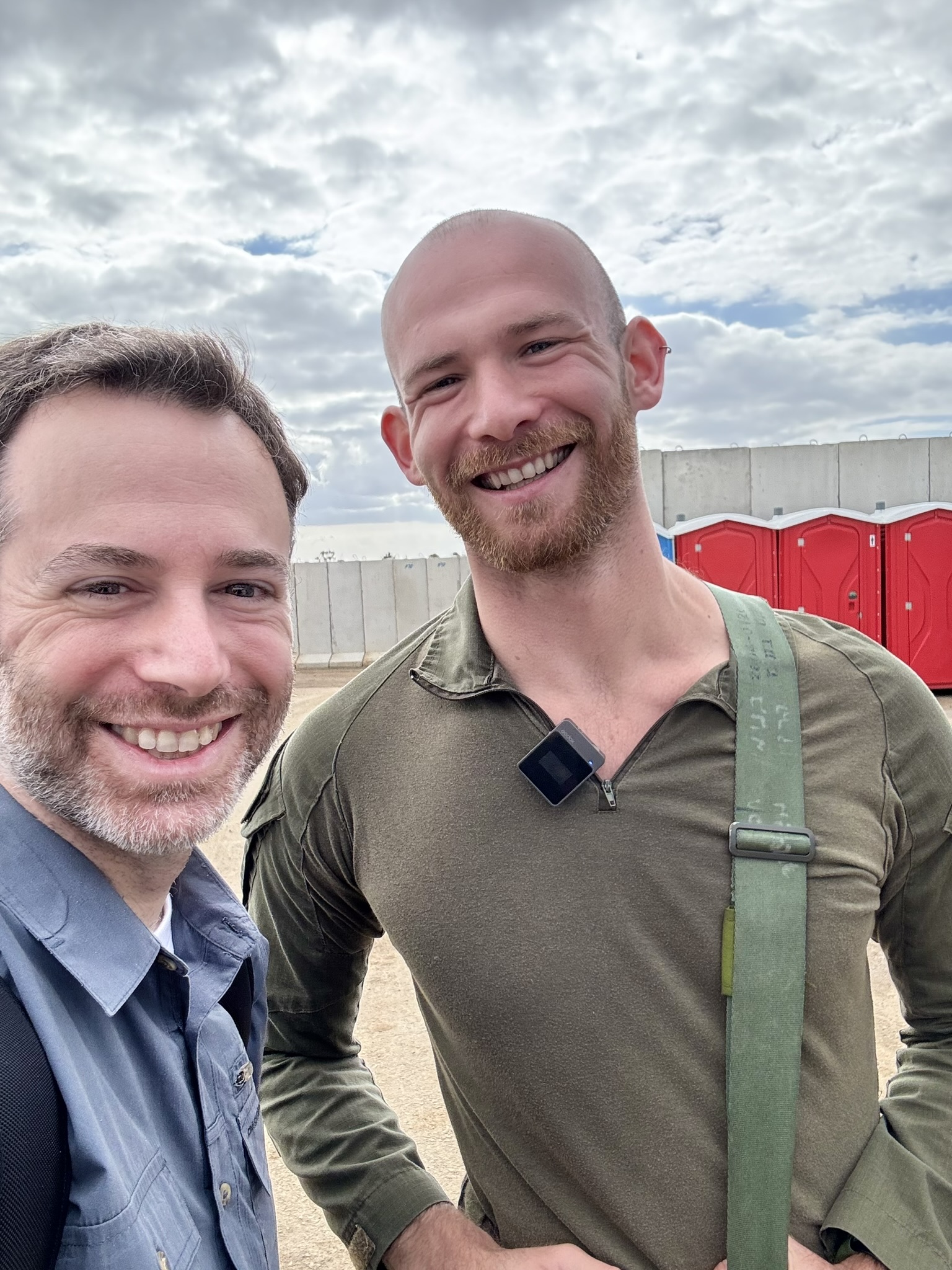


Ben grew up at Valley Beth Shalom synagogue in LA, was active in USY and went on Nativ year course before making Aliyah. When he isn’t in the reserves, Ben works as Coordinator of Development and Lone Soldiers for a company called Israel-is, an NGO that helps Israelis to represent and share Israel while traveling abroad and engaging online. Ben describes the moment when everyone got the alert on October 7. Even before he got his orders, Ben was en route, only to find that over 600 soldiers had already shown up for duty. It was another “one for all and all for one” moment that reminded me of my rush to donate blood the late morning of 9/11, only to find a line wrapped around city block after city block. As Ben puts it- “all of us, a week earlier we would’ve been arguing.” But they went to Kfar Aza, where ZAKA was there with 15 ambulances filled with bodies. For 90 minutes that same battalion that would’ve been arguing stood there reciting Kaddish, crying. After a week of protecting the kibbutz and area to the border, his unit moved to Kibbutz Beeri for one month (a Hamas terrorist was found weeks into the conflict on the kibbutz itself), returning to Alumim two weeks ago. Ben gives an important view point as an American-Israeli- first, the level of impact on families- they don’t really show us what they’re feeling. The second, the balancing of sharing facts (and it’s so important to know and share the facts), but that at the end of the day people connect to people before they connect to ideas. Engaging narratives speak louder than meticulous notes.
I was struck that his aliyahversary was Chanukkah 2017, as Ben spoke of a number of miracles that saved lives on October 7.
- Hamas didn’t know that the alumim base existed (knew kibbutz), so when the attacks took place, the base ran into action; casualties were kept at a minimum to those who were unfortunately in the fields (foreign workers)
- On Oct 6, the 890 battalion paratroopers were preparing for a drill in full combat gear. They were ready that day, near the Dead Sea. The battalion was transported by helicopters; the last one was hit with an RPG- yet able to land, its troops able to run 100 m before it exploded
- Ben’s CEO happens to also be a Captain in matkal and with rifle in hand was able to help those same soldiers to safety before the helicopter exploded.


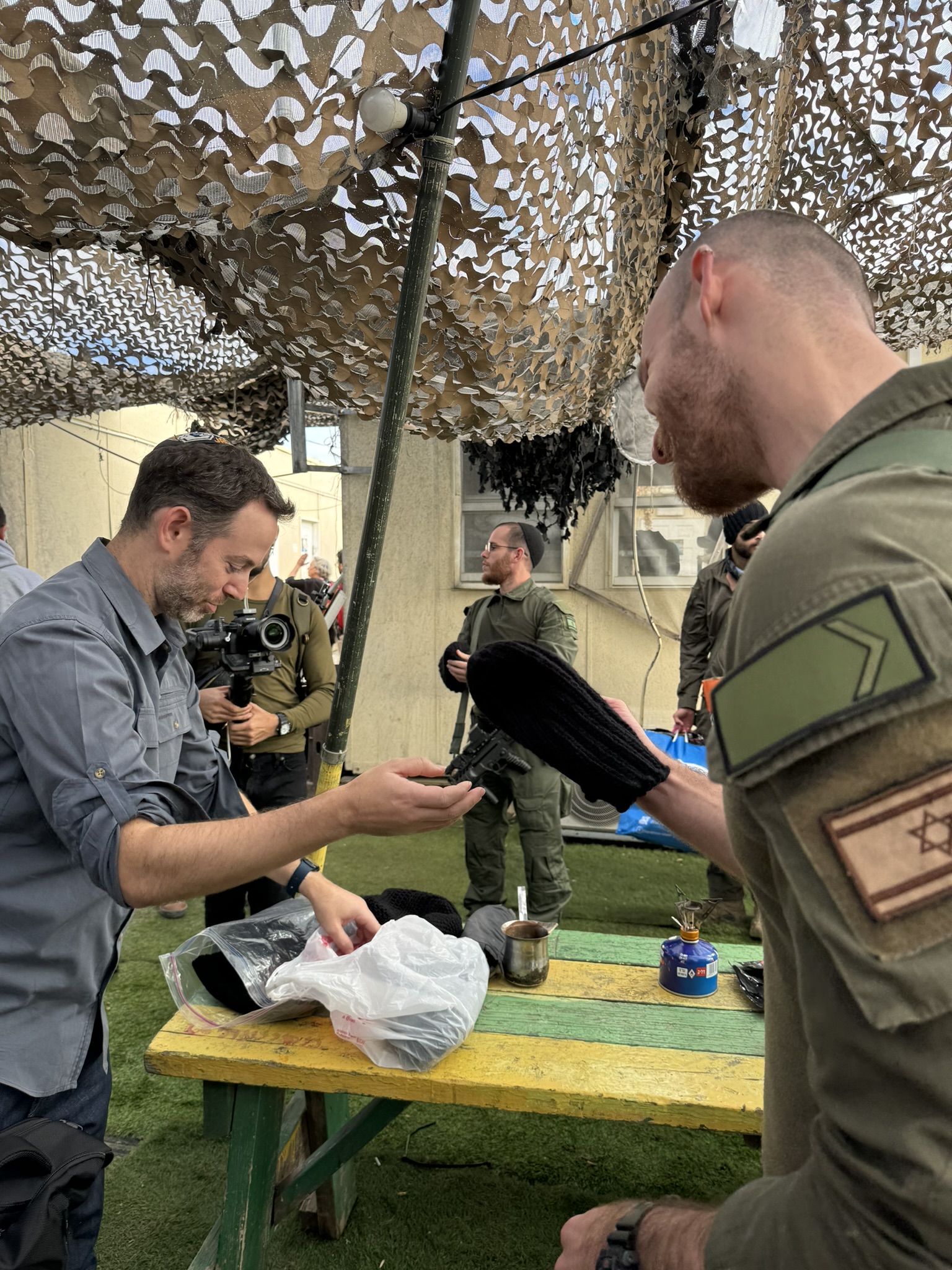

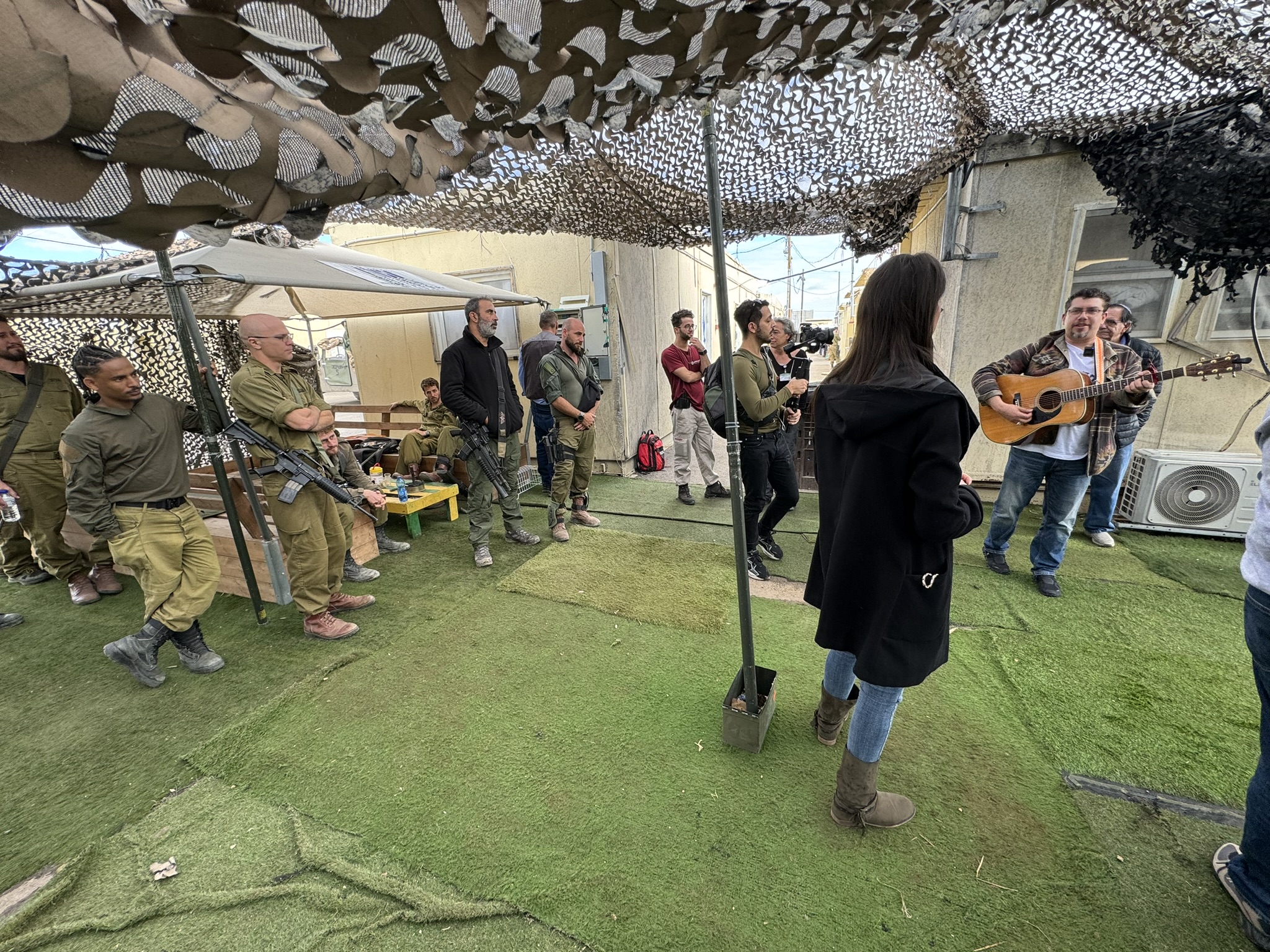
We felt a great sense of “Am Yisrael Chai” when we gathered with the unit for singing. We sang everything from Oseh Shalom to a prayer for the IDF to Kol Haolam Kulo. Of course my highlight was sharing hats knit by members of our synagogue, an important gift to the soldiers as many Mluim (reservists) don’t have access to the same gear that those in active military have. Smiles and hugs as we approach the hardest part of our trip. Part 2 to come soon.
Cantors Assembly Solidarity Mission Day 2 Part 2
Day 2 Part 2
I’ve mentioned throughout my life that the most spiritual and impactful journeys of my life were not found in Israel or in the United States, but in the ravaged communities of Eastern Europe- to understand a vibrant history, the untold stories of 6 million of our people, made visiting the concentration camps more than just a place of massacre and loss; they became a place to share in not only how people died, but how they lived and how they should’ve lived for generations to come.
In many ways, visiting a place like Kfar Aza should come across as visiting a concentration camp- the smells, the sights of destruction, paired with the stories of atrocities and war crimes, are so overwhelming that I don’t know when I’ll fully process what I saw. And yet visiting Kfar Aza, led around the Kibbutz by a survivor who fought off 40 Hamas terrorists, is so far removed from any trip I ever made to Majdanek, Auschwitz, Dachau or any of the camps I’ve visited. For in truth, this is the balance of life here- Kfar Aza is the sight of a massacre, a shiva home to those who mourn, and ALSO a Wonderful place “ you should be jealous” our guide tells us that you would be living in a place like Kibbutz Kfar Aza, a privatized kibbutz home to over 900 members with a long waiting list to get in. This is a place that for now is frozen in time (sukkot are still up) and yet it is where the living want to return and will return, a place of loss AND a place, God willing, of life.
Before I continue with a few more details and photos on my blog, two photos of note- the first reminded me of a photo I took on a Cantors Assembly mission to Germany- a photo of a small flower growing out of the rubble of Dachau Concentration camp. As a number of missions and soldier groups have made their way through the crime scene, there are small gestures here and there to remind people that the people of Israel are here to be witnesses.
The second photo is a single card from the game “Spot it.” Seeing so much destruction is sensory overload, but finding this playing card within the rubble hit hard. All three of my children play this game at home with us. The goal is to match a single item from the dealt card with the card at the top of your pile. So metaphorically, I felt the importance to be that other card- to find one person, one anecdote that people might remember, so that they see the beauty of the members who were lost and who suffer the trauma of October 7, the hate and premeditated barbarism of Hamas, and the hope of what Kfar Aza may be for generations to come.


As we enter into Kfar Aza, our guide gives us a little context for this community:

950 members, more than 60 murdered; 10 kidnapped to Gaza, burned houses. The displacement shvaim (refugees) are in the south of Netanya – in hotel rooms or apartments/houses subsidized by the government and friends of the community.
We are met at the entrance by Gon who lives in Kfar Aza- a husband and father to a new baby. His brother, sister and parents all moved to Kfar Aza as well, because this is/was paradise. Some of the photos I’ll be sharing speak to this beauty (that even remains in parts of the kibbutz). they never thought something like this could happen, that 300 terrorists would massacre this community.
He explains that there were 3 waves of attack, led by Bakai (motorized gliders) that made their way over the Gaza border that morning and landed in five different places around the kibbutz. It’s clear that Hamas had a map (Google maps also has a clear outline of the kibbutz). The attackers knocked out the Kibbutz armory called the niishkiya- place where they held all the kibbutz’s weapons. This was just past 6:20 on the morning of October 7. By 7am, there were 100 terrorists in the kibbutz. Most of the destruction outlined in my photos is from the neighborhood known as Dor Hatzeir- a place where most of the young singles live- there are very few survivors of this neighborhood.
The battle went from Saturday to WEDNESDAY before the last wave of Hamas terrorists fled or were killed. We hear stories of heroism as WhatsApp and other forms of technology are used to warn kibbutzniks of what’s transpiring; we hear horror stories of safe rooms being anything from safe from the actions of Hamas (The “Mamad” safe room is not bullet proof, even if it is safe from the impact). The images of burned houses and safe rooms, bullet holes in one area are met with other images of neighborhoods that appear more intact – sukkot still up, little physical damage; although this does not reflect the mental toll on anyone who lived through this trauma.

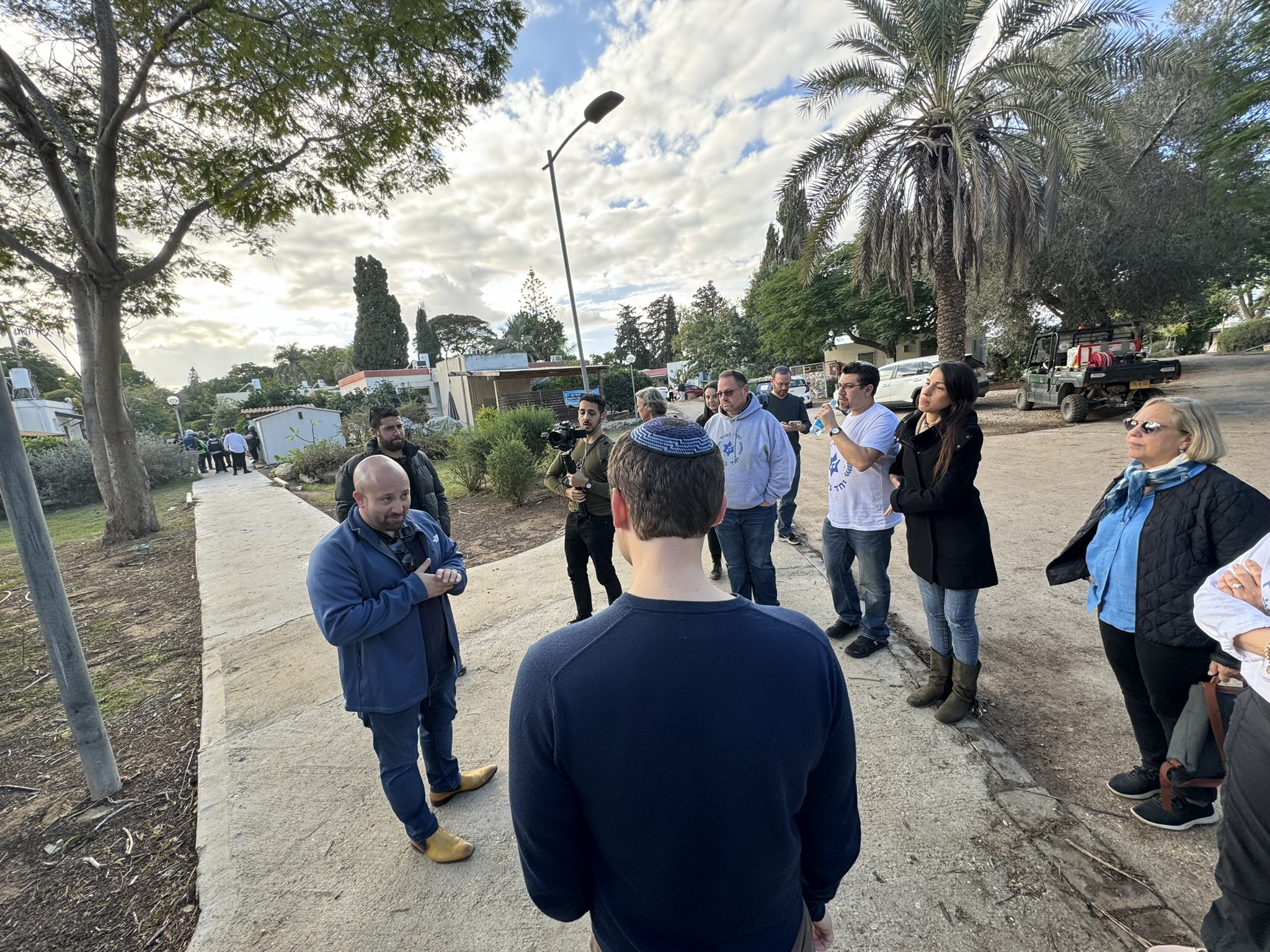


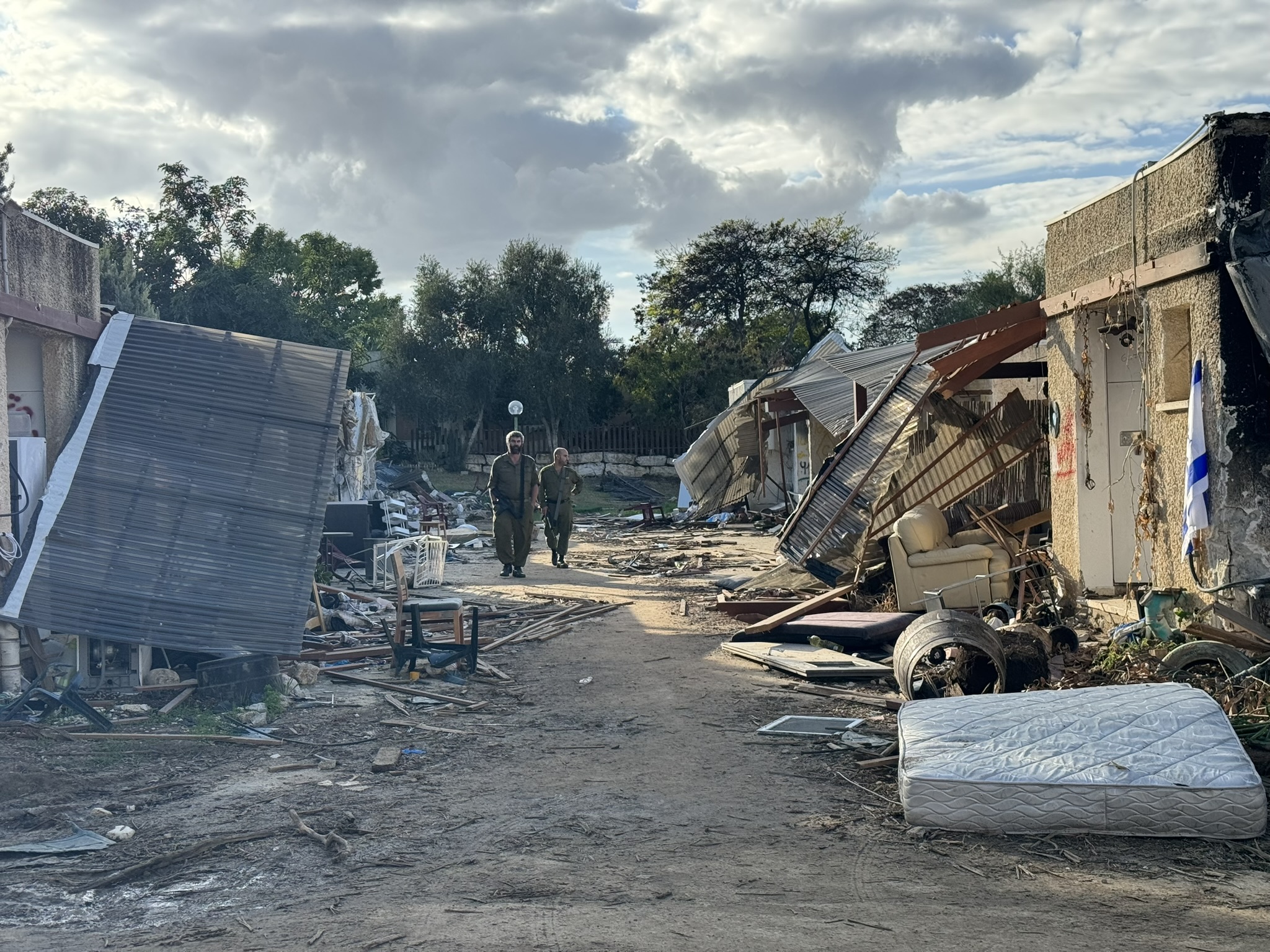


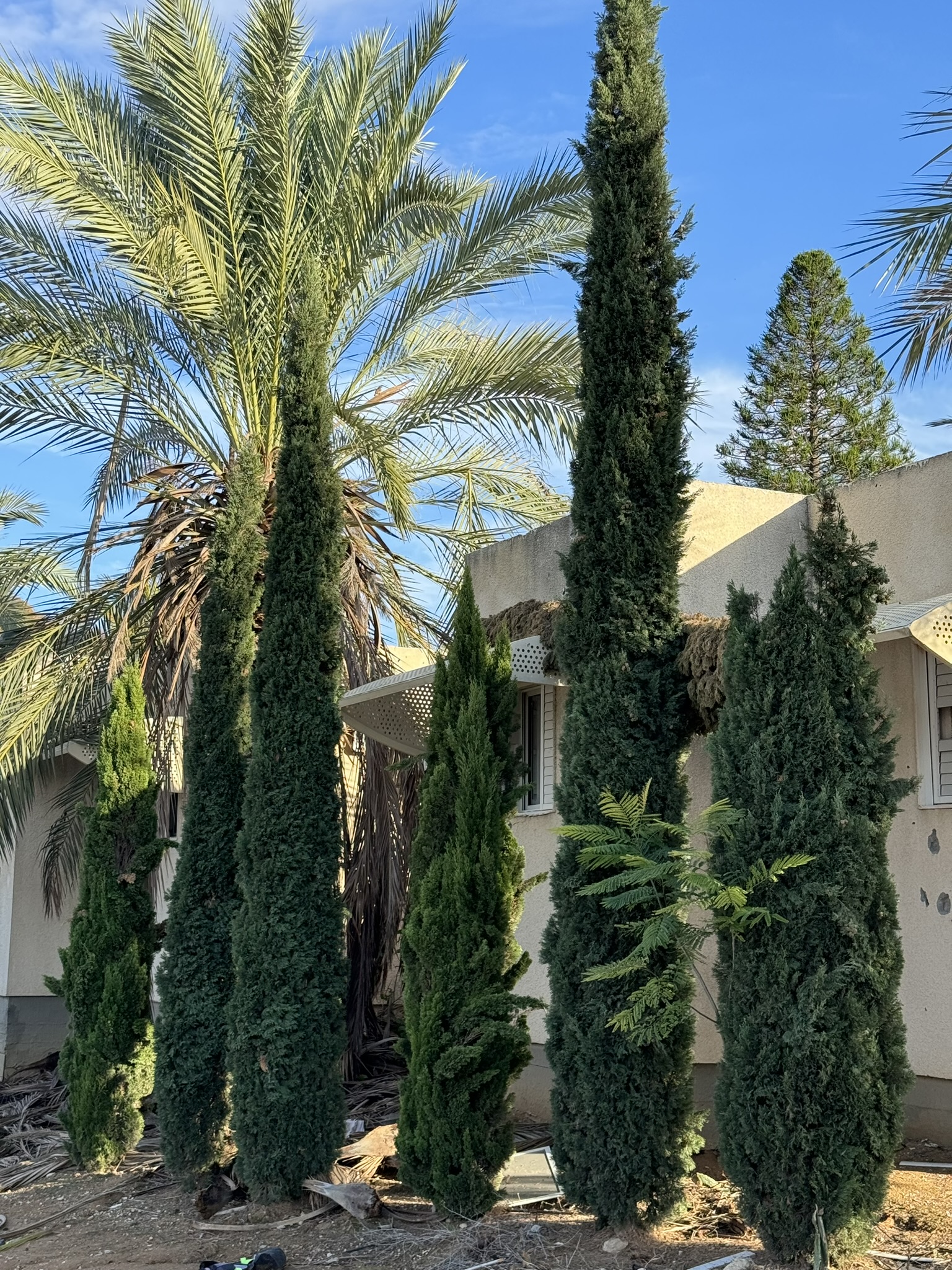




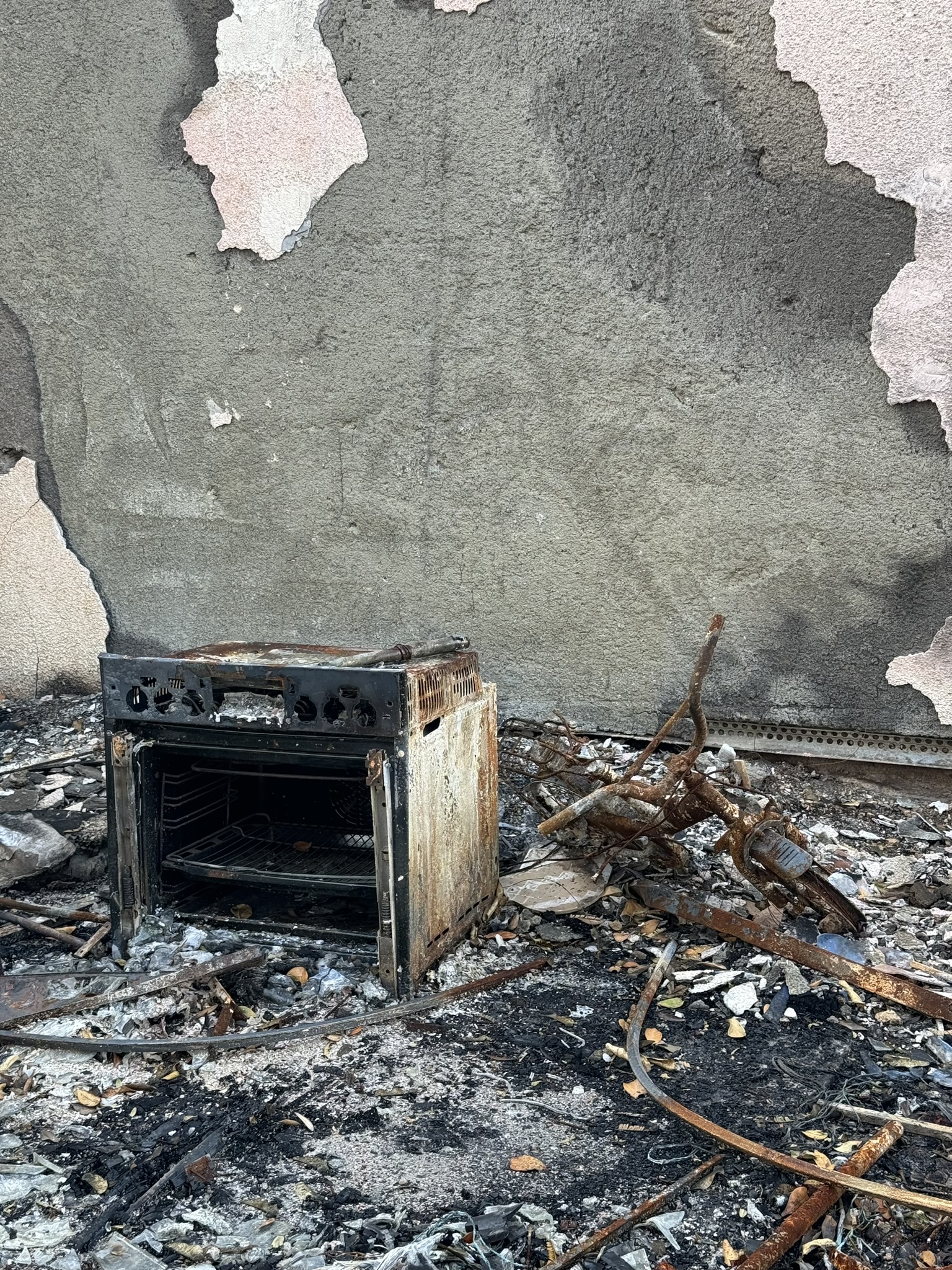


We ask Gon how he can walk around this space, so soon after experiencing this trauma. He says, “Many are not with us anymore. Someone needs to tell the story. And one day, we want to come back here (to live).” Elon futterman- friend of kfar aza and son of Conservative Rabbi Matt Futterman (who will mean shortly) says that there is a line of survivors waiting to tell their story…may there be lines of open minds and open hearts to hear it…
Our last destination before dinner, Ashkelon. We have a short visit with Rabbi Futterman, former counselor to Rabbi Jonathan Lubliner and former rabbi of a community in Ashkelon. We hear from Matt and three other community members. A few takeaways:

- We hear the ongoing narrative of ordinary people doing extraordinary things (also goes to what this government is NOT doing for its people), providing food, shelter and clothing for total strangers; a network of care unlike any we would ever see around the world.
- There are two lenses from which to see this war- the national level of grief/heaviness and the personal level (were YOU there when it happened)
- For context, 3 years ago, Ashkelon had 400 rockets fired on it over a period of weeks. This October, it was over 2000. Jokingly, a member says now with people evacuated it’s easy to find a place to park. But another talks about the jumpiness- when a group of kids heard a plane overhead, they ran to find shelter as a conditioned reflex. He worries about the mortal decision to take a shower when you have 15 seconds to get to shelter.
And yet…they keep on living. Every day, they package 5,000 packages for kids in shelters. The zoom Kabbalat Shabbat services of October are now the in person kiddushes of this past Shabbat (sound familiar). As one describes it, it’s jumping from the frying pan to the fire- there are people escaping TO Ashkelon.
A telling closing to our meeting- they offer support to US. They feel like everyone has their back, but feel sorry for what WE are going through- extra security, having to explain our right to exist!! And if not telling enough, they pitch moving to Ashkelon, the greatest city. Am Yisrael Chai
Cantors Assembly Solidarity Mission Day 3
Our morning begins with a debriefing by Yizhar Hess. Between 2007-2020 Yizhar served as the Executive Director of the Masorti Movement in Israel. Yizhar also coordinated our last Cantors Assembly leadership mission in the summer of 2022 (more on that later). Three major takeaways from our interactions:
Yizhar mentions that we are the 4th Solidarity mission of Masorti (Conservative) leaders since October 7. He reframes the significance of us being in Israel at this moment, our mission, in how it relates to zionism. In 1897, the Zionist Movement was a minority- the first congress only had 207 participants. 1903 the Kishinev pogrom. This wasn’t a large pogrom by any scale, but the key to this moment was that a delegation was sent after the tragedy, a delegation that included the great Hebrew poet Bialik, who wrote Be-ir Heharageh. In retelling the story, it galvanized the Zionist movement. Stories, real life stories, matter to changing the direction of a narrative. We are now associated as tellers of this unbelievable story (remember to believe the unbelievable).
The second update was on Yizhar’s family. He is the only civilian in his family. For his oldest son, one week he was in Nepal, the next week on the beach in Gaza. His younger son is in the IDF and his wife is a colonel in the IDF. Yizhar reminds us that Israel had been in turmoil BEFORE the war- every Saturday night hundreds of thousands protesting in the streets, fighting for that holy balance of democracy and Jewish statehood. And it was through this turmoil that people felt they were protecting Zionism, holding flags, having ownership over what Zionism is.
The third portion, which was the focus of our talks with Yizhar 18 months ago, is the strengthening of the diasporic pluralistic voice of the people. With Mercaz (elections may be in early 2025), American Jews can have a voice 100% by voting for Masorti Mercaz. The PR for Masorti must be this fact and the fact that all of these values people are fighting for- showing resilience in the battle for inclusivity and democratic idealogy, we can be stakeholders, as American Jews, in this endeavor. We can influence how the Gaza envelope will be repaired, how egalitarianism can matter for the Jewish homeland.
We head over to two schools in Jerusalem that now house what’s known as a Hamal, a civilian command center. We meet Adir Schwartz, the 29 year old who is both head of the largest political party in Jerusalem (hitorirut) and the director of this Hamal operation. By the end of October 7, Adir had already plugged in the first laptop on the fifth floor of this building to mobilize a movement. The theater is a newer construction, meaning it has shelters..and soon Adir and his team took over the entire building. Through the organization Lev Echad, this group of volunteers created an organization of 20 departments as they heard the needs of 3 key demographics: the 30,000 evacuees coming to Jerusalem, Soldiers, and the Jerusalem community (some 10,000 will be directly affected by this war). These departments include mental health, storage, transportation (getting out of harms way, delivering food), hot food, blood drives, and so on. Adir also describes the plan to not create dependency – the direct goods and services we are seeing will eventually turn into a voucher system and eventually a discount system before its entirely phased out, b’h, in a few months time.
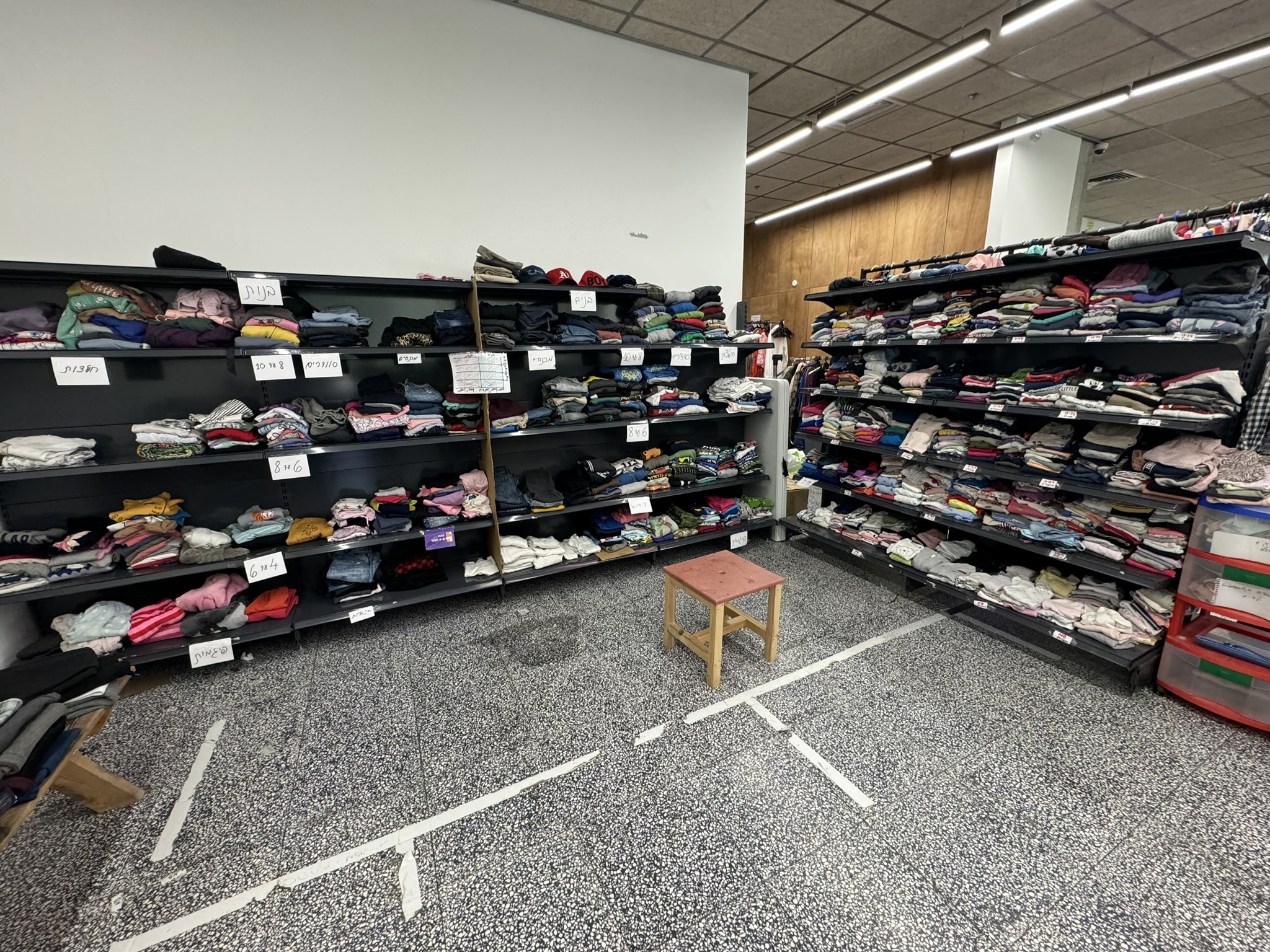
People want to reclaim their agency, and Lev Echad is helping to do that in a number of ways. The first feeling one can have is powerlessness, but through Hamal, they are able to participate. Adir reminds us that the Hebrew word “Kavod” is not just honor, but human dignity. We see this in a “store” called Otef, meaning “embrace.” It’s a store, but it’s free. The experience returns agency to all who enter.
Adir is quick to thank all of the volunteers. When the government (in this case the municipality) finally came in to help, the volunteers were running the show- they knew what to do, what to ask, what to say; many of them were then hired by the municipality to continue in this role.
On one hand, I hear a common positive theme when Adir describes how all of the rival political movements in Jerusalem joined together to create this movement. Yet on the other side, Adir calls the Hotels in Jerusalem “63 refugee camps with a lobby.” Boredom is the #1 problem for refugees and evacuees…and I don’t hear a complete answer to this problem. For every story of communal resilience, I’m more saddened at the lack of access to services (at least under this current government).
After a short lunch break we head to the Old Train Station for a soundcheck for our concert with Hila Ben David. It was wonderful to have members of my family there (who I had never met before!) and to see my colleagues, Hila, and the band give their all. You could see the joy on people’s faces, and as I remarked before one of my favorite songs, Rikma Enoshit- we are all one tissue: when I hurt, you hurt; when you find joy, I find joy. May we all find joy and comfort in the days. Video forthcoming




And finally, a relief. As we walked back to the hotel, I learned that Amit Shani was released today alongside 11 other hostages. Amit was partnered with our congregation to add special prayers for these past few weeks. In a cruel layer of misinformation, Amit’s information was included in group from a few days ago, but tonight he heads home. We pray until they are ALL home #BringThemHome
Cantors Assembly Solidarity Mission Day 4 part 1
As I was checking in to our midnight flight home, I looked back at my “notes” app to reflect on the day. It was hard to imagine all that we fit in our final day in Israel- the itinerary, the interactions, the emotions. I’m going to try to fit it all into two posts as I sit here in the middle row at 9am (or really now 2am). A note on the photos- they will be a mishmash of happy and sad- of note, I hope that you’ll be able to feel the ways in which Israel and Israelis are trying to process this war, just as I have just started to figure how I process what we’ve seen and experienced.
Israelis keep i24 on all the time- on tvs, on their smartphones. It’s not background noise- it’s the passing of information in real time. In similar fashion I refresh my Times of Israel or Haaretz main page seemingly every five minutes. Immediately following breakfast (sharing a video montage for a little levity),
I read about a terrorist attack in Jerusalem. Within minutes, security footage is posted on X to reveal two Hamas gunmen shooting up a Jerusalem bus stop towards the entrance of the city (they were residents of East Jerusalem, for context). This isn’t near us or our route for the day as we head to Jerusalem, but it is telling that I told my wife all would be ok since I’d be staying in Jerusalem most of the time (and even our friend Eli sent me a note glad that I was heading to Tel Aviv for the day).
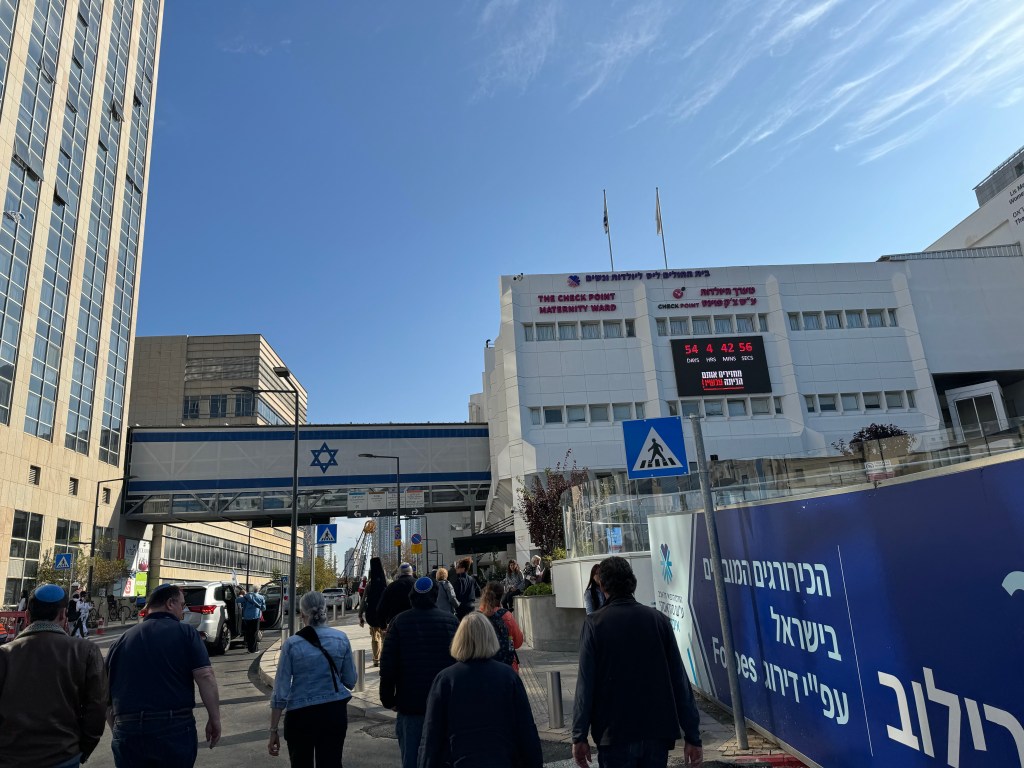
We drive to Tel Aviv en route to Ichilov hospital, the 2nd largest hospital in Israel (also where my cousin Aton Holzer, who I’ve never met, works as a dermatologist -note he is actually out of the country this week!). En route, we discuss some of the updates we’ve been reading and hearing about on the news- hostages held in the homes of physicians and UN personnel, Thai workers testifying that the Israelis, and just the Israelis, who were held with them, being beaten with electrical cables; the misogyny of Israeli intelligence, as a number of female intelligence officers warned of an impending attack only to be dismissed by higher ranking officials; the PR war-Hamas as the one who delivers by attacking Israel and bringing home their imprisoned, while Fatah is all about corruption.
At Ichilov, we meet with the rabbi of the hospital, Rabbi Avraham, who gives us a brief outline of his role as pastor and chief rabbi. Most of the questions he fields are about “kashrus,” as the one who oversees 10,000 kosher meals a day. The most important part of his job is dealing with the ethical issues that come up- this can be a case by case basis, and it can also be how he uses the weekly torah portion to help inform an ethical standard of practice for all the physicians and social workers who work with patients-just thinking of this week’s parsha, when Jacob splits into two camps for fear his brother will kill them all- it’s a story of triage.
I think our delegation of hazzanim is a bit of a shock to the rabbi. Not only are we (men and women) serving in a full time capacity, but our pastoral presence in our communities- visiting congregants in elderly care facilities, hospitals, in trauma, is a different model than in Israel- synagogue clergy rarely visit their members in hospitals. It’s an important realization on his part as we prepare to visit soldiers injured on October 7.
Most of those injured on October 7 went to other hospitals, but over the past few weeks, a number were transferred to Ichilov who required more surgeries and a different level of care. At first, this feels very different from our straight off the plane visit to Hadassah hospital. The first soldier we meet is very matter of fact (we understand that for some, sharing their story is therapeutic, but that’s not the case for everyone): 2 bullets to his shoulder. We learn from others in the room that 18 of the 28 members of his unit were killed, simply unimaginable.
We meet with Yaron, a resident of Kfar Aza. To hear another layer of the story we had heard and seen on Tuesday was powerful. Yaron’s ex wife, along with one of their 3 children, were in Kfar Aza when the ambush began. The two held off for 22 hrs as Hamas gunmen shot at them from their roof. Yaron heard about the attack right away and came INTO Kfar Aza to help. He was shot with an RPG like rifle (something he says he has never seen before). Yaron laid there for 3 hrs before being rescued. He was in a coma for 2 weeks and lost part of his lung. In reflecting on that morning, Yaron speaks of the “beautiful people we lost,” a reminder of the lives, innocent civilian lives, that were cut short by monsters.
Our group gathers in an open space in the rehab floor to sing a number of songs, including the now canonized Acheinu prayer that speaks of the bonds of brotherhood and the need to bring everyone from darkness to light, from captivity to freedom. As we close, a soldier shares that he’s thinking of us during this difficult time in America. He also reiterates an important message that there are different ways to help. For him, having us sing for the patients and their families makes them stronger. Two of us begin a conversation with a mother (originally from Rochester, NY) who waits for her son to return from his IV treatments- he was bartending in Miami Beach just before the holidays, only to return home, enlist, and experience major injury. We added his name in Hebrew to our mi shebeirakh prayers.
After lunch at Serona Market we will make our way to two places where families, friends, and all of Israel come together to shout out Bring Them Home Now. Closing reflections coming soon


Cantors Assembly Solidarity Mission Day 4 & Closing thoughts
Day 4 and Concluding reflections
The remainder of our last day in Israel focuses on the hostages and their families. First, we visit the Hostage and Missing Families Forum, known through the hashtag #BringThemHomeNow. According to their website, the Hostage and Missing Families Forum was formed by the families of the abductees less than 24 hours after the horrific attack by Hamas on Israel on October 7th, in which more than 1300 innocent civilians were murdered and hundreds were taken hostage. The Forum is volunteer-based and laser-focused on bringing the hostages back home to their families, to us.


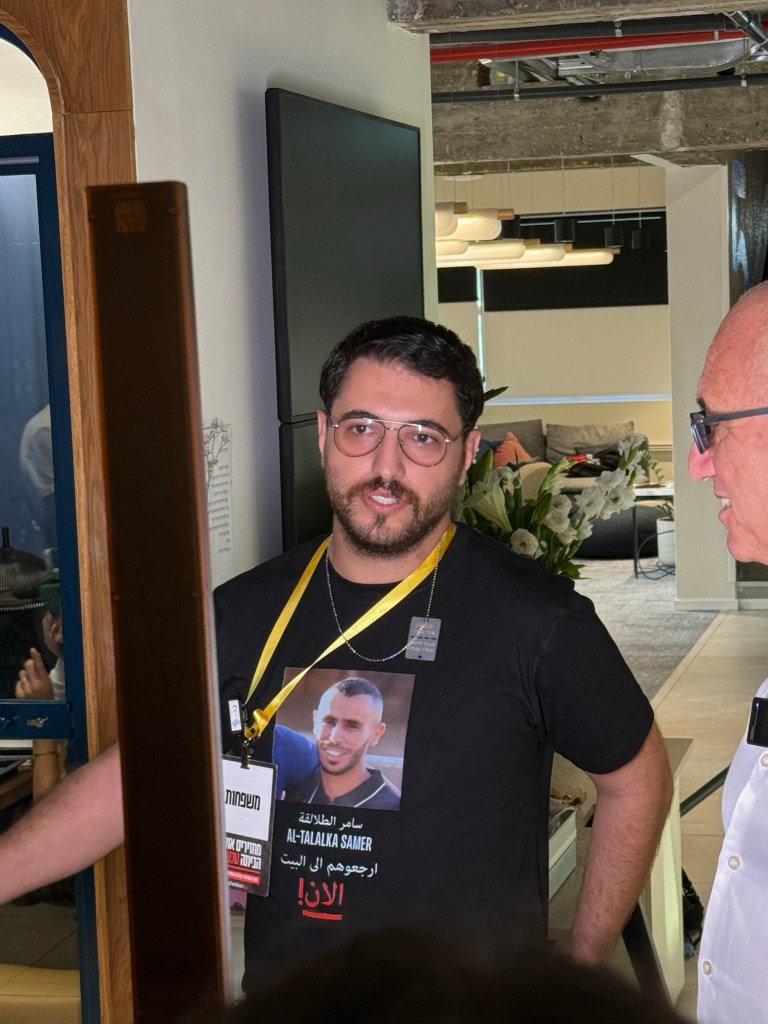
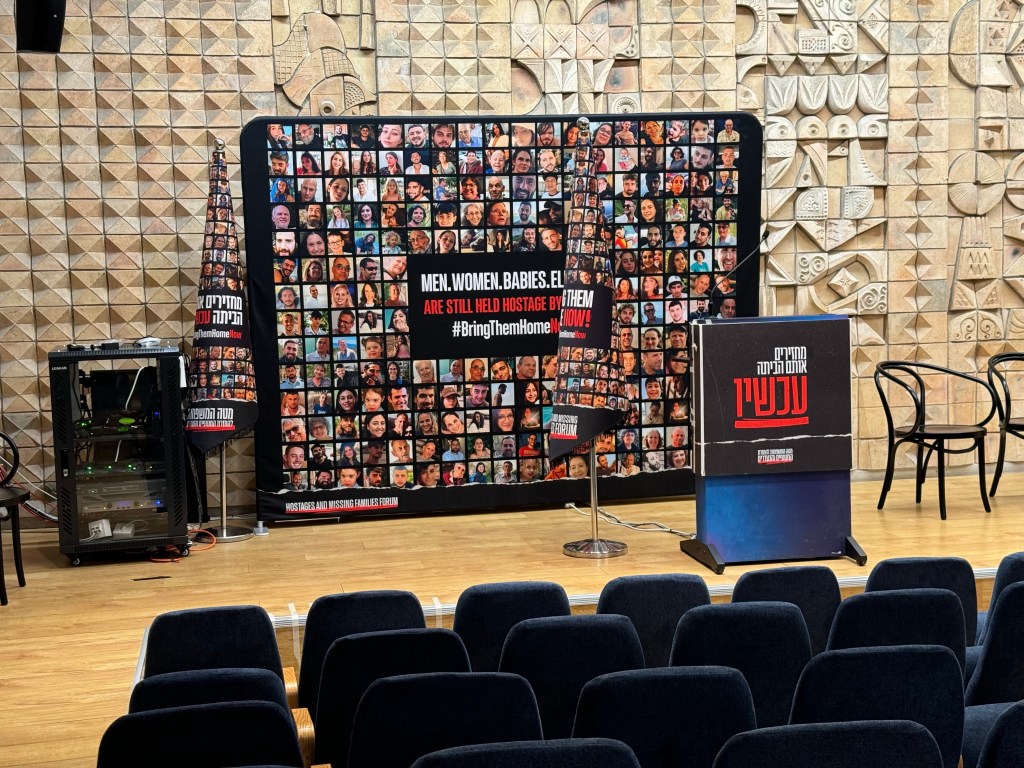

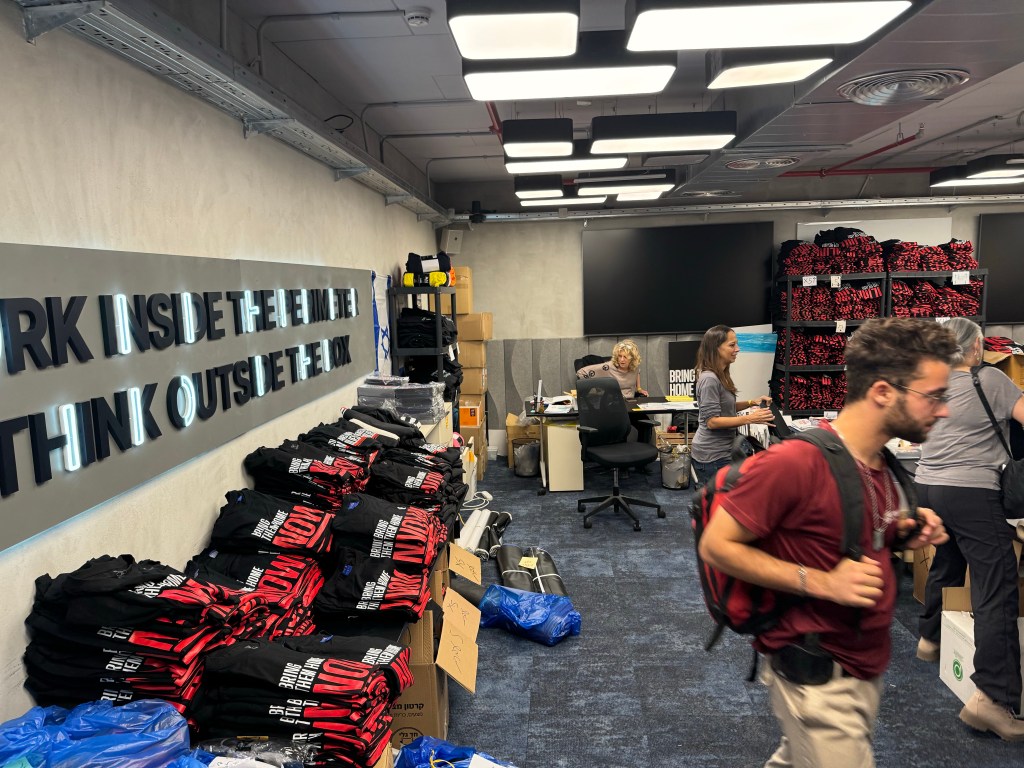

Our guide Meirav reiterates the volunteer nature of this NGO as people work around the clock in addition to, in many cases, full time jobs. The two goals are to keep the return of the hostages in the forefront of the political agenda as well as supporting the families of the hostages. We meet members of a number of the teams- the diplomatic team mobilizes awareness in their own governments, the medical team provides mental health resources for families and supplies medical info of the hostages to the Red Cross, whom Meirav describes as acting like a GETT taxi driver, refusing to offer medical attention when needed; the legal department, communication department (think of all the billboards in 90 locations around the world); the social media team who write everything in Hebrew AND in English; and the influencer department, where we learn from Brian Spivak (originally from Englewood, NJ) who works with creators and influencers to share stories about the hostages- one such example is the “recipes4return” campaign on Instagram where food bloggers make recipes while sharing stories of the hostages. We learn that the color scheme of the posters, often in the jarring black, white and red colors, now includes a yellow ribbon inspired by the yellow ribbon campaign for veterans, here in the US.
After the terrors of October 7, Dudi Zalmanovich, a prominent Israeli businessman whose daughter survived the massacre at the Nova festival and whose nephew was taken captive by Hamas, emptied two floors of his office and gave birth to the forum. We hear Dudi speak about the days immediately after and how the forum is adapting to the reality of some hostages being released. A number of times, he says that doesn’t matter Israeli or non-Israeli, Jewish or not Jewish, they want all of the hostages home safely and home speedily. After we sing a very emotional Acheinu (a literal prayer for hostages) in our little hallway, Dudi’s statements come into play in real time, as a family member receives a phone call right next to us that Aisha Ziyadne, from the Bedouin community of Ziyadne, is one of the captives being released (if you’re thinking Bedouin – a reminder that Hamas doesn’t want people of all religions living on this land). Later that night, we learn that her brother Bilal is also released. After an embrace, As Dudi puts it, “to see this person so drained yesterday and now today…” Even in the joy of the moment, the shirt he wears reminds us that there are still other family members in captivity.
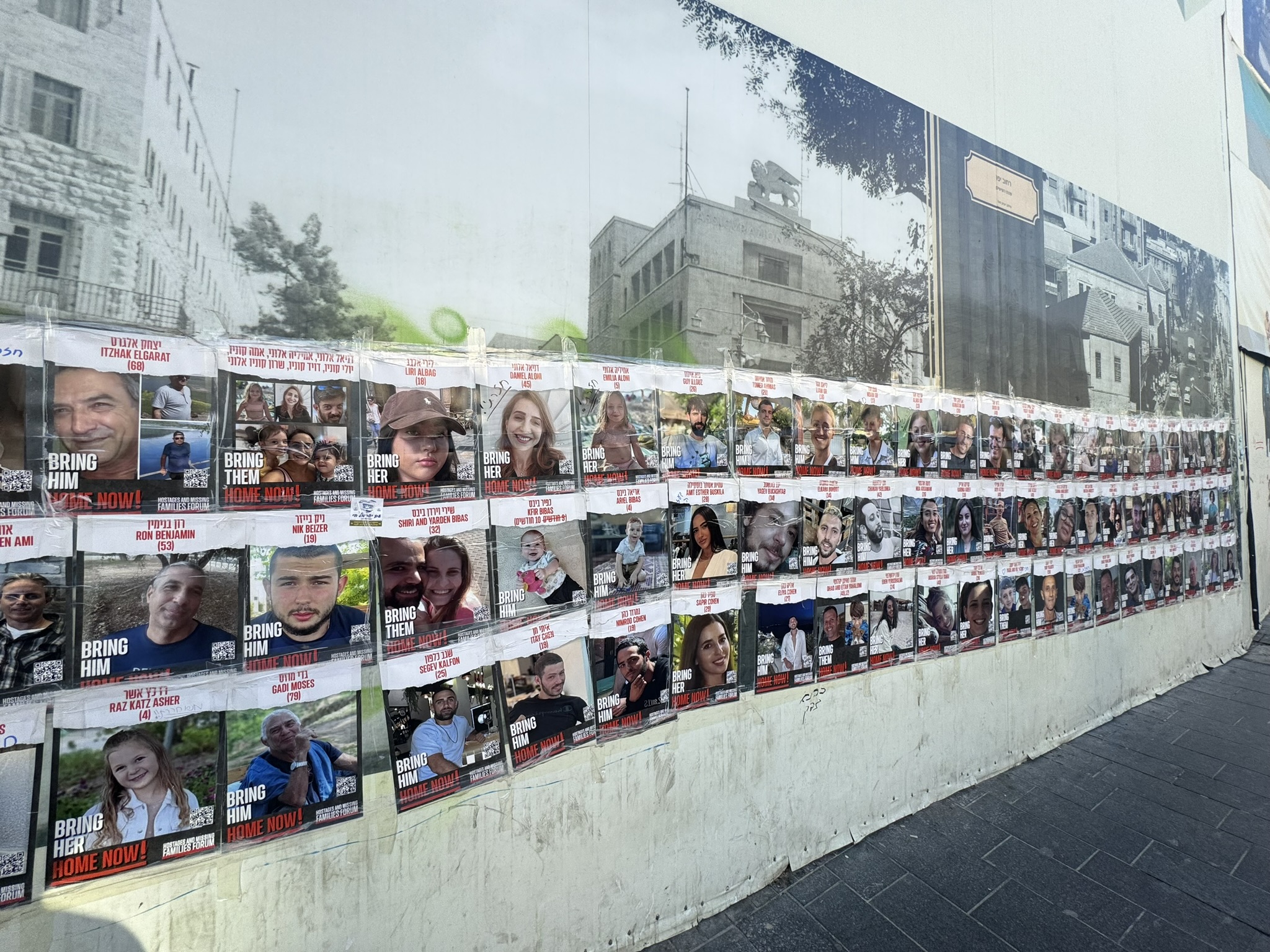
After picking up posters and t shirts to bring back to the states, we make our way to what has been renamed Hostage Square. I’ll let the images speak for themselves, as artists and family members find a way to express their sorrow, their pain, and their hope, all in one instant. I think of the end stages of life: this is a hospital visit, shiva home, and living monument all wrapped into one. Just as in a shiva home, we are told not to start asking questions or talking too much when we interact with families of the hostages gathered in the tents. If they want to talk, they will initiate. I listen in on a conversation with the aunt and uncle of hostage, Elkana Bohbot. With everything going on, life being a blur and in many ways halting on October 7, it was comforting for me to hear the two of them laugh with friends, even for a short moment. Normalcy is something we all crave.
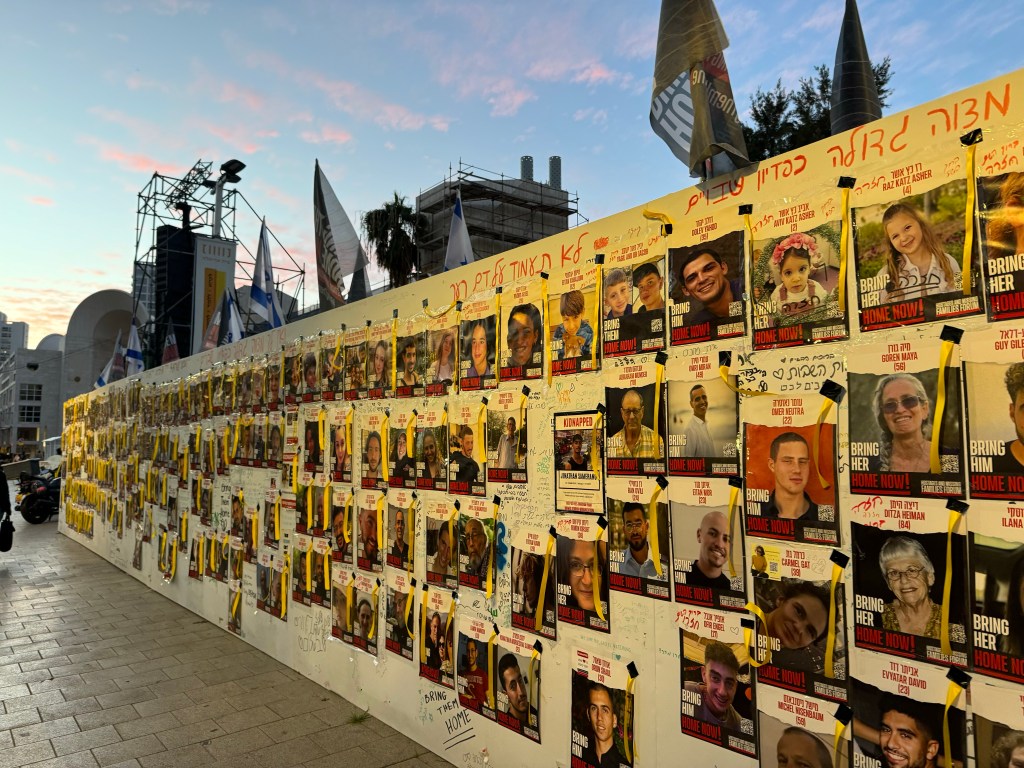
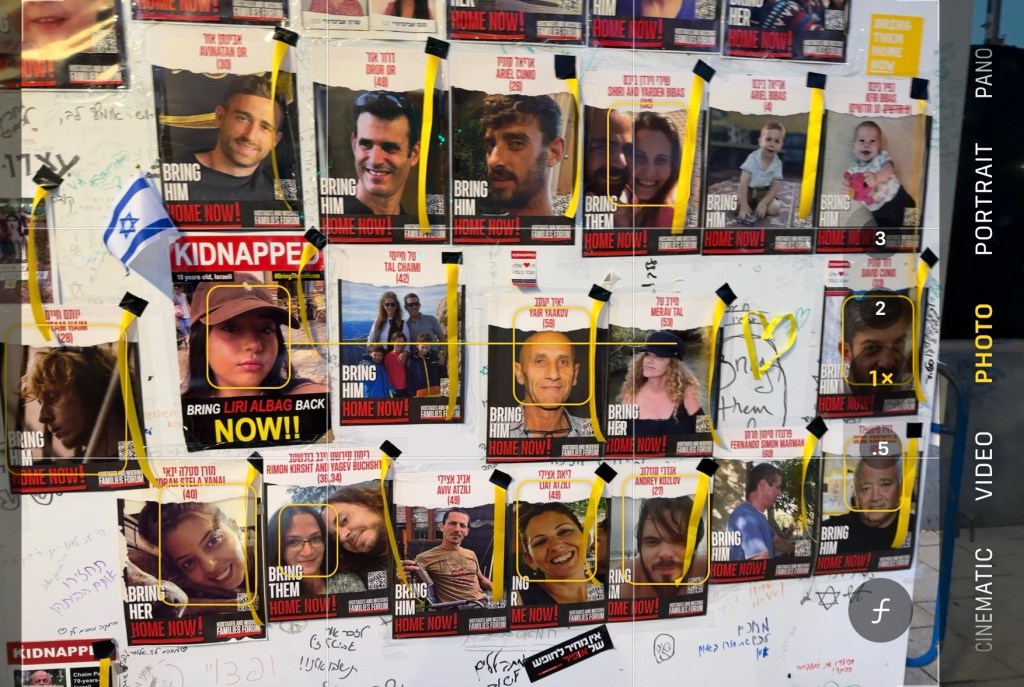


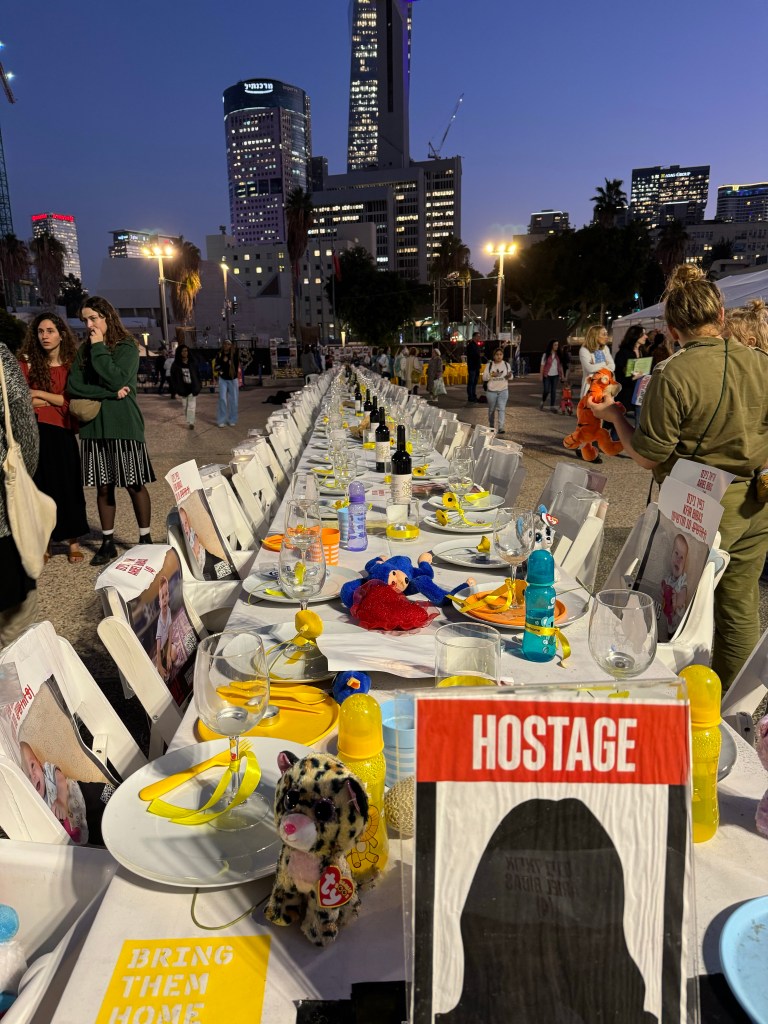
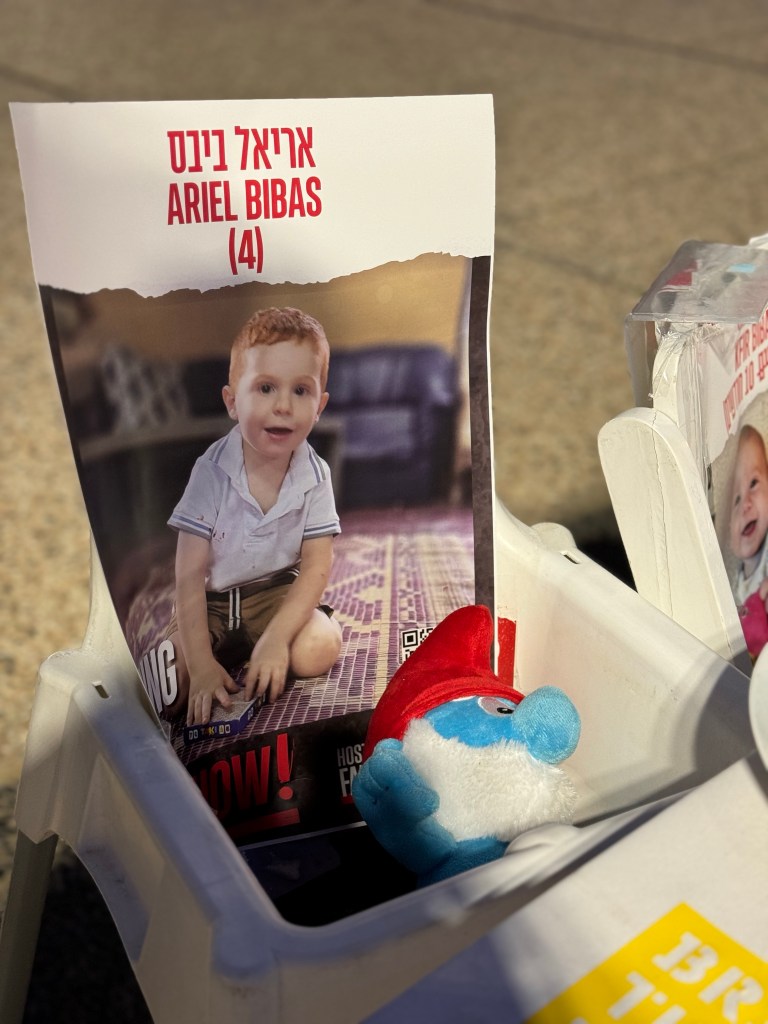


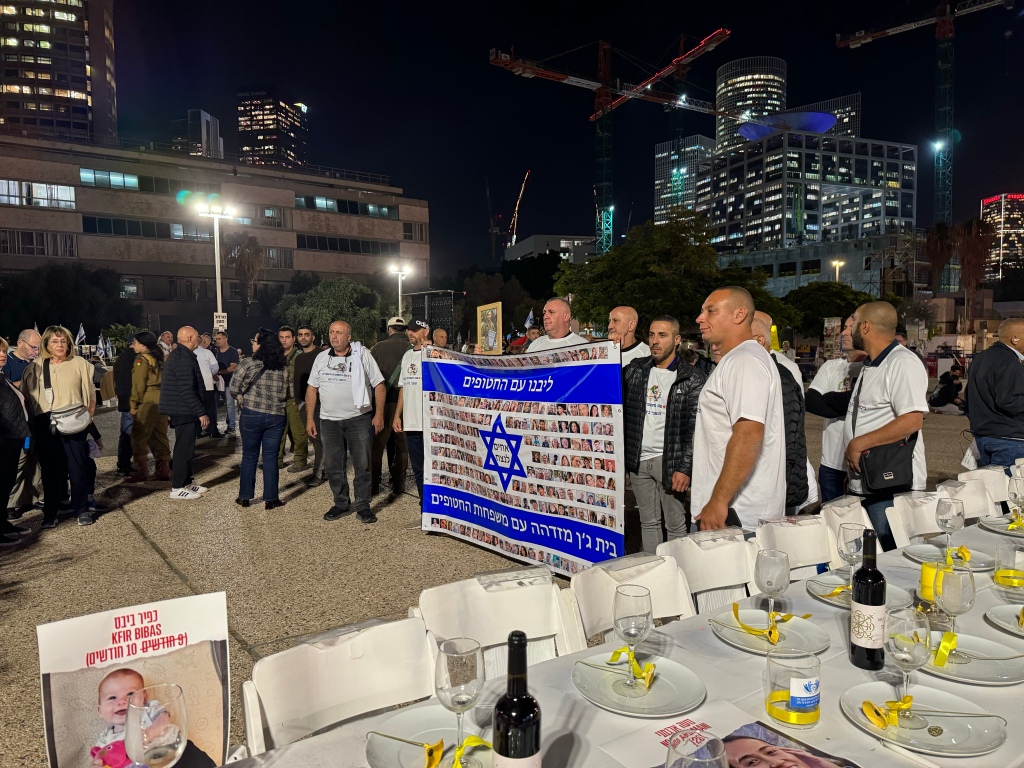

Everyday at 5pm, community members gather in the square for prayers and shira b’tzibbur, communal singing. We were privileged to help lead this ceremony, with our instruments, our voices, and our fullest kavanah. More than singing at the hospitals (often singing “to” the families), this was a spiritual communal moment when everyone was singing. It was nice to see our Masorti counterparts and other friends visiting from North America.
Our final dinner at an amazing restaurant, Goshen (photos included), was a way to express gratitude to our guide Kari, our producer Ben, videographer Or and all of our colleagues for experiencing the power and difficulty of this mission, together. As we shared words around our table, it also helped me to begin to formulate the narrative that I hope to share with all who read.


As I write this last post, the mood is changing in Israel. Hamas breaks the ceasefire by firing into Israel, by not sending a new list of hostages to be released. Yes, the 7 day ceasefire that saw over 100 hostages released, that had enveloped our entire 5 day journey, is over. It makes this experience unique, an ענין של זמן , a moment in time.
As the psalmist writes in psalm 121,” the guardian of Israel neither slumbers nor sleeps.” Israelis, the literal guardians of Israel, neither slumber or sleep. The resilience of this country is unbelievable- believe the unbelievable, as I mentioned early, can be a positive too. I pray that there are pockets of relief, followed by blankets of joy in the days ahead. While this is an indictment of Israel’s government, the intestinal fortitude of each Israeli to push on, to have open hands and hearts to family and strangers, is something we on this side of the Atlantic can learn a lot from. Israel mobilized, and we CAN do the same- for our own communities and for the state of Israel.
In the complexity of sadness & joy in every moment, an image is engrained in my mind- that of the tall Cedar trees that we found in Tel Aviv, in Kfar Aza, in Ashkelon, in Alumim, in Jerusalem. Cedars that stand tall even in the midst of chaos. Just as we speak of the inhumanity of Hamas, we MUST speak of Israeli expressions of humanity. Facts and figures are important, but human touch points will be what is needed to change the narrative.
When our group shared those last moments of gratitude, our videographer Or (you’ll see his work soon thanks to funds we raised at the JJC), said that WE are the hope. WE, the cantors on this mission, and WE Israel’s family and friends in the diaspora. This isn’t something Israelis would’ve said two months ago…
As we often have had a shaliach (emissary) with us in Jacksonville, I’ve never felt more of a shaliach representing and strengthened by you. The messages on Facebook, and in particular a video my daughters made with their cast of Newsies (shared later), have brought me to tears when I’ve felt overwhelmed. Being in Israel, sharing music, stories and lots of hugs, has been the language that pierces the heart and soul. Together, Israel and diaspora, are the hope. Just as we can have boundless love, we can always have boundless hope- hope for the return of hostages, for peace, for a people of Israel that thrives for generations to come. Am Yisrael Chai


 Hazzan Jesse Holzer