Category Archives: Sermons
Look up!
One of the architectural perks of our house is that I get to live in two meteorological realities at the same time. I will often hear a little rain on the roof, pausing to ask if it’s actually rain or just the AC turning on. I will look out into our backyard to see raindrops falling in the pool, only to glance back into the front lawn to see sunshine. Just yesterday afternoon, I stood in our synagogue portico as I watched dark stormclouds rip through the camp carpool line. On the other side of the portico? Not a cloud in the sky.
This is very Jacksonville. It is also the reality of life- holding on to two opposite signs of darkness and light in the same space. From a Jewish lens, this is very much the moment of twilight on a Friday night- that Kabbalat Shabbat moment when we still feel the struggles and frustrations of the weekday while holding space to invite Shabbat into our midst.
Our Rabbis delve into this specific twilight moment in Pirkei Avot, found in Siddur Sim Shalom on pg. 273
Ten things were created on the eve of the Sabbath at twilight, and these are they: [1] the mouth of the earth, [2] the mouth of the well, [3] the mouth of the donkey, [4] the rainbow, [5] the manna, [6] the staff [of Moses], [7] the shamir, [8] the letters, [9] the writing, [10] and the tablets
13th Century Rabbi Menachem Meiri comments that these ten items were created at the “edge” of creation—bein hashmashot—to signal that although they appear miraculous, they were part of the original plan of the universe.
“These are not new interventions in nature, but pre-programmed events that God placed into creation itself.”
— Meiri on Avot 5:6
My favorite 16th century Italian Rabbi, Obadiah ben Abraham of Bertinoro, aka the Bartenura, explains each of these ten items in Pirkei Avot 5:6:
At twilight: on the eve of the Shabbat of creation, before the creation was completed
.(1)The mouth of the earth: to swallow Korach and his congregation, (a reference to Numbers 16:32:
“and the earth opened its mouth and swallowed them up with their households, all Korah’s people and all their possessions.”)
(2)and the mouth of the well: The well of Miriam that went with Israel in the wilderness on all of the journeys. And some say, that it opened its mouth and uttered song, as it stated (Numbers 21:17), “rise up, O well; answer it.”
(3)and the mouth of the donkey: At twilight it was decreed that it should speak with Bilaam.
(The Message: Truth can come from unexpected places)
(4)and the rainbow: as a sign of the covenant that there would not be another flood.
(5)and the manna: that descended for Israel for forty years in the wilderness.
(It’s Message: Trust in God’s daily provision. Trains spiritual discipline—no hoarding, just enough.(Emunah- faith))
(6)and the staff [of Moshe]: with which the signs were performed. And it was [made] of sapphire.
(7)and the shamir: It is like a type of worm, the [size of a grain of] barley in its entirety. When they would [place] it on the stones that were marked with ink [to demark what they wanted cut, the stones] would become indented on their own. And with it did they engrave the stones of the vest (ephod) and the breastplate, as it is written about them, “in their fullness.”
(Talmud Sotah 48b) teaches the value of purpose: A supernatural worm that cut stone without iron (used in Temple construction).
(It’s Message: The Temple must be built in peace; even tools of violence are excluded.)(8)the letters: The shape of the letters that were engraved on the tablets;
(9)the writing: that they could be read from all four sides.
(10)the tablets: were [made] of sapphire. Their length was six and their width was six and their thickness was three, like a stone whose length, width and thickness are equal and it was split into two. And they were soft and they were quarried from the ball of the sun.
Side note: the text mentions the tongs (tsevat), made with tongs- yes the first set of tongs were formed through divine intervention
Midrash Shmuel, a major 16th-century commentary on Pirkei Avot, explores how each item listed in the Mishnah has moral or theological meaning.
On the rainbow, he writes that it is both a reminder and a restraint—a symbol that God holds back anger and destruction, and that humans must remember our part in preserving life.
On the mouth of the earth, he suggests that it is a warning against hubris and rebellion—specifically, Korach’s arrogance in trying to replace divinely-ordained leadership.
“The mouth of the earth represents the dangers of pride; the rainbow represents the blessings of humility and submission to the Divine.”
— Midrash Shmuel on Avot 5:6
The mouth of the earth, we know, appears in this week’s parashah. Korach, Datan, and Aviram rebel against Moses and Aaron. They challenge their leadership—not, it seems, to build something better, but to tear down what they feel excluded from. And in response, God causes the earth to open its mouth and swallow them whole. Too many people die in these horrific events, marred by rupture and silence.
The rainbow, on the other hand, comes from a similar, yet very different story. After the flood, after the destruction of nearly all life on earth, another potentially terrifying image of a barren world, God places a bow in the sky—a symbol of covenant, of peace, of enduring love for humanity. Nahmanides (13th-century Spain) suggests it is a bow (as in a bow and arrow) that is no longer aimed at the earth. Sforno adds on Genesis 9:17- a reference to a “double rainbow” (זאת אות הברית,) that acts as the sign of the warning aspect of the covenant. When this rainbow appears it is high time to call people to order and to warn them of impending natural calamities unless they change their ways.
Nahmanides teaches that every visible object that is set before two parties to remind them of a matter that they have vowed between them is called a “sign,” and every agreement is called a “covenant.” The rainbow is a reminder of an eternal, covenantal bond. It is the one enduring symbol out of all ten from Pirkei Avot that we continue to see today. As the storm dissipates and the sun peaks through, it is a literal and figurative call to action.
The rainbow really is the bein hashmashot symbol- between sunlight and the storm. When we look at regular sunlight, we do not see the colors of the rainbow. It is water that acts like a prism, revealing the beautiful spectrum of colors that make up sunlight. Water is divine, but water is also our story. Tears of empathy, tears of acceptance, tears of struggle, tears of joy open up a full tapestry for us all to hold, allowing beauty to emerge from brokenness.
It was under this teardrop-rainbow that 10 years ago, the Supreme Court affirmed that the Fourteenth Amendment guarantees the right to marry for same-sex couples, ensuring equal protection under the law.
If there were a song to accompany that moment, it may have been “Somewhere over the rainbow” a ballad by Harold Arlen with lyrics by Yip Harburg.
Its almost-prophetic lyrics—framed by the pogroms of the past and the Holocaust on the horizon —dreamt of a world where “troubles melt like lemon drops.” The song spoke to those who felt out of place, othered, or voiceless. That’s part of the other side of the rainbow story, popularized by Judy Garland in The Wizard of Oz. When Garland died in June of 1969, her funeral was held on June 27—just one day before the Stonewall Uprising, often considered the birth of the modern LGBTQ+ rights movement. Many who mourned her found themselves marching the next night, igniting a revolution that continues to this day.
A rainbow was always more than light—it was the dream of belonging.
We are called to resist the pull of Korah’s pride, pride that turned quickly to selfishness, in order to build community not from ego, but from empathy. And we are called to pursue the light of the rainbow—to create sacred space for everyone, affirming that all souls reflect the Divine image.
Lord Rabbi Jonathan Sacks, expands on the rainbow from a Jewish lens:
“We are not all the same. We are each different, each unique, each a fragment of the Divine image. The rainbow reminds us that unity is not uniformity”…Later he writes, “A rainbow is unity in diversity: many colors, each beautiful, each different, forming a single harmonious whole. That is the Jewish vision, one God, one humanity, many cultures, many faiths.”
The story of Korah reminds us that the earth can swallow from below. Pride can pull us down as we are tripped up by haughtiness and ego.
The rainbow shines from above, a mirror of what our world can look like. We can always keep our head up, even in the storm, to catch that glimmer of light that creates beauty even for just a moment.
May we keep our heads high, appreciating the beautiful spectrum of those who make up our community.
May we keep our heads high, proud of one another.
May we keep our heads high, ready to join the blue birds in circled flight.
Od lo avda tikvateinu”—“our hope is not lost”—Even in the darkest of times, the Jewish people have dared to believe in a brighter horizon.
May we always dare to dream.
And may our dreams rise like the rainbow—arched across the sky…
Somewhere over the rainbow, way up high,
There’s a land that I heard of once in a lullaby.
Somewhere over the rainbow, skies are blue,
And the dreams that you dare to dream really do come true.
Someday I’ll wish upon a star
and wake up where the clouds are far behind me.
Where troubles melt like lemon drops
away above the chimney tops,
That’s where you’ll find me.
Somewhere over the rainbow, bluebirds fly.
Birds fly over the rainbow; why, then, oh why can’t I?
Faith over fear: Parshat Sh’lah
What’s my report?
This week is about freedom. We commemorated Juneteenth—the day in 1865 when Union troops arrived in Galveston, Texas, and announced the end of slavery. That day marked the announcement of emancipation, but not the completion of freedom. Freedom is never instantaneous; it is a process, a struggle, a journey—one that demands faith, persistence, and accountability.
In The Heaven & Earth Grocery Store by James McBride, the residents of Chicken Hill—a multicultural neighborhood in Pottstown, Pennsylvania—embody the fragile, interdependent march toward freedom. Jews and African Americans live side by side, navigating shared struggles and hopes.
At the heart of this world is Chona Ludlow, who runs a modest grocery store. To the Black residents, she becomes an “artery to freedom”—a lifeline in a time and place with too few. Her quiet faith, her courage to stand up for the vulnerable, and her willingness to risk herself for others makes her more than a shopkeeper—she becomes a messenger of possibility.
This phrase, artery to freedom, stayed with me after listening to the book last summer. It reminds us that none of us reach liberation alone. We need one another—we need lifelines. But more than that, we each have a sacred responsibility to be a lifeline for others. We are vessels, not just recipients. Without continuing the journey—without delivering the message and following it through—freedom remains elusive. Each of us has the responsibility as a shaliach, an emissary, to be honest in our message rather than be corrupted by fear or agenda, poisoning our collective body.
We often find ourselves in an all consuming media world that cares less about a story that’s important and more about a story that’s compelling. The loudest report is the right one, right? When a hospital is bombed in Beersheva, or when ballistic missiles send thousands running to cover- what is the report being given? What happens when the truth of a story doesn’t play well with a compelling, all-in, yet deeply flawed narrative?
Miri Bar-Halpern and Jaclyn Wolfman, two Boston-area trauma therapists, give voice to a phenomenon many in our Jewish community have felt over the last 20 months. In a recent article, they use a term from their field: traumatic invalidation.
They explain: traumatic invalidation occurs when the pain of victims is dismissed, minimized, or denied. Like when rape victims are told they misinterpreted what happened, or even brought it on themselves. This term now echoes across Jewish communities around the world in the wake of October 7, when Hamas-led terrorists brutally slaughtered over 1,200 Israelis and abducted more than 250 to Gaza.
Bar-Halpern and Wolfman write:
“Rather than being met with compassion and care, many were instead met with a stunning mix of silence, blaming, excluding, and even outright denying the atrocities of October 7 along with any emotional pain stemming from them.”
What Bar Halpern and Wolfman describe is a giant “laughing emoji” to the pained status of those we don’t know and show little care for. This is the opposite of a lifeline. This is a severing, a refusal to witness truth. Indocrination poisons the message and the messenger.
We find ourselves in uncharted land, in an era of disinformation and invalidation. How can we be emissaries of truths, even multiple truths, when we travel into new uncharted territory? We look to the name of this week’s parasha: Shelach. Send forth.
We know the Shoresh:
שָׁלִיחַ (shaliah) = Messenger, shaliach tzibbur is a prayer leader
מִשְׁלוֹחַ (mishloah) = Delivery, as in our special delivery on Purim
מִשְׁלַחַת (mishlahat) = Delegation; often referring to our Israeli groups that work at Jewish summer camps across the country.
שְׂעִיר הַמִּשְׁתַּלֵּחַ (se’ir ha-mishtalei’ah) = The scapegoat that gets sent to Azazel on Yom Kippur to atone for Benei Yisrael’s sins
Sh’lach is something we are familiar with from a number of recent storylines in the torah (and even earlier than these):
וַיִּשְׁלַ֣ח פַּרְעֹ֔ה וְהִנֵּ֗ה לֹא־מֵ֛ת מִמִּקְנֵ֥ה יִשְׂרָאֵ֖ל עַד־אֶחָ֑ד וַיִּכְבַּד֙ לֵ֣ב פַּרְעֹ֔ה וְלֹ֥א שִׁלַּ֖ח אֶת־הָעָֽם׃ {פ}
Pharaoh sent [scouts] (following the cattle plag) and behold not a single animal of the B’nei Yisrael died. The heart of Pharaoh remained hard and he did not send out the people.
וַיֹּ֤אמֶר יהוה אֶל־מֹשֶׁ֔ה בֹּ֖א אֶל־פַּרְעֹ֑ה וְדִבַּרְתָּ֣ אֵלָ֗יו כֹּֽה־אָמַ֤ר יהוה אֱלֹהֵ֣י הָֽעִבְרִ֔ים שַׁלַּ֥ח אֶת־עַמִּ֖י וְיַֽעַבְדֻֽנִי׃
Then the Lord said to Moshe, Go in to Par῾o, and tell him, Thus says the Lord God of the Hebrews, Send out my people, that they may serve me.
So we see:
Sending forth a messenger or delegation may result in a delivery in hand, but does not guarantee satisfaction for anyone in the supply chain- sender, messenger, or receiver.
Sending forth leaders, Moses hoped for a positive review. why Shlach Lecha?
Rashi states:
שלח לך SEND THEE (more lit., for thyself) — i.e. according to your own judgement: I do not command you, but if you wish to do so send them. — God said this because the Israelites came to Moses and said. “We will send men before us etc.”, as it is said, (Deuteronomy 1:22)
Rashi points out—God doesn’t command the sending of the scouts. “Send for yourself,” He says. In other words: I’m not taking credit for what happens next. The responsibility rests with you, Moses—and with the people.
שלח לך אנשים. לָמָּה נִסְמְכָה פָרָשַׁת מְרַגְּלִים לְפָרָשַׁת מִרְיָם? לְפִי שֶׁלָּקְתָה עַל עִסְקֵי דִבָּה, שֶׁדִּבְּרָה בְאָחִיהָ, וּרְשָׁעִים הַלָּלוּ רָאוּ וְלֹא לָקְחוּ מוּסָר (תנחומא):
שלח לך אנשים SEND THOU MEN — Why is the section dealing with the spies put in juxtaposition with the section dealing with Miriam’s punishment? To show the grievousness of the spies’ sin: because she (Miriam) was punished on account of the slander which she uttered against her brother, and these sinners witnessed it and yet they did not take a lesson from her (Midrash Tanchuma, Sh’lach 5).
The juxtaposition of this story with that of Miriam’s punishment (for her lashon hara, or slander) is no accident. The scouts witnessed Miriam’s fate and still failed to learn from it. Rashi notes this starkly. Accountability—learning from mistakes—is essential for growth and freedom.
So Moses sends the scouts. The outcome is sobering.
Let’s take a look at the two sides of their response.
(כז) וַיְסַפְּרוּ־לוֹ֙ וַיֹּ֣אמְר֔וּ בָּ֕אנוּ אֶל־הָאָ֖רֶץ אֲשֶׁ֣ר שְׁלַחְתָּ֑נוּ וְ֠גַ֠ם זָבַ֨ת חָלָ֥ב וּדְבַ֛שׁ הִ֖וא וְזֶה־פִּרְיָֽהּ׃ (כח) אֶ֚פֶס כִּֽי־עַ֣ז הָעָ֔ם הַיֹּשֵׁ֖ב בָּאָ֑רֶץ וְהֶֽעָרִ֗ים בְּצֻר֤וֹת גְּדֹלֹת֙ מְאֹ֔ד וְגַם־יְלִדֵ֥י הָֽעֲנָ֖ק רָאִ֥ינוּ שָֽׁם׃ (כט) עֲמָלֵ֥ק יוֹשֵׁ֖ב בְּאֶ֣רֶץ הַנֶּ֑גֶב וְ֠הַֽחִתִּ֠י וְהַיְבוּסִ֤י וְהָֽאֱמֹרִי֙ יוֹשֵׁ֣ב בָּהָ֔ר וְהַֽכְּנַעֲנִי֙ יוֹשֵׁ֣ב עַל־הַיָּ֔ם וְעַ֖ל יַ֥ד הַיַּרְדֵּֽן׃
(ל) וַיַּ֧הַס כָּלֵ֛ב אֶת־הָעָ֖ם אֶל־מֹשֶׁ֑ה וַיֹּ֗אמֶר עָלֹ֤ה נַעֲלֶה֙ וְיָרַ֣שְׁנוּ אֹתָ֔הּ כִּֽי־יָכ֥וֹל נוּכַ֖ל לָֽהּ׃
(לא) וְהָ֨אֲנָשִׁ֜ים אֲשֶׁר־עָל֤וּ עִמּוֹ֙ אָֽמְר֔וּ לֹ֥א נוּכַ֖ל לַעֲל֣וֹת אֶל־הָעָ֑ם כִּֽי־חָזָ֥ק ה֖וּא מִמֶּֽנּוּ׃ (לב) וַיֹּצִ֜יאוּ דִּבַּ֤ת הָאָ֙רֶץ֙ אֲשֶׁ֣ר תָּר֣וּ אֹתָ֔הּ אֶל־בְּנֵ֥י יִשְׂרָאֵ֖ל לֵאמֹ֑ר הָאָ֡רֶץ אֲשֶׁר֩ עָבַ֨רְנוּ בָ֜הּ לָת֣וּר אֹתָ֗הּ אֶ֣רֶץ אֹכֶ֤לֶת יוֹשְׁבֶ֙יהָ֙ הִ֔וא וְכׇל־הָעָ֛ם אֲשֶׁר־רָאִ֥ינוּ בְתוֹכָ֖הּ אַנְשֵׁ֥י מִדּֽוֹת׃ (לג) וְשָׁ֣ם רָאִ֗ינוּ אֶת־הַנְּפִילִ֛ים בְּנֵ֥י עֲנָ֖ק מִן־הַנְּפִלִ֑ים וַנְּהִ֤י בְעֵינֵ֙ינוּ֙ כַּֽחֲגָבִ֔ים וְכֵ֥ן הָיִ֖ינוּ בְּעֵינֵיהֶֽם׃
(27) This is what they told him: “We came to the land you sent us to; it does indeed flow with milk and honey, and this is its fruit. (28) However, the people who inhabit the country are powerful, and the cities are fortified and very large; moreover, we saw the Anakites there. (29) Amalekites dwell in the Negeb region; Hittites, Jebusites, and Amorites inhabit the hill country; and Canaanites dwell by the Sea and along the Jordan.”
(30) Caleb hushed the people before Moses and said, “Let us by all means go up, and we shall gain possession of it, for we shall surely overcome it.”
(31) But the other men who had gone up with him said, “We cannot attack that people, for it is stronger than we.” (32) Thus they spread calumnies (aka slander/fear) among the Israelites about the land they had scouted, saying, “The country that we traversed and scouted is one that devours its settlers. All the people that we saw in it are of great size; (33) we saw the Nephilim there—the Anakites are part of the Nephilim—and we looked like grasshoppers to ourselves, and so we must have looked to them.”
We hear the fear in the voices of the 10 scouts, reconfirmed by the overwhelmingly nervous response of the community, who cry out in fear. With the first report, with the Israelites drinking the kool aid, How do Caleb and Joshua respond?
(ז) וַיֹּ֣אמְר֔וּ אֶל־כׇּל־עֲדַ֥ת בְּנֵֽי־יִשְׂרָאֵ֖ל לֵאמֹ֑ר הָאָ֗רֶץ אֲשֶׁ֨ר עָבַ֤רְנוּ בָהּ֙ לָת֣וּר אֹתָ֔הּ טוֹבָ֥ה הָאָ֖רֶץ מְאֹ֥ד מְאֹֽד׃ (ח)
(6) And Joshua son of Nun and Caleb son of Jephunneh, of those who had scouted the land, rent their clothes (7) and exhorted the whole Israelite community: “The land that we traversed and scouted is an exceedingly good land. (8) If pleased with us, יהוה will bring us into that land, a land that flows with milk and honey, and give it to us; (9) only you must not rebel against יהוה. Have no fear then of the people of the country, for they are our prey: their protection has departed from them, but יהוה is with us. Have no fear of them!”
וְטַעַם טוֹבָה הָאָרֶץ מְאֹד מְאֹד לְהַכְחִישׁ הַדִּבָּה, לֵאמֹר שֶׁאֵינָהּ אוֹכֶלֶת יוֹשְׁבֶיהָ, כִּי הָאֲוִיר טוֹב וְהִיא אֶרֶץ זָבַת חָלָב וּדְבָשׁ:
IT IS ‘M’OD M’OD’ (AN EXCEEDING) GOOD LAND. The reason [for this emphasis] is in order to contradict the false report [of the scouts]] and to state that it is not [a Land] that eateth up the inhabitants thereof, for the air is good, and it is a Land flowing with milk and honey.
This double emphasis—meod meod—is not just poetic flourish. It points to a mindset: to see goodness not through naive optimism, but through deep conviction. Caleb and Joshua’s meod meod is a defiant declaration of faith in the face of overwhelming doubt.
And this very phrase appears again in the teachings of Rebbe Nachman of Breslov, in Likutei Moharan:
ליקוטי מוהר”ן, תנינא מ״ח:ב׳:ז׳
וְדַע, שֶׁהָאָדָם צָרִיךְ לַעֲבֹר עַל גֶּשֶׁר צַר מְאֹד מְאֹד, וְהַכְּלָל וְהָעִקָּר – שֶׁלֹּא יִתְפַּחֵד כְּלָל:
“A person must cross a very, very narrow bridge.
The most important thing is not to make one’s self afraid at all.”
Again: מאד מאד – meod meod. (side note- tzurot – narrowness- is used by the first 10 scouts to describe the fortresses) .
This is no coincidence. Joshua, Caleb and Rebbe Nachman recognize that the path to redemption—to true freedom—is not wide or easy. It’s precarious. Risky. But it is possible. And the key to crossing that bridge is not strength or certainty. It is faith over fear.
Like the scouts, each of us is sent out every day—to observe, to report, to lead. Whether in our homes, our workplaces, or our communities, we are messengers. The question is: What kind of report do we bring back?
Do we, like the ten, amplify fear? Do we exaggerate threats and shrink in the face of difficulty? Or do we, like Caleb, look honestly and still choose hope?
Do we recognize our role as lifelines—arteries to freedom—not only for ourselves but for others?
Freedom requires accountability—learning from the past, owning our choices; being an ally rather than searching out an alibi,for where we weren’t when it mattered most. Accountability demands faith—faith that we can grow, change, and overcome. And faith insists on courage—not because the path is wide, but because the bridge is narrow.
Caleb’s report didn’t deny the challenges. But he did not let fear become falsehood.
Let us remember: the land, our ancestral homeland, is very, very good—tova meod meod.
Even if the bridge is very, very narrow—tzar meod meod.
Because God is still with us.
Because we are still here.
And because our voices, our reports, and our faith still matter.
A shoulder to cry on
Everyone can use a good cry. When we no longer hold our emotions in check, the floodgates open up and we feel some sense of relief. This is seen in real time with Joseph, our main character for the ending of Genesis. To understand his emotional state in Vayigash, we have to first take a look at Mikeitz. In this portion, Joseph sees his brothers but soon realizes that none of them recognize him. With that context, we see below:
(24) He turned away from them and wept. But he came back to them and spoke to them; and he took Simeon from among them and had him bound before their eyes.
Joseph was able to hide his tears simply by turning away- imagine shedding a single tear or getting a little “sniffly.” He’s able to contain his emotions in the same room. That all changes when the brothers continue to use a translator to communicate. It becomes harder and harder:
(30) With that, Joseph hurried out, for he was overcome with feeling toward his brother and was on the verge of tears; he went into a room and wept there. (31) Then he washed his face, reappeared, and—now in control of himself—gave the order, “Serve the meal.”
The tears flowed to the point that Joseph’s face became flushed. He needed to wash up just to see his brothers as the minister (still not as their brother). That’s the story of our previous parasha, Mikeitz. We are left with a cliffhanger, as Joseph has identified his brothers, but his brothers have yet to figure out that the super important minister of Egypt is in fact their long lost brother, a man they had left to die.
(1) Joseph could no longer control himself before all his attendants, and he cried out, “Have everyone withdraw from me!” So there was no one else about when Joseph made himself known to his brothers. (2) His sobs were so loud that the Egyptians could hear, and so the news reached Pharaoh’s palace. (3) Joseph said to his brothers, “I am Joseph. Is my father still well?” But his brothers could not answer him, so dumbfounded were they on account of him.
Finally able to shed a tear, Joseph cried out- our commentators discuss whether or not Joseph felt embarrassed, or on the flip side, if he sent everyone out of the room to not embarrass his brothers…either way, this is a chance to be finally let it all out.
(12) You can see for yourselves, and my brother Benjamin for himself, that it is indeed I who am speaking to you. (13) And you must tell my father everything about my high station in Egypt and all that you have seen; and bring my father here with all speed.” (14) With that he embraced his brother Benjamin around the neck and wept, and Benjamin wept on his neck. (15) He kissed all his brothers and wept upon them; only then were his brothers able to talk to him.
A second layer of crying- no longer just the wailing, but the embrace and the kisses- seeing his brother Benjamin (and Benjamin understanding that he’s seeing his long lost brother Joseph) is a full body experience.
And finally, Joseph meets up with his father, someone who had prayed for his return for some 22 years.
(29) Joseph ordered his chariot and went to Goshen to meet his father Israel; he presented himself to him and, embracing him around the neck, he wept on his neck a good while.
The singular use – that “he wept” and not “they wept” is puzzling. Rabbi Samson Raphael Hirsch writes,
Yosef cried; Yaacov no longer cried. Yaacov already finished crying, but Yosef just began when he spoke with his father… Yaacov had lived until this point a life of constancy: He cried for Yosef. His grief ruled his entire emotional/spiritual being. Yosef’s life, on the other hand, abounded with change and flux, and he never had the time to turn his heart to the pain of his separation [from his father]. He was always preoccupied with the present. Only now, at the moment when he fell on his father’s neck did he feel all the agony of that separation, and he re-lived all of those 22 years past.
For all the crying of these two torah portions, Jacob does not cry. One can find power in the rabbinic view that Jacob had been crying for all those years and just had nothing left. But I’d like to consider another option. Joseph wept on his father, embraced his father, and Jacob took it all in. By feeling the embrace of his son, hearing his cries, it made the experience no longer a pipe dream but a real one. The physical touch of someone he had longed for was so powerful that beyond the wailing, he could just BE in the moment. For me, that is the essence of this parsha. Yes, we leave windows to cry, but the greatest embraces that take place are when Joseph can finally be Joseph with his brothers (no more hiding), when he can finally embrace the man who has cried for him for 22 years. To be present, in the moment, without inhibition, is the essence of our parsha. As we look to the tensions that exist in our interactions- with estranged loved ones and friends, with political opponents, it’s a reminder that you don’t always have the right words to say; the tears don’t automatically flow at the moment you think you can plan for them to flow. To fight through the tensions, to pierce the heart, to feel the embrace of connection, all we need to be, is present. If we don’t show up, open our hearts to possibilities of repair, words and emotions will never succeed nor will they fail, for they will never happen. To be present, or not to be present, that is the question.
When a fortress is also an open tent
Parshat Vayeira begins with the following story:
God appeared to him by the terebinths of Mamre; he was sitting at the entrance of the tent as the day grew hot. (2) Looking up, he saw three figures standing near him. Seeing this, he ran from the entrance of the tent to greet them and, bowing to the ground, (3) he said, “My lords! If it pleases you, do not go on past your servant. (4) Let a little water be brought; bathe your feet and recline under the tree. (5) And let me fetch a morsel of bread that you may refresh yourselves; then go on—seeing that you have come your servant’s way.” They replied, “Do as you have said.” (6) Abraham RAN into the tent to Sarah, and said, “Quick, three seahs of choice flour! Knead and make cakes!” (7) Then Abraham ran to the herd, took a calf, tender and choice, and gave it to a servant-boy, who hastened to prepare it. (8) He took curds and milk and the calf that had been prepared and set these before them; and he waited on them under the tree as they ate.
Abraham offered morsels of bread and a little water. He returned with a feast- cakes, meat, and milk. It’s also the first example of chutzpah in the bible, as he really gets others (Sarah/servant boy) to do the bulk of the work while he does the running. Collectively, that’s the power of audacious hospitality.
The Babylonian Talmud (Shabbat 127A) relays the following discussion:
Rabbi Yoḥanan said: Hospitality toward guests is as great as rising early to go to the study hall…And Rav Dimi from Neharde’a says: Hospitality toward guests is greater than rising early to the study hall…Rav Yehuda said that Rav said on a related note: Hospitality toward guests is greater than receiving the Divine Presence, as when Abraham invited his guests it is written: “And he said: Lord, if now I have found favor in Your sight, please pass not from Your servant” (Genesis 18:3). Abraham requested that God, the Divine Presence, wait for him while he tended to his guests appropriately.
Welcoming others into our tent comes first, even before welcoming God.
Looking at our own community- how can we show acts of audacious hospitality- to those we know, and those we might not know?
It was back in February of 2009, roughly 15 years ago, that our Safer Shabbaton Scholar-in-Residence was Dr. Ron Wolfson, professor at American Jewish University and author of a recently penned book entitled “The Spirituality of Welcoming: How to Transform Your Congregation into a Sacred Community.” Using his research as our guide, our board and staff at the time began exploring best practices and what might prevent us—as individuals or as a community—from being fully welcoming?
Greeter training, better signage, colorful handouts, transliteration guides, come as you are, our doors are always open… A number of great ideas came from out of this Shabbaton. Some ideas were implemented, but with the passage of time, many of them were not – staffing and budgetary constraints, or conflicting ideologies (imagine someone being interested in a Green initiative while also printing hundreds of Shabbat handouts each week) played a factor. But in reality, the world changed a few times over. The board of directors (none of whom are the same from 2009), the professional staff (only 2 remain), and even the shabbat regular crowd (most of you weren’t shabbat regulars here at the JJC in 2009), is a different makeup from 15 years ago. We are the same synagogue, but we aren’t the same group of people that filled these pews back then.
That being said, there were four events that changed the trajectory of how we welcome people into our community.
When you enter our building, you’ll notice a large “Stand with Israel” banner created in the summer of 2014, following the kidnapping and murder of three Israeli teenagers in the West Bank, leading to the 2014 Gaza War. It was in its aftermath that we began to add more security measures than ever before.
5 years ago, the brutal murder of 11 souls at Tree of Life, meant a full time security staff; more training, cameras, and other security measures. It’s the reason I wear a smart watch with SOS capabilities. This is the new normal.
2020. Covid taught us about protecting each other; we returned to worship with no shared kippah bins or shared scarves, but rather with hand sanitizer and masks; we balanced the hybrid of welcoming those in person while trying to maintain a welcoming atmosphere online (often leaving both parties wanting something different), and as we emerged from that point to recognize the concept of mitigated risk- we can never prevent everything from going wrong, but we can be more mindful of how to prevent further harm.
And almost one month ago. Israel is at war with terrorist monsters. And we are broken, scared, and uneasy.
All of this has meant that we, collectively, have had to recalibrate the art of welcoming. And for November 2023, in this moment at least (or in the moment I wrote this sermon) it seems like I am consumed with the feeling, that this is a place, this is a safe space for Am Yisrael Chai; a feeling that every Shabbat, here, is solidarity Shabbat, and that is a very welcoming feeling to me, the not so outsider of this congregation. And I want to go into that for a minute.
Back in March of this year, I led a caravan of baseball loving, Israel supporting fans to a South Florida pilgrimage- Ben’s Deli, and a World Baseball Classic game of Team Israel vs. Team Puerto Rico. As I stepped onto the shuttle bus to the stadium, wearing my kippah and a personalized Israel soccer jersey, a large blue star draped in the front, the Puerto Rico fans on the bus jokingly booed- not because of my kippah, or my Jewish heritage, but because I was the rival team in a baseball game. I thought “wow, we’ve made it- maybe things are turning around in this country.” On October 8, following the events of the previous day, I wore the jersey walking to synagogue, with pride, and without fear. By October 10th, those feelings of safety dissipated. I wear my Israel gear to the JCA, to synagogue, but nowhere else. When I went to a Pro-Israel rally downtown, I wore a baseball cap. I pray that my fear will subside, but for today, this synagogue is that haven, that refuge where I can express my Judaism fully, and safely; a place where we pray for our ancestral homeland and recognize it’s right to exist and defend itself. This is what welcoming means to me, today.
And for those who wear your blue ribbon outside of this space, who hang their Israeli flags, thank you for being brave to extend the openings of this tent to more dialogue and understanding. Last year, when buildings downtown were desecrated by projections of hate, we countered with projections of love. And I hope I’ll join you soon, maybe I’ll be ready in a month, when it’s time to inflate my dozen or so Hanukkah inflatables on my front lawn overlooking Scott Mill Road.
When we have this laser, singular focus on Israel, I don’t want to forget that our synagogue is so much more than a haven from the darkness that surrounds us. We may never construct a perfect setup that makes every person feel safe, or welcome, but as we aim for that as our goal, as we pray not only for wholeness and peace in the world but wholeness of an inclusive community, the onus is on the jew in the pew– often sermons we say we are preaching to the choir- but here, you are the choir, the conductor, the instrumentalist, and the soloist to make this happen.
I think about a story about the residents of ancient Jerusalem portrayed in the midrashic work Avot de-Rabbi Natan.
When the Temple still stood in Jerusalem, that city was the destination of pilgrims from throughout the Land of Israel at the three harvest festivals. The rabbinic storytellers of late antiquity relate that Jerusalem’s residents opened their homes for free to those visitors. “No person ever remarked to another, ‘I couldn’t find a bed to sleep on in Jerusalem.’ No person ever remarked to another, ‘Jerusalem is too small [i.e., crowded] for me to be able to stay over there’”.
We see the remarkable spirit of the people of Israel today, in our ancestral homeland, as thousands of displaced Israelis are absorbed by other communities- creating makeshift schools, community centers, homes. I read an inspiring story about a group of adults and youth from the Masorti Kibbutz Hannaton and its surrounding Palestinian and Jewish villages, who gathered yesterday morning to paint signs that read, “Good Neighbors Also in Difficult Times” in both Hebrew and Arabic. They hung them on the main roads in the area and at the entrances to their villages. If they can have an open tent, having the courage and compassion, the knowledge and self-awareness, to honor diversity, to embrace the simple notion that we all belong here, then why can’t we do a few small steps towards the same goal?
We can be welcoming, and we can reach the next level of being inclusive. We can be welcoming, and we can make people feel a sense of belonging. How? At our synagogue, can everyone walk in and not be seen as an outsider, not be seen as exotic, not worry that they will be treated unkindly because of the color of their skin, that they and their families are seen as members of the Jewish community?
Yes these are questions that we must always be asking ourselves:
Do we greet people with questions or statements like:
- “So, how are you Jewish?”
- “Where are you from? No, where are you really from?”
- “You don’t look Jewish.”
Do we hear ourselves or others using these amongst a host of other microaggressions?
How do we welcome the convert? Those interested in conversion? The non- Ashkenazi?
I know I’m guilty at times of a number of microaggressions.
What about the questions that come our way- whether asked out loud or internally?
For Disability accessibility:
- How have you welcomed families with disabilities in the past?
- Are your facilities accessible for folks with disabilities? Is there access to the bima for those with mobility issues (i.e.: folks with a walker, cane or wheelchair)? Do you have large-print prayer books?
For Interfaith inclusion:
- Will my partner, who is not Jewish, be allowed on the bima during our child’s bar mitzvah?
- Will my partner, who is not Jewish, be a welcome addition to the synagogue during events or services that I cannot attend?
For LGBTQ Inclusion:
- Do your membership forms utilize inclusive language?
- Do you celebrate LGBTQ Jewish heroes in your religious school? Has your rabbi spoken about LGBTQ inclusion and acceptance during sermons?
For those with sensory issues: have we considered many aspects of a service that can be overstimulating for different people? Do we offer a space that’s scent free, has comfortable seating options, limits the # of attendees or encourages people to take breaks?
After Shabbat, I’ll be sharing links to a number of these sites- 18doors, URJ, Sensoryfriendly.net as a starting point to doing a little Heshbon Hanefesh, looking inward to how each of us can be more inclusive, more aware of what we say and how we act. I have no expectation that each of us will suddenly be the extroverted greeter who brings everyone into the tent, but it can mean an extra hello, a smile…I can do better, we can do better. Yes there are more questions than answers, but I hope that each of us heeds the call of Abraham from our parsha- Hineni- here I am- I don’t have the answers, but I am here, present, prepared to do the work; I am here to welcome the stranger and the estranged the newcomer and the frequent flyer; to get out of my comfort zone without feeling unsafe, to welcome an inclusive environment despite the challenges of our time. We don’t feel safe, but we can still feel the sacred obligation to welcome all into our tent. Kol Yisrael Areivim zeh Bazeh. All Jews are responsible for one another- to help build, bond, and belong to one sacred community. Shabbat Shalom Umevorach- may we all enjoy a shabbat of peace and blessing.
https://www.sensoryfriendly.net/how-to-make-your-synagogue-sensory-friendly/
https://urj.org/blog/welcoming-vs-belonging-key-step-making-our-communities-diverse-and-whole
Journey IN life
The Netflix documentary The Social Dilemma explains how social media operates using a special algorithm. Mixed in with posts, photos, videos of your friends biggest to-dos, you’ll have a litany of “other” posts. Where do those come from? Why do I see certain posts over others? Well…if you pause on a post as you scroll through, the algorithm picks up on that as a sign that you are interested in seeing similar posts.
For me, this often means a heavy dose of clips from The Office, clips of dogs dressed up as people, or clips of amazing sports feats. While the algorithm can connect to content that is dangerous and misleading, it can also (based on the parameters I’ve mentioned) lead to some truly inspiring content.
The algorithm introduced me to the work of a “serial entrepreneur”, someone who is a self described “spiritual billionaire.” His name is Jesse Itzler.
Itzler, co-owner of the Atlanta Hawks, is so much more. He rapped in the 1990s, wrote a number of team anthems including the New York Knickerbockers “Go Knicks Go,” co-founded Marquis Jet, partnered with ZICO Coconut Water and sold it to Coca-Cola, married his incredibly successful wife Sara Blakely (founder of Spanx), and wrote two New York Times best-selling books, Living with a SEAL and Living with the Monks.
Yes, In 2015, Itzler had a Navy SEAL live in his apartment and train him in the most intense conditions for 30 days – just to “shake things up” in his life. As a 55 yr old athlete, he uses fitness to better his relationships and the world. He once ran 100 miles – nonstop – to raise $1.5M for charity.
But most of his crazy journeys are communal in nature. Itzler started a race called 29029, an ode to Mt. Everest’s 29,029 ft of elevation. It’s an endurance event- a physical and mental challenge, that anyone could participate in. You don’t have to be a runner, swimmer, cyclist or “obstacle-course-type of person.” Everyone pushes everyone to the finish line. As the event website states, “overcoming obstacles reveals the best in each of us.” In May, Itzler recruited a dozen strangers to take a 2 week biking trip, some 3000 miles, from San Diego to St Augustine, raising funds for families who cannot afford cycling equipment. In both experiences, Itzler talks about the community bonds that form from being in those moments together. It’s the ultimate “bubble” experience that brings everyone who participates closer together, even for a short period, in the bonds of life.
Yes Itzler is a billionaire (in large part thanks to his wife’s empire), and he could just write a check to those charities that speak to him, but he describes himself as a “spiritual billionaire.” In an interview, Itzler explained
“that his father was never a billionaire in financial terms, but his father was the ultimate spiritual billionaire, the only currency that really matters in life. This was profoundly represented to Jesse when he was researching retirement homes for his mother after the passing of his father. The evaluation process didn’t include analysis of bank accounts, connections or social status, but was based on a retirement grading system of wellness, known as “SIPPS”–social, intellectual, physical, purposeful, and as Jesse emphasized, spiritual. Jesse explained the value of being a spiritual billionaire is the ultimate multiplier in life. One can have billions of dollars in the bank, but if they don’t have anything else of value in their life, they ultimately have nothing. In other words, being a financial billionaire multiplied by zero spiritual wealth equals zero. He encouraged everyone to spend more time on the spiritual side of the equation, as that is the true multiplier of life.”
When speaking about the legacy he’ll leave his four children, Itzler says “One of the hardest things as a parent for me is recognizing that our kids are on a different journey than us. For example, I liked to play basketball in my driveway until midnight…my sons like to play Minecraft. And that’s amazing.
That said, I’ve learned to focus on certain things that matter most regardless of what our kids decide to do: self esteem, grit, empathy and compassion. We’ve found the best way to build those qualities in our kids is to show them. They are watching.”
This is probably not the first time you’ve heard some guru advice about appreciating the journey. It actually takes place in the second half of our double parasha, Masei.
“These were the marches of the Israelites who started from the land of Egypt, troop by troop, in the charge of Moses and Aaron. Moses recorded the starting points of their various marches as directed by the Lord….” (Numbers 33:1-2).
Parashat Masei, the second of the two portions that we read this week, begins with the recounting of the Israelites’ itinerary, outlining their travels from Egypt through the desert, acting as a checklist before the “promised land moment.” I mean this is it- the end of Numbers is that threshold moment outside Israel. Deuteronomy is mostly a reprisal to get us to those final moments before we enter the land.
So the rabbis go back and forth as to why we have this listing of directions that reads more like an old printed Mapquest guide.
Approach 1: Remember the miracles; show God’s power. Each stop represents God’s miraculous moments.
Approach 2: Remind the Israelites of where they went wrong, both in the places they rebelled and in the fact that they are traveling so long in the first place.
Approach 3: The faith of the Israelites. Yes they had to walk around in circles, and they weren’t always compliant, but in the end, they maintained faith in God.
I’d like to add a fourth approach. By repeating the Israelites’ itinerary, we place value on life experience. Yes our faith wavered and remained intact, somehow, but I would argue that more importantly, we experienced all the ups and downs, the journey, together; and the bonds of that journey are everlasting friendship and community.
The journey is more than just for you– it’s for those who you take with you on the journey- family, friends, even strangers. It’s about finding that lucrative deal where one can maximize the quality AND quantity of interactions with loved ones. Which brings me to the first Jesse Itzler video to pop up on my social media feed. It’s the video that launched an algorithm of more Itzler videos. In a standard back and forth question sequence he has done in a number of interviews, Itzler asks the interviewer, Rich Roll, the following:
J: My parents are both alive. Are your parents alive?
R: Yeah
J: How older are your parents?
R: 76, 74
J: And where do they live?
R: Washington DC
J: How often do you see them?
R: like twice a year
J: Ok, so most people’d be like, “okay, you know I have…lets say your parents live until 80, so they have five more years, lets just say roughly, you would say “I have five more years of my parents” but I would say, “no, you have 10 more times with your parents if you see them twice a year.” You see them twice a year times 5, you have 10 more times to see them. WHen you start thinking of things like that, your first reaction is, “I wanna go see my parents.” At least that’s mine. So you change the way you approach it, and I’m like “I’m gonna go see my parents every other month, I’m gonna make it a priority”
Many of us prepare for retirement, or prepare for our ultimate retirement, our death. We do so in the hope that we have a financial portfolio that puts our loved ones at ease, thinking about the literal capital we leave for them. Rarely are we thinking in spiritual terms- we should aspire to be spiritual billionaires, leaving a legacy of a journey well taken. And while we can sometimes have a clearer picture of life as a Journey towards something- towards retirement, towards death, towards the world to come, life is really a journey IN something.
Take a moment to think about Itzler’s scenario: if you have 10 years, 20 years left on this earth, how does that equate to different journeys you might take? Is that 10-20 more times in shul? Is that a few dozen times seeing your friends for lunch? The question isn’t intended to freak you out, although I do recall kids at summer camp crying because that Tuesday was the last Tuesday french toast that they’d ever have as a camper. Rather, it’s a question to motivate us to live IN the journey, to make time for meaningful moments and meaningful conversations, to engage rather than dismiss.
Rabbi Harold Kushner, of blessed memory, who guided so many on this path of life and loss as a rabbi and an author, wrote the following:
“The purpose in life is not to win. The purpose in life is to grow and to share. “When you come to look back on all that you have done in life, you will get more satisfaction from the pleasure you have brought into other people’s lives than you will from the times that you outdid and defeated them.”
At our regular healing service, I often highlight a line from one of our healing prayers that reads “we celebrate the journey, this precious gift of life.” May we celebrate our journeys, enhanced because we walk them, with purpose, together.
Our successes in life will be defined by engaging IN life, IN partnership with others, not towards something else- a journey well traveled, a life well lived.
There’s a favorite quote of mine from Ralph Waldo Emerson that summarizes this idea:
“To laugh often and much; to win the respect of intelligent people and the affection of children; to earn the appreciation of honest critics and endure the betrayal of false friends; to appreciate beauty, to find the best in others; to leave the world a bit better, whether by a healthy child, a garden, a redeemed social condition; to know even one life has breathed easier because you have lived. This is to have succeeded.”
We are all on the ultimate endurance course of life. May we help others breath easier, lift others up because we are on this journey, together.

Remarks from Pride Shabbat
 There are moments that we etch into our collective memory. For myself, those moments include the Challenger explosion, the assasination of Yitzhak Rabin, and the morning of 9/11. While moments like these may be followed by moments of bravery, of community coming together, the moments themselves are initially moments of collective pain and sorrow.
There are also moments of collective memory having overcome adversity, adversity often sowed from tears, adversity following generations of struggle. These moments begin not in pain but in pure unadulterated joy. 4 years ago, I stood on a crowded street in historic Charleston, South Carolina, waiting to attend the funeral of Reverend Clementa Pinckney. Reverend Pinckney had been brutally murdered a few days earlier along with 8 others who had gathered to worship and to study, to join in fellowship.
A joyous cheer broke out in the crowd. A crowd of mourners broke out in shouts of joy. The Supreme Court had just ruled that the fundemental right to marry is guarunteed to same-sex couples. Marriage equality throughout our country. People of every walk of life- every age, every ethnicity, every gender, every religion, every sexual orientation, in line to pay their respects to a respected and beloved minister and leader, screamed for joy. I was proud to be a part of such a moment. I am proud of what we can do when we acknowledge the beauty of all humanity, when we recognize that Love is love is love is love is love is love is love is love. I was proud in that moment of collective joy. I am once again proud today.
On this Shabbat, we celebrate love. We celebrate diversity. We celebrate the dream, the hope for a more inclusive and embracing community. This Pride Shabbat, literally SHabbat Ha-gei-a-va, is our collective embrace of all: pride in all individuals, pride in our community for making today a reality.
The fact that we mark today with the vibrant colors of the rainbow, here in the sanctuary of the Jacksonville Jewish Center, is truly a celebration. There was a time, not that long ago, when anyone who had what may have been coined an alternative lifestyle had to find an alternative place, an alternative community. We’ve come a long way on our journey towards inclusivity, but we have a long way to go. 13 years ago, as the Conservative Movement passed a ruling to allow ordination of Gay and Lesbian rabbis and cantors, our congregation was still making the giant leap towards fully egalitarian worship. When our city debated the passing of a fully expanded Human Rights Ordinance, our 3 clergy were the first handful of faith leaders to sign on in support. At at time when Pride parades battle with intersectionality, when members of the LGBTQ Jewish community feel like they have to fight off a rise in anti-semitism, I hope that today is affirmation that we can be a haven, a home..a place and community where one’s Judaism and one’s sexuality do not have to be at odds with one another. Leading up to this moment, perception and reality have been greatly unaligned. Yet, I am proud of where we are going. I am proud that when you google “Pride Shabbat” that the Jacksonville Jewish Center pops up as the #2 response. I am proud to be here with members of the LGBTQ community, with allies, friends and family. And I am proud to be here this morning, to have this platform and share this bima with our member Frieda Saraga, who through her own journey, has made it her life’s passion to embrace all. We are blessed by her presence, her commitment to push for growth in our own congregation and for all of Jacksonville.
For access to our Pride supplement click here.

Reflections from Uganda Part 1
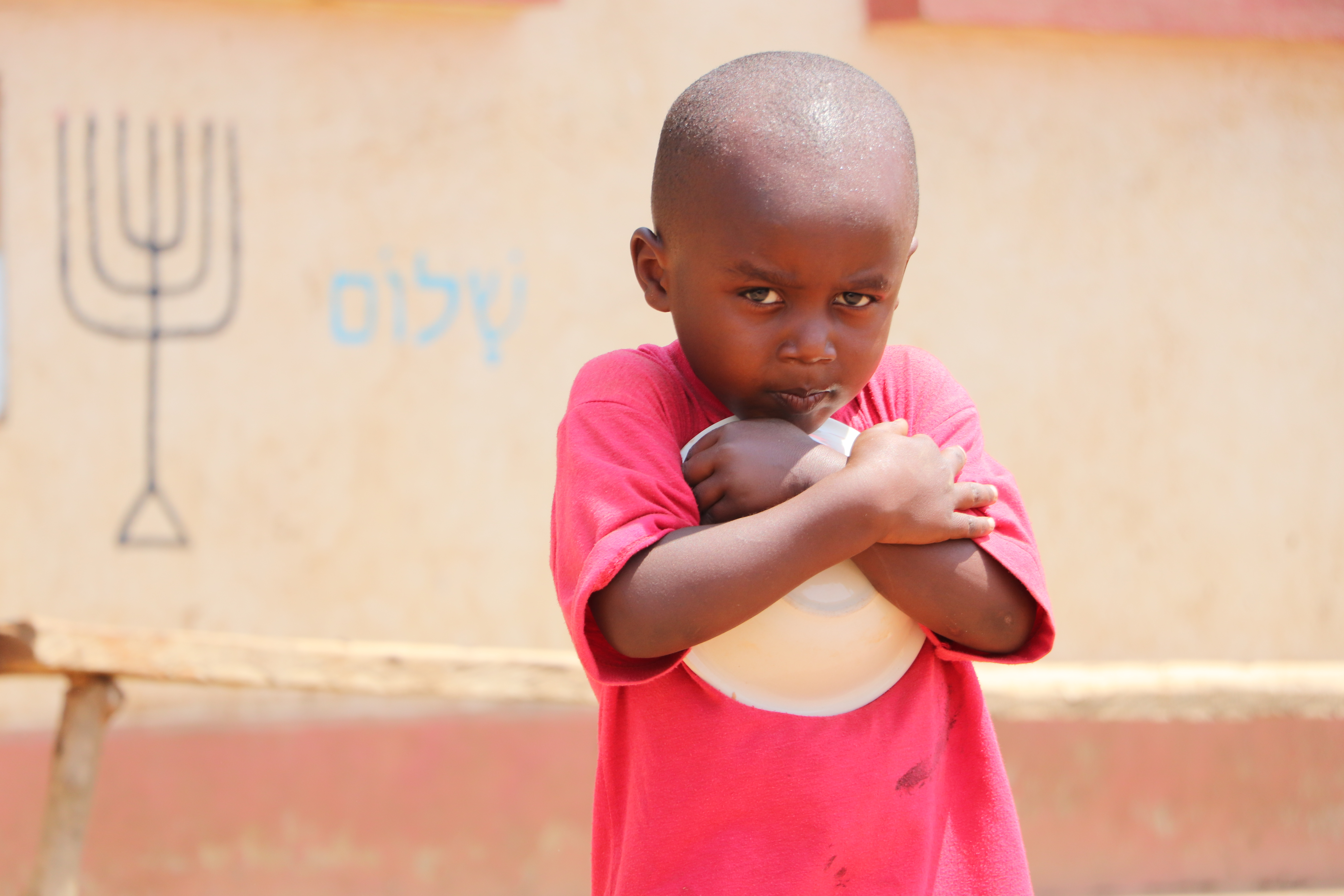 The following were my remarks for our congregation’s Shabbat celebration of the 100th anniversary of our Boy Scout Troup 14. (Thanks to Cantor Jack Chomsky and Rabbi Jeffrey A. Summit, Ph.D. for their background info/wording)
For a few minutes, I want to take us back 100 years to a far different place than Jacksonville Florida. It’s 1919. Religious conversion is a key component to the British colonization of Africa. Tribal chief and military leader Semei Kakungulu, who had founded the town of Mbale, Uganda, was evangelized by Anglican Church missionaries. He hoped to use his connections with the British so that he might be recognized as ruler of Uganda’s eastern region. When the British didn’t give Kakungulu what he desired, he returned to Mbale and rejected the Anglican church. He joined a group known as the Malakites who took a literal reading of the bible- Saturday was the Sabbath, they would eat no pork; eventually breaking from the group to follow an even stricter reading of the text, all while studying the Luganda translation of the Hebrew bible. In 1919, he and his followers embraced circumcision. Kakungulu created a Sabbath liturgy that included reading selections from the Hebrew bible in Luganda, chanting selections from the Song of Moses, the penultimate section of the Hebrew bible. The community, known as the Abayudaya, persisted for some years with little contact with the outside Jewish world, at first not even aware that there WAS such a world.
In time, though, they crossed paths with a few Jews who were living or working in Africa and shifted their practice to resemble the outside world. A quantum leap in their connection to the Jewish world came in the 1960’s when an Israeli graduate student named Arye Oded learned about the community and established connections with it. He later became Israeli ambassador to a number of countries in Africa, including Uganda. Oded died two weeks ago at age 89, a Professor Emeritus at the Hebrew University.
When Idi Amin outlawed other religions during the 1970s, the Abayudaya community suffered as most of its population converted out of Judaism. Beginning in the 1980s, the community revitalized under the leadership of one family in particular, brothers JJ, Aaron, Seth and Gershom, who infused new music and energy into the community. There were more connections with the rest of the Jewish world, especially through the Masorti (Conservative) and Progressive (Reform) Movements, and the international Jewish organizations Kulanu and B’chol Lashon.
In recent years the community has been led by one of those brothers, now RABBI Gershom Sizomu, who trained for the rabbinate at Ziegler School of Rabbinic Studies. Rabbi Sizomu not only leads his congregation and the organized Jewish community of Uganda, he is also a member of the Ugandan Parliament, serving as a minister in the opposition party. Rabbi Gershom, a true mensch, gives much of his state salary to provide for his community. His brother Aaron Kintu Moses runs the Hadassah Primary School. Another brother JJ is leader of another community in the village of Putti. Brother Seth Jonadab runs the Semei Kokungulu High School and played in most of the services we attended.
Recently, the community has finally been recognized by the Jewish Agency for Israel, although there are those in Israel that questioned their Jewish identity because of their community’s conversion through Masorti/Conservative rabbis. And while most of the community do not speak about making aliyah, there are a number of individuals who have fought to obtain study VISAs in Israel.
Our Cantors Assembly mission began as two part solidarity and one part musicological: to record not only the music of the community, but to hear their story through personal interviews and recordings. We recorded these interviews under the framework of the Haggadah- a retelling of the journey from the slavery of Idi Amin to the modern freedoms they have to express their Judaism. This was a listening tour- a strange endeavour for cantors, similar to a silent retreat for rabbis. I also felt the need to follow what the series Star Trek referred to as the “prime directive”- to not disturb people in their element- to just listen and observe. Knowing full well that Rabbi Gershom and his family lived in the States for a few years, that visitors have brought in their own melodies, we had some idea that the music was already a hybrid of what came before western influence and the melodies that we hear each and every Shabbat here in the U.S.
As we prepared to board our 15 hr flight to Nairobi, each of us was interviewed about why we chose to come along for this journey. I spoke about this notion of about a miracle- how I was looking to figure out how this tiny group in the most remote of places is not just surviving but thriving. How 2500 Jews make a name for themselves amongst 40 million Ugandans. We think of ourselves as a minority at 2.5 percent in this country. Imagine being .00006% of the population.
Our time was spent meeting with many of the community leaders. I spent a few hours each day doing in depth interviews learning about the collective experience being Jewish in Uganda. We talked to the generation who had revitalized the community in the 1980s and the younger leaders who have a great thirst for knowledge. Uganda, and this community, are young. Very young. 77% of Uganda falls into the Generation Z range. Walking into services, the average age of the congregation may have hovered in the low 20s. For while the community is 100 years old, they have seen a rebirth in the last 10-15 years.
We found the answer to this miracle. We found it in the beaming joy of our hosts who wore large, beautiful, colorful kippot that community members had hand knitted.
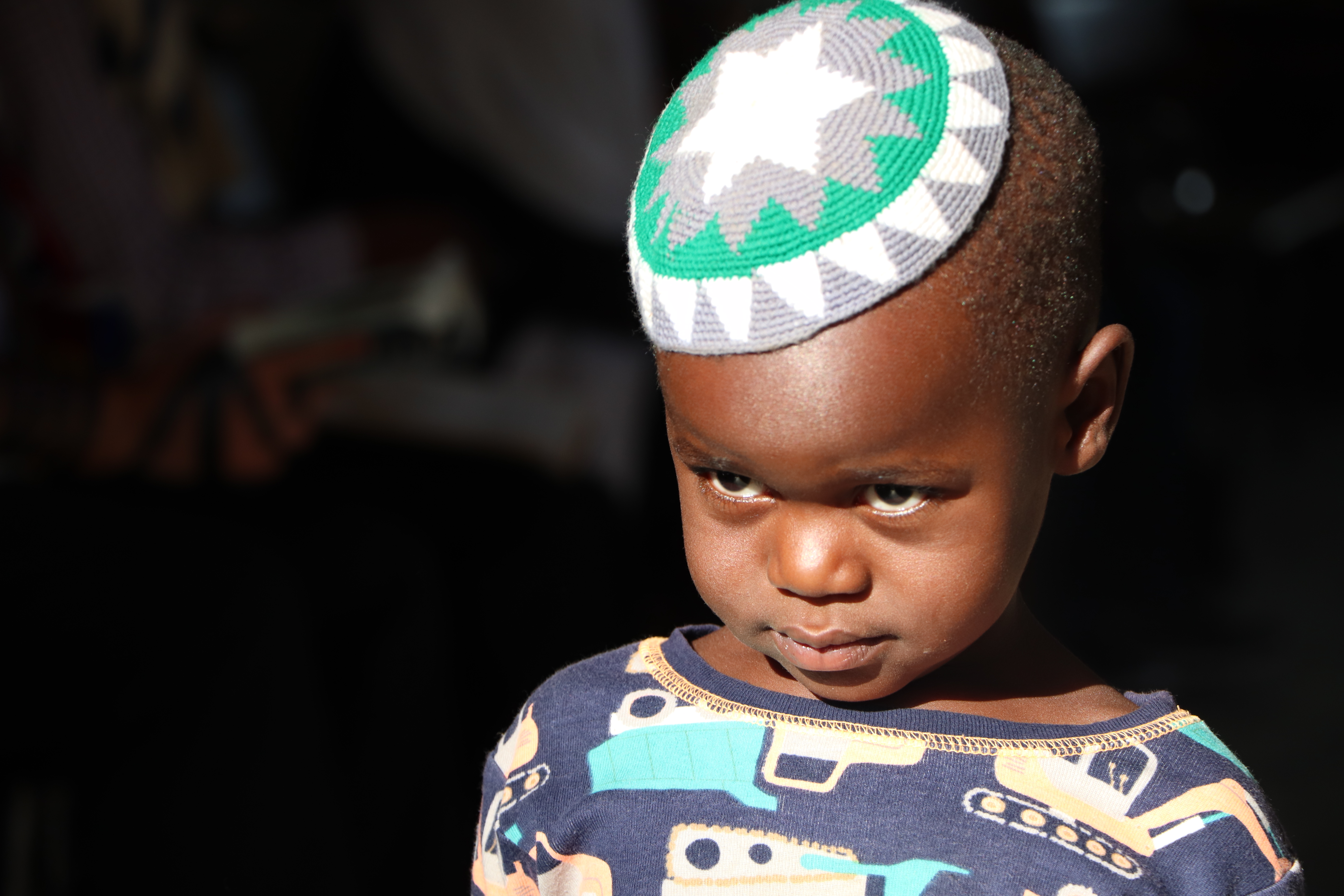
While we were warned not to wear our kippot in public, we were greeted in Entebbe by our guide and head driver who wore their kippot with pride. And so we, in turn, felt proud to wear our kippot throughout our trip. As a heads up, I brought back a number of kippot that will soon be on sale in the Center gift shop, proceeds going to support the Abayudaya.
We found the miracle in the depth of the questions and answers of the Abayudayan youth. We interviewed a few 20somethings who are starting a community in the capital of Kampala. We asked each of them what questions they had about Judaism. One of 20somethings thought for a brief second and asked, “Why isn’t Tisha B’av, a day in which we mourn the loss of our temple, a more prominent holiday in the Jewish world?” I could ask any 20something from our community what questions they have about Judaism, and I’m fairly certain Tisha B’av would not crack the top 100 questions.
Life is hard for the Jews of Uganda. The only area schools in the early 20th century were started by Catholics and Protestants. They required conversion for entry. This meant that those who chose to keep their Judaism public, that entire community, lagged some 20 years behind the rest of their neighbors. Today, some 90% of the population is unemployed, making ends meet by selling crafts or produce. A teenager attending one of our morning learning sessions was asked why he wasn’t in a rush to get to school- he mentioned that his family couldn’t afford the fees.
Many do not have access to drinkable water, often making long treks to the local unclean water tap. You’re lucky if you have two meals a day. Most do not have access to electricity. Yet we saw an example of the extraordinary work of the Tobin Health clinic when we met a youth who attended Kabbalat Shabbat who had just received an IV for Malaria treatment who was up and around after just 24 hours. We visited with amazing NGOs connected to the United States and Israel who are slowly bringing access to clean water and electricity to communities one by one- and you can see the palpable difference it makes- you see it in the schools- in improved test scores, in enabling girls to continue schooling because they have private and clean bathrooms.
We found the miracle in the faith of the community. It didn’t matter if some of the synagogues lacked electricity. In one case, in the small village of Nalubembe, the synagogue, a brick structure with no roof, doesn’t survive from season to season. We asked what would it cost to build a synagogue- a brick building with a roof, no electricity: the equivalent of $2000. $2000 for a prayer space. In another synagogue in the village of Namatubma, as they await approval for a new clean water source, we asked the community’s spiritual leader, Shadrach, what his community needed most. Shadrach, for context, is studying to be a rabbi under the ALEPH program. He came to his role as leader when the elder of the community stood up one day and proclaimed that he was retiring- he looked to find a new leader who fit 3 criteria- someone who was engaged or married, over a certain age, and had a college degree. Shadrach was the only person in the community who checked all the boxes. So we asked him this question, what do they need?…and he replied “A Torah.” A community that does not have access to clean water, wants a Torah. Torah is water.
We found the miracle in the joy of a group of singers in the village of Nasenyi, home of the chairman of the Abayudaya. We were greeted by such beautiful music and dancing wherever we went, but the face of one of these singers stayed with me (show picture). The featured singer of their “choir” began losing her voice as the group sang Psalm after Psalm in their native Luganda, but as I filmed and photographed, I’ve never seen a more passionate singer in my life- it was a full body experience, and her full smile brought all of us to tears.
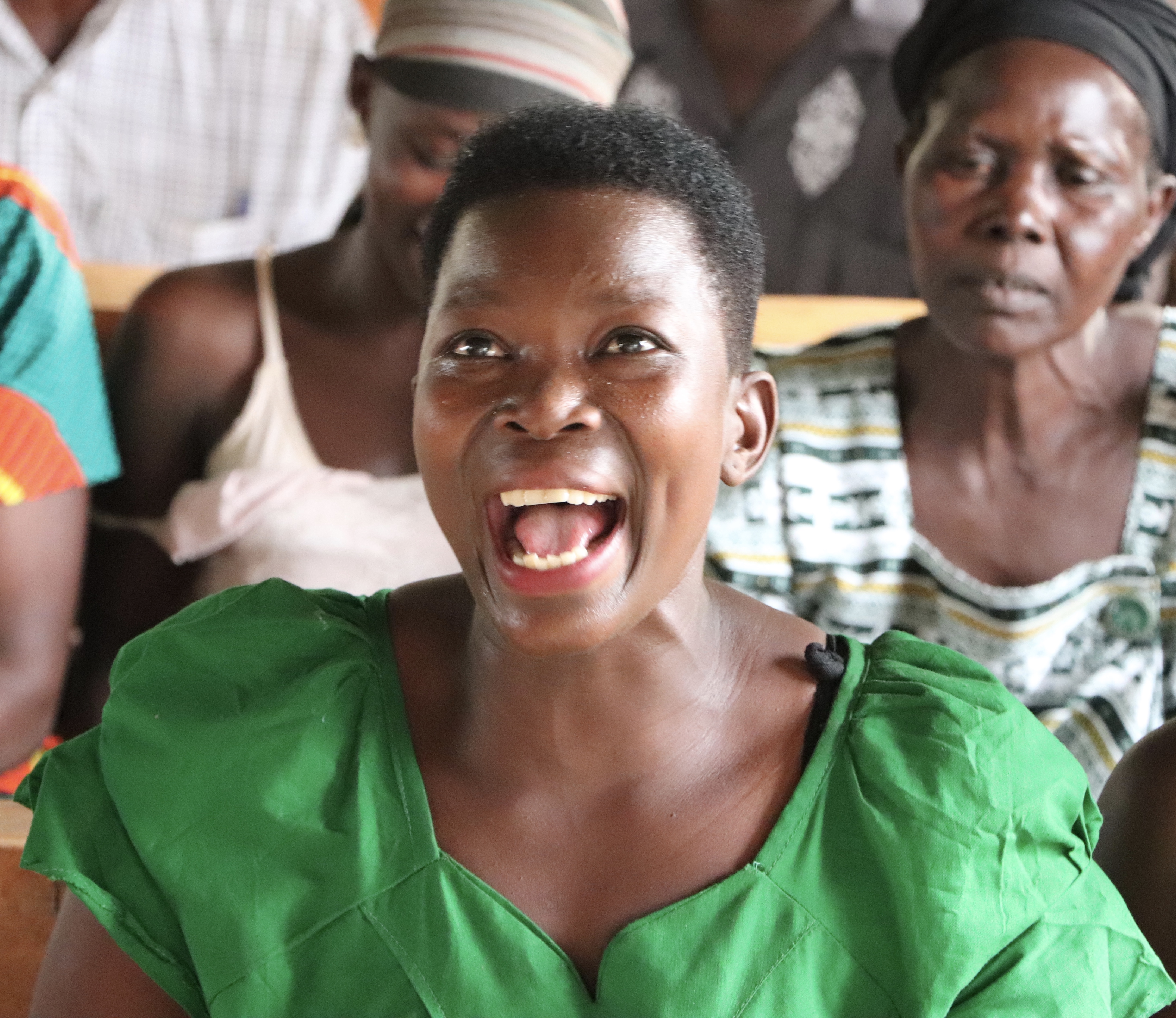
Most of our prayer experiences took place in the main village of Nabogoye Hill. Services were often co-led by Cantors and the local community. We heard familiar melodies, new melodies, and new languages. We listened to an entire congregation sing. Sing well. Sing in hebrew, in Luganda. We saw cultural differences, as most of the torah and many of the psalms were chanted in Luganda, shoes were removed outside the synagogue,
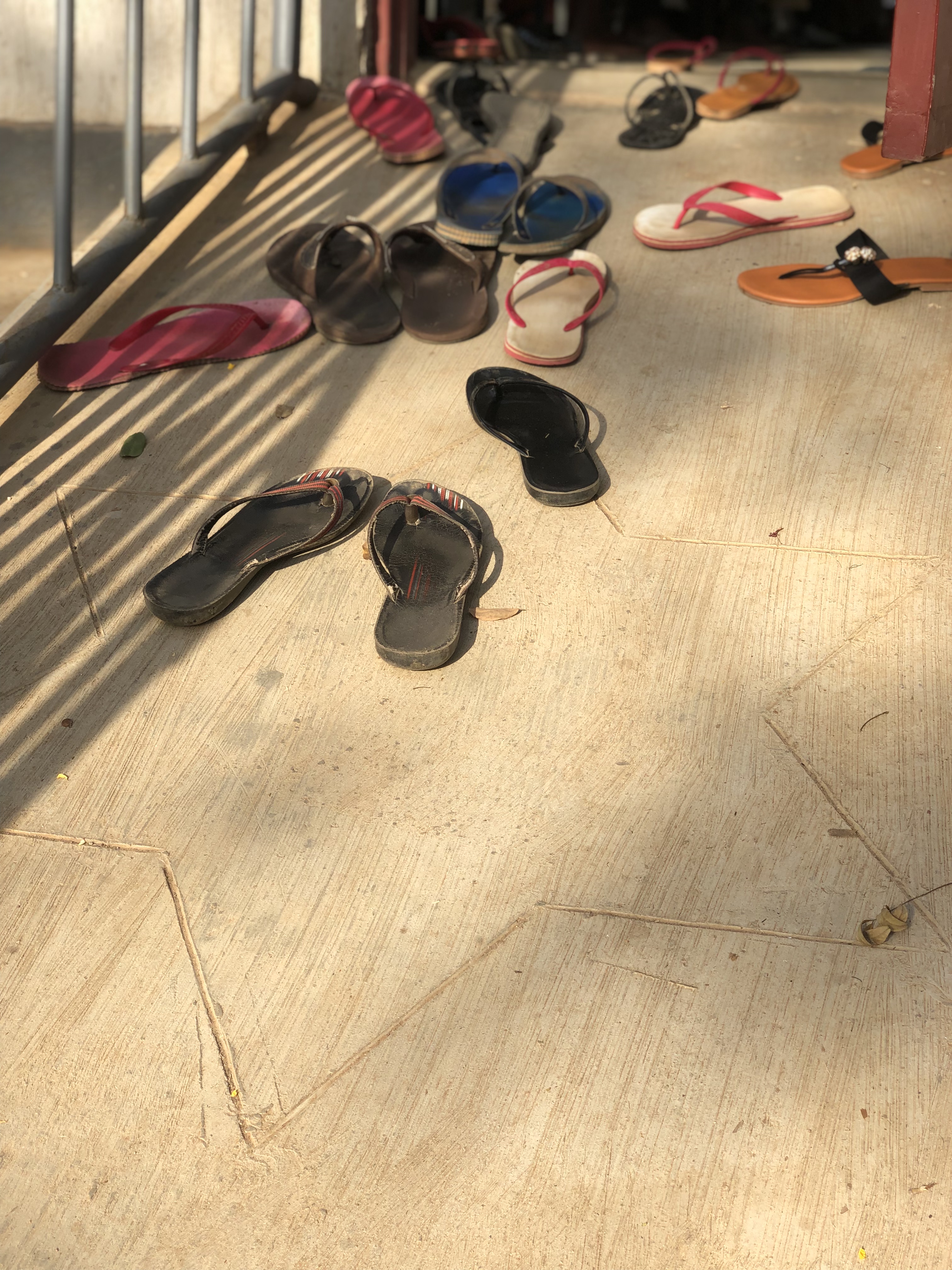
and women often chose to sit separately- however, this was a cultural difference, not a religious one, as each community is extremely egalitarian.
We found the miracle come full circle during a special ceremony on Super Bowl Sunday. Following a World Wide Wrap Shaharit service, our delegation assembled by the village guest house. One of our colleagues,Jerry Berkowitz, a cantor serving a congregation in Manitowic, Wisconsin, had procured one of his congregation’s five torahs to be donated as a gift to future generations of Abayudaya.
Jerry stood under a chuppah as we processed towards the synagogue singing and dancing with the Torah. From the other direction, members of the community processed towards our group singing their own songs of welcome and celebration. As two separate colleagues said, “it was right out of the musical Music Man.” A seemingly random reference, I’ll be performing as Salesman #5 in the Martin J Gottlieb Day School production of Music Man Jr during the first weekend of April.
As we came together, our voices joined in one song as we took the torah into the synagogue to be read. Rabbi Gershom chanted the penultimate chapter of the book of Devarim in Hebrew, the same chapter that Semei Kokungulu had memorized in his native Luganda (this had been memorized by the early Abayudaya as a song since the Torah says we are supposed to memorize it. Their minhag had been to recite it in Luganda by memory). The cantors shared an aliyah. Our hosts shared aliyot. It was a morning filled with expressions of pride, depth, faith, joy and passion.
And, as you might expect from a cantorial mission, they brought us the miracle of music. In between each aliyah, the Abayudayan congregations welcome the person taking the aliyah with a Halleluyah song. Not only does it celebrate the individual having an aliyah, it reminds those in the pews that they are very much a part of the torah service, when often it can seem like a very frontal portion of our worship. Throughout our time in Nabogoye, our hosts prayed, prayed well. They were insightful and inspiring. I’ll be speaking more about their music next Friday night.
All the Abayudaya are searching for is what any community or really any individual ever wants from others: acceptance. It’s hard to imagine that anyone ever questioned this group’s commitment to Jewish life and practice. As we taught them about Jewish practice and song, we learned ten fold on how to bring community to life. Abayudaya is Luganda for “Jew”. We are all Abayudaya. We all have the potential to bring these attributes into our own practice of Judaism. The torah portion during our visit was Mishpatim, a section in which we read the words, Naaseh V’nishma, “we will do and we will listen.” This is the story of the Abayudaya. They created unbelievable traditions and are ready to listen, thirsting for a greater understanding of Judaism. And, in turn, by listening and learning from this remarkable community, I hope that I and we can do Judaism as well as they do.
The Old Boys Club: Mens’ Club Shabbat and Shabbat Shira 2018
It was my first week on the job. As the list of yartzeits were called off, I did a double take. Hyman Schulman? THE Hyman Schulman? Well in fact it wasn’t THE Hyman Shulman, spelled S H U L M A N.
I glanced through the Center yearbook and did a double take again. Charles Moskovitz? THE Charles Moskowitz is a member here? No, not THE charles moskowitz, who spelled his name with a W” and who was born in the 1880s.
You see, I was looking for a connection- to family; to my brothers. Long before I worked alongside my sister-in law, I worked alongside two of my brothers, Brother Jesse Olitzky and Brother Howard Tilman. Brother Charles Moskowitz, along with Hyman Shulman and the rest of the “Immortal 11” founded Alpha Epsilon Pi Fraternity 115 years ago on the campus of New York University.
AEPI started as a fraternity based in Jewish values, as many of its early members were barred from joining other fraternal orders. Today, alumni total over 100,000. As a sophomore and junior, I held the position of Master, or President of the Alpha chapter at NYU. Some of my closest friends from college stem from this experience, and while we all attended different universities, the four clergy who share this brotherhood share both pride and fond memories of being a lifelong brother of AEPI. But the fraternity, as you may imagine, was not always all about the comroderary, fellowship, and call to improve our community. I entered as the second pledge class following a “reformation” of the chapter following a probationary period. National would God forbid cut ties all-together with its Alpha chapter. Our pledge period had what I’d call “hazing light” under tight scrutiny. Within a few years of graduating, the chapter had disbanded once again due to a number of issues and restarted once again. For while the vision of the Immortal 11 may have focused on togetherness and brotherhood, the modern chapters have been dealing with a pressing issue since the age of Animal house- “boys will be boys.” Even in our own pledge class, I remember the sense of acceptance because we thought to ourselves “well, compared to what we could have done…”
I’ve seen the acceptance of this world of the “old boys club” in other places. It’s taken over a decade to slowly change the culture of my own Cantors Assembly, where conventions used to be marred by inappropriate language or behavior. The back room, where colleagues share in a cigar, a drink, and conduct unfit for a person of the cloth, exists for many organizations. There are typically two reactions to this- You can be shocked, or not surprised all.
I say this in recognition of the sentencing this week of Dr. Larry Nassar. As Washington Post columnist Sally Jenkins writes:
“It’s only the worst sex abuse scandal in the history of sports, and maybe in the history of this country. USA Gymnastics not only allowed serial pedophile Larry Nassar unsupervised access to the scores of girls in its charge over 30 years, it required them to submit to him and his utterly unjustifiable (vaginal) examinations. There was no saying, ‘I don’t like this doctor, I want my own.’ The organizations systematically deprived them of any right to say no, to ask for alternate treatment. It makes Hollywood rapes look principled.”
Charles Pierce of Sports Illustrated contends:
Burn it all down. That is the calm and reasoned conclusion to which I have come as one horror story after another unspooled in the courtroom. Nobody employed in the upper echelons at USA Gymnastics, or at the United States Olympic Committee, or at Michigan State University should still have a job. If accessorial or conspiracy charges plausibly can be lodged against those people, they should be prosecuted to the full extent of the law. Those people should come out of civil courts wearing barrels. Their descendants should be answering motions in the 22nd Century.”
These fraternal orders have abused a power that should’ve been used for good. The relationships that could have improved this world are used to exploit not just those on the margins, but those taking center stage. In the Jewish world we’ve seen this abuse not just from the abusers themselves, but the communal space that allowed the inappropriate acts to continue. I’m not talking about Hollywood. I’m talking about the world of Rabbi Shlomo Carlebach, the world that knew of his misconduct with underage girls and yet allowed it to continue under the guise of “its part of the times.” The same excuse would be made for those in leadership positions in our national youth movements in the 80s and 90s. “It was part of the times.” The dangerous excuses that have dangerous consequences.
So where is the model for leadership amidst the blindness and complacency?
Over the past few years, we have looked at Shirat Hayam through the scope of musi and of theatre, but the Song of the Sea, and song in general, has a power to strengthen us as a call to action. Through song, we have the strength to push on, to make our case known.
The Shorashim (roots) of song illustrate this power. Nigun- Nun, Gimel Nun translates to melody, but it is also the word for shield, or defense (Magein).
Rena means joyous song, but it is also a shout for joy, a wake up call. Zemer means “to prune.” Moses’ famous line “Ozi V’zimrat Ya” can be translated as either “God is my strength and song,” OR “God is my strength and my cutting force.’” Song is a cutting, loud and defiant call as our defense against the silence and dismissive language.
We can’t understand the magnitude of the moment without being witness to what happened in Egypt. So where were we before this jubilant song?
The 18th century Rabbi Moshe Chaim Luzzatto (1707 -1746) writes
“This is the advice of the wicked Pharaoh, who said: “Let heavier work be laud upon the men and let them keep it and not pay attention to false words” (Exodus 5:9). He intended not only to leave them no spirit whatsoever, so that they might not think or plan against him, but he attempted to deny them any opportunity for reflection through the constant and incessant burden of labor.”
In Egypt, we were denied the option of living without fear, of having the space to reflect. Freedom, at the other end of the sea, is the ability to sing our song, to shout our words, to reflect and praise. THIS is the message. To remember the exodus from egypt, the journey. The miracle that we could finally shout from the mountaintops in praise of being in that moment following the parting of the sea, when Pharaoh and all that he represented was behind us. This is the reminder for this shabbat and every shabbat in fact, zecher litziyat mitzraim, to appreciate what we have.
But our Shabbat is not just for the appreciation of our ability to relax and contemplate the world. In remembering the journey out of egypt, we have a constant reminder that we too must shout as witness to what is right in the world, and what is wrong; to find the enslavements of those around us and treat them as our own. No more dismissals.
This song, this wake up call, the putting of Pharaoh and his Egyptian fraternity on notice, was orchestrated by a team of leaders.
The Prophet Micah 6:4 states,
“ In fact, I brought you up from the land of Egypt, I redeemed you from the house of bondage, And I sent before you Moses, Aaron, and Miriam.”
The three siblings are intertwined, but Moses and Aaron share a unique brotherhood given the political power both would acquire. Moses’ and Aaron’s uncomplicated reunion signals a vastly different relationship than the brothers of the book of Genesis. There is no sadness for what could have been; no long embrace. Rather, they are constant communicators, their relationship harmonious.
As for Miriam,
Exodus 15:20-21 states,
(20) And Miriam the prophetess, the sister of Aaron, took a timbrel in her hand; and all the women went out after her with timbrels and with dances. (21) And Miriam sang unto them: Sing ye to the LORD, for He is highly exalted: The horse and his rider hath He thrown into the sea.
Her line שִׁ֤ירוּ לַֽה’ כִּֽי־גָאֹ֣ה גָּאָ֔ה ס֥וּס וְרֹכְב֖וֹ רָמָ֥ה בַיָּֽם׃ parallels the earlier verse אָשִׁ֤ירָה לַֽה’ כִּֽי־גָאֹ֣ה גָּאָ֔ה ס֥וּס וְרֹכְב֖וֹ רָמָ֥ה בַיָּֽם׃, where I sing to God about the handiwork God has done to place horse and rider in the sea. Now, through Miriam’s words, we all sing to God for the horse and his rider are in the sea. This isn’t the celebration of the Egpytian deaths. Think about that image- horse and rider; elevated, in power. Hone in on that image- in which the Egyptians thought that we were lower, treated us as lower beings.
With a timbrel in her hand, Miriam elevated all of us, as she stood and bore witness that moment. With a timbrel in her hand, the message was loud, portable and palpable. We are not lower, we will call you out for what you did. Even from a young age, Miriam beared witness to the world around her. Exodus 2:4: And his sister stood from a distance to know what would happen to him.
In the Talmud, Sota 11, we learn that Miriam and another character from our story, Puah, are one and the same. “Puah” refers to “cooing” and rocking a baby, perhaps a reference to her nuturing of young Israelites. But Shemot Rabah, the midrash of our Exodus story, cites another meaning of Puah as she was insolent (hofi’ah panim) toward Pharaoh and looked down her nose at him. This was Miriam standing up to Pharaoh by saying “no.” She looked down her nose at him long before she did the same at the horse and rider at the Sea of Reeds. She was a whistleblower protecting the most vulnerable Israelites, its children.
Through this narrative, we end up with a positive model for leadership fueled by brotherhood of all things. In Moses and Aaron we learn that in a society of questionable brotherhoods, groups of men can build healthy relationships, turning the old boys clubs on their head.
Most importantly, we end up with a prime example of being elevated by the women around us. Miriam stands up, calls out what is wrong, and the community and the rest of the leadership acknowledge the sacred words she proclaims as Miriam Hanivia, Miriam the prophet.
So let us be like our male leaders, Moses and Aaron, like the organization we honor this morning, our Men’s club, that uses their relationships to build bridges while also building sukkot, who brings men of all ages together to enhance their own lives as well as that of their own families; who on the national level teaches and engages our men in a series of workshops entitled “Hearing men’s voices”; a group that prepares its members to help facilitiate shiva minyanim during a family’s most trying hours; a group that is open to being real and raw, spiritual and religious, and above all else, the farthest from the old boys club.
Let us be like our timbral bearing leader, Miriam the prophet, who called a spade a spade and shouted that change was upon us. And when it isn’t our turn to be like her, allow those prophets amongst us to share their stories so that we ourselves will be elevated. May their stories enable us all to find holiness in the communities we are a part of, to repair and reclaim that which is broken, to not only act like but BE the brothers and sisters that we can and should be.
A lesson of Sports and Torah: Making the ordinary extraordinary
We have a lot of sports metaphors in this week’s parsha. First and foremost we have the description of the Red Heifer, which happens to have been my high school mascot (going 20 years strong). We talk about animal sacrifice- one key animal is the GOAT, or for sports enthusiasts, the “Greatest of of All Time”; Moses “hitting the rock” sounds like either a curling play or something that happened in the WWE. Maybe the greatest sports pun of our torah portion is the story of those who have touched a dead body, aka those who have been “near death.” The torah states that these individuals are anointed with fresh water from a vessel” – Mayim chaim el kelly. This could be in reference to the “near death” experience the Buffalo Bills had 24 years ago, when second-string signal caller Frank Reich, subbing for an injured Jim Kelly, led The “Greatest Comeback in NFL History”, as the Buffalo Bills overcame a 32-point deficit, near death, to defeat the Houston Oilers in their 1993 playoff matchup.
So sports, therefore, become a natural connector to the stories of the bible. For some, sports have a more accessible set of liturgy- the rules of the games are fairly straightforward (and we know why they exist), We are mesmerized by the individual feats. We kvell in success and are filled with tzuris in times of great angst. Above all, we are moved by the storylines that trascend the Xs and Os of a game.
I grew up hearing “Havlicek stealing the ball“, watching old footage of Flutie’s Hail Mary and Carlton Fisk willing the ball fair; seeing Bobby Ohr fly through the air. THat’s Boston for you. These were photographs on a wall that told a story of our people. But I didn’t live through them. I more vividly remember Kordell Stewart to Michael Westbrook’s Hail Mary connection propelling Colorado over Michigan, Joe Carter’s series clinching home run for the Toronto Blue Jays, Bryce Drew’s miracle shot versus Ole Miss, and Brett Hull’s controversial series clincher for the Dallas Stars. Removed from earlier great moments, The winning guarantee was not Joe Namath’s Super Bowl III decree but Mark Messier’s Stanley Cup finals pledge.
Each of these moments de-emphasize the journey, focusing on those final few seconds. How we perform in the clutch final two minutes is somehow more heroic than how we perform for the first 46. A horrific display of athletic talent can be redeemed through one magical moment that we lift up higher than the sum of the work. And vice versa, a glorious career may be clouded by not having won the big game.
This past Super Bowl, a tale of two halves, is a perfect example. A few weeks ago, my family visited Disneyworld’s Hollywood Studios. While participating in the Frozen Sing-A-Long, one of the actors made an Atlanta Falcon’s joke, referencing “28-3”, the lead the Falcons had over the New England Patriots. For Patriots fans, the 28-3 stat line references the largest comeback in Super Bowl history, not how poorly they played for most of the game. For Falcons fans, it reflects a failure to close out the game rather than how they outperformed the Patriots in every way for the earlier parts of the game. How we do in the big moment seems to matter so much more.
Moses’ big moment comes in this torah portion. He’s almost at the finish line. After hearing the complaints of the Israelite people for yet another time, Moses proclaims
“Listen, you rebels, shall we get water for you out of this rock?” And Moses raised his hand and struck the rock twice with his rod. Out came copious water, and the community and their beasts drank. (NUmbers 20:10-11)
The story focuses on disobeying God’s command to speak to the rock. But we’ve been here before. In Exodus 17, the people complain, and God instructs Moses to hit the rock; out came the water. Moses ignored God’s new decree because he knew what worked the first time. He took the shortcut. But something else changed between the two narratives. Moses rebukes the people- “Listen you rebels, shall we get water for you out of this rock?” reminds me of Russell Crowe’s line from the movie Gladiator:” Are you not entertained?”
Rashi and Ramban debate the sin of Moses. One says it was the act of striking the rock, the other saying it was this line, “Listen you rebels” Yet they are intertwined. The Kedushat Levi contends that it is a total lack of patience with the people that led Moses to sell them sort, rather than uplifting the people. He insists that ordinary people can and indeed must be raised to the highest rung.
For my own sensibilities, more than the clutch playoff performance, I am often moved by the mundane sports moment that suddenly becomes extraordinary. A preliminary race, a regular season game, takes on new meaning.
As the Baseball Hall of Fame puts it:
It was July 1, 1945 (72 years ago today) – less than eight weeks after Germany’s surrender ended the European war and a little more than two months until the end of the battle in the Pacific. Hank Greenberg, who entered the Army Air Corps four years earlier in May of 1941, stepped to the plate in the bottom of the eighth inning of Game 1 of a Tigers vs. A’s doubleheader. It was his first game in the majors since his discharge two weeks prior, and Greenberg was already 0-for-3.
No one – not even the two-time American League MVP himself – knew for sure if a player could return from war and regain his previous form.
But with one swing – a blow that sailed into the left-field stands at Briggs Stadium and electrified the crowd of 47,729 fans – Greenberg answered the all the questions.
The heroes of baseball were on their way home.
An ordinary game, an ordinary moment, became extraordinary. Greenberg, not only as a baseball star, but a Jewish baseball star, returning from the atrocities of WWII to lift up an ordinary July 1 day.
Another favorite sports moment comes from Barcelona, 1992. Sprinter Derek Redmond blows out his hamstring in the semifinal heat of the 400meters. Grimacing from the pain, Redmond hobbles on one leg as he makes the turn around the track, determined to finish the race. His father jumps his way through security to the track, helping his son finish the race with arms draped around one another. It becomes a symbol of determination, of the love a father has for a son, of perseverance through adversity.
A few years ago, a number of high school and collegiate videos went viral for showcasing an opponent helping out the other side. These are the examples of greatness when you least expect it. A simple act of sportsmanship, like carrying your opponent around the base path after they’ve torn their ACL, carrying your teammate across the finish line, we remember those moments long after you remember the rest of the stat sheet. These sports moments are a manifestation of the credo to have faith in people.
The ordinary becoming the extraordinary combats our highlighting of the failures when we expect greatness. But for every Lance Armstrong or Ben Johnson, there is a Derek Redmond to lift us up. For every person who shaves points and cuts corners, we have teammates who carry their fallen friend on their backs.
We are people of the book- Am Hasefer. The book, the torah, is a collection of laws, of does and don’ts. But it is also a parable, a collection of stories. Even this week’s torah portion, Chukat, taken from the root “Khok” (meaning law), we are driven to the narrative rather than the list of instructions. And so if we are truly a people of the book, we are also bound by the stories we read, the insights gleaned. We learn from Moses not only from his great leadership, but from the times when he comes up short. We learn that Moses is punished not only for his lack of faith in God’s instruction, but more importantly, his lack of faith in his people. We glorify the greatest feats, but we must remind ourselves that the ordinary can become extraordinary through faith in another. In believing in one another, our moments on this earth become more memorable; our marks more indelible than we could have ever imagined.
BONUS:
Hazzan Holzer’s Top 10 Biblical Sports Comparisons
- Mr. October = Kohein Gadol, The high priest (High Holidays, Sukkot, Shmini Atzeret and Simchat Torah)
- Kerri Strug (she scored a perfect 10) = Minyan of a routine
- Miracle on Ice = defeating the Egyptians at the Sea of Reeds
- Kirk Gibson’s World Series home run = teaches that you can really learn all of Jewish thought and practice “on one foot”
- Tebow’s “The Promise” = Ruth’s “The Promise” to Naomi
- Buster Douglass vs. Mike Tyson = David vs. Goliath
- Broadway Joe’s Super Bowl III guarantee = God’s decree that Abraham’s decendants will be as numerous as the stars
- UCONN women’s basketball 111 game winning streak = “It rained for 40 days and 40 nights”
- Bill Buckner = the scapegoat (or the sacrificial lamb)
- Former Jaguars GM Gene Smith = one of the 10 scouts who described the land as being filled with giants while we were grasshoppers
We are all strange(rs)
Excerpts from sermon delivered June 17, 2017
Each of us is tasked to scout into the “Promised land” for all who make up our tribe. How we perceive of what we are seeing and the impactful words we use to describe these moments, shape our reality moving forward.
The scouts of Shelach Lecha were seeking out, exploring something new. They were in search of a way to access this new frontier. But they got scared. The 10 Spies weren’t lying- they reported an accurate depiction of the land, but they saw themselves as grasshoppers, the text states
“and we looked like grasshoppers to ourselves and so we must have looked to them” (Numbers 13;33)
Rabbi Menachem Mendel of Kotzk taught
‘You are certainly permitted to say that you feel like a grasshopper in your own eyes. But what right do you have to imagine how you appear to someone else? To them, you might have appeared as angels.”
Imagine you invite a friend to synagogue for the very first time. Or maybe someone visiting for a world religion class. If you had to pick one ritual experience that you might consider a “weird moment in judaism” to be their first exposure to Jewish communal practice, what would that be?
I distinctly remember a morning in high school when our interfaith encounter partners from a local catholic high school attended our chol hamoed succot service at school. Phylacteries, prayer shawls, chanting back and forth as we processed around in a circle with our lulavim and etrogim. The entire time I felt like the grasshopper, but afterwards I discovered that our visitors were fascinated by our rituals, and deeply respected our commitment to our faith. “But what right do we have to imagine how we appear to someone else? To them, we might have appeared as angels.”
In accepting his Tony for Best Actor in Musical, proud Camp Ramah alumnus Ben Platt stated the following as the music played him off stage:
“Don’t waste any time trying to be anyone but yourself, because the things that make you strange are the things that make you powerful.”
Don’t waste any time trying to be anyone but yourself, because the things that make you strange are the things that make you powerful.
We hear something might be “different” or “strange” and we interpret as dangerous or in the wrong. But what if what is different, what is challenging, what is strange, empowers us as individuals and community.
When we journey through the unknown, when we see something different, we should remind ourselves that we all connect to the world in different ways. We all have different points of access. It’s important to acknowledge that fact. We are stronger when don’t label ourselves or others. We are stronger when all have access. We are strong because, admit it, we are all a little strange. As we remind ourselves throughout our sacred texts, for we were “strangers” in the land of Egypt. Doubling down, our text this week states:
For the generations to come, whenever a stranger or anyone else living among you presents a food offering as an aroma pleasing to the Lord, they must do exactly as you do. The community is to have the same rules for you and for the stranger residing among you; this is a lasting ordinance for the generations to come. You and the stranger shall be the same before the Lord: The same laws and regulations will apply both to you and to the foreigner residing among you.’” (Numbers 15:14-16)
It is who we are. Let it strengthen each of us for generations to come.


 Hazzan Jesse Holzer