Author Archives: Hazzan Jesse Holzer

Cantors Mission to Spain Day 1
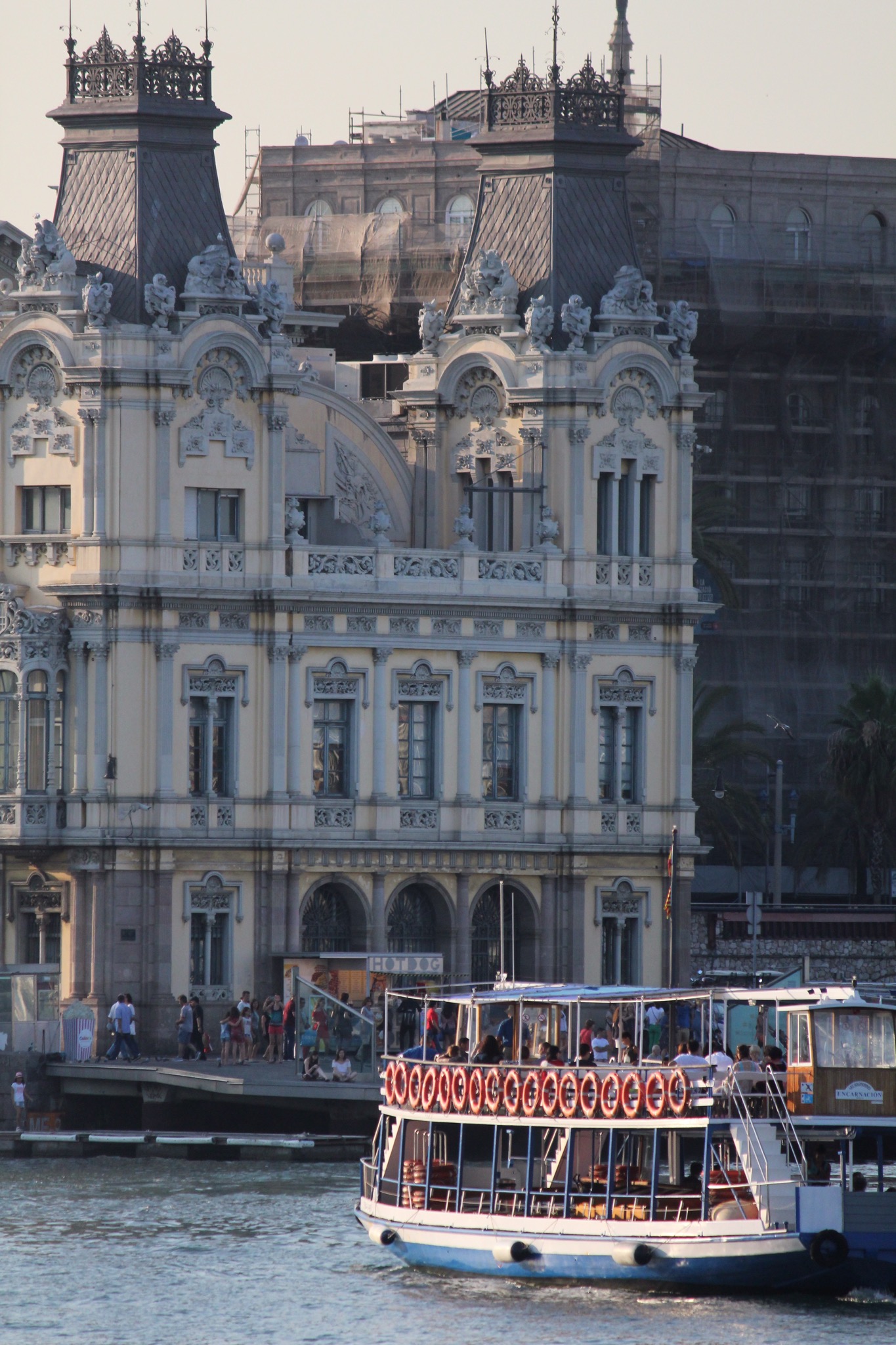
Good morning (or evening)! We’ve had a wonderful first day in Barcelona after our overnight flight from Atlanta. While we missed a stunning a tour of the Barcelona Jewish Quarter (known as El Call), we were able to catch the morning presentation by Professor Berk entitled, “The ‘Greatest’ Year in Spanish History. In 1492, Columbus sailed the ocean blue…and two other things occurred.”
As I mentioned in my initial post, I had some idea of where Professor Berk would take the lectures, and in fact his train of logic included parallels (and differences) to his analysis of the German Jewish journey from our Germany trip 4 years ago. It is fascinating to see these two stories of German Jewry and Spanish Jewry, take center stage 4 years apart (in lecture time) and hundreds of years apart in real time.
A few notes from Berk:
1492 was a great year for Spanish Catholics. With the conquest of Granada on January 1, the last stand of Muslim Spain was now over.
On March 31 (I’ve mentioned this as being the only factoid I know about my birthday other than sharing it with Al Gore) of the same year, in the Ambassador’s room at the Alhambra, the edict was signed to expel the Jews from Spain. This was the culmination of a long series of events. Berk takes us back:
711- Muslims cross the Straights of Gibraltar to take Spain. At the same time, Berk brings up the Mongol horsemen who rode their way through multiple continents. The question arises: why move? And in this case, why are the Arabs expanding (or leaving) in 711? Jihad (spreading faith by war)? Food shortage? The classical definition of Jihad wins out.
When the Arabs go on the March, 97% of Spain is conquered. This is a “relatively” good time for the Jews. This academic hyopthesis, known as La Convivencia (the coexistence) claims that during this period from the early eight century until 1492, the Muslims, Christians and Jews lived in “relative” peace.
I mentioned this in my earlier blog, but Berk reminds us of this relationship between Jew and Muslim as parallel to what we learned 4 years ago. He states “Don’t look at German-Jewish relations through the prism of the Holocaust, just like you shouldn’t look at the Muslim-Jewish relations through the prism of the present. Times for Jews were “relatively” good as Dhimmis (protected people’s)- legitimate but inferior contributors to society.
So what happens in 1492? The Church is on the March, unified, while there is disunity amongst the Arabs. This is the time of “militant orders” (it wasn’t uncommon to find militant monks).
And the Jews? As we know, in history, perception of reality is what matters. The growing mythology that began with Matthew Chapter 27 has taken form in two ways- Jews are guilty of ritual murder and host desecration so (rabbis supposedly stabbing wafers). In spite of the fact that 1/3 of the Jewish community in Spain opts to convert, there is a growing fear that Judaism will subvert Christianity from within. “Old” Christians are upset- and racist thought comes to the forefront with this notion of “purity of blood.” That was the fear of the church, but the state and the masses also had fears- the legislation that barred Jews from having certain rights was null and void when 1/3 of them converted. There’s lots more to write but that’s a good start on Berk’s lecture ….
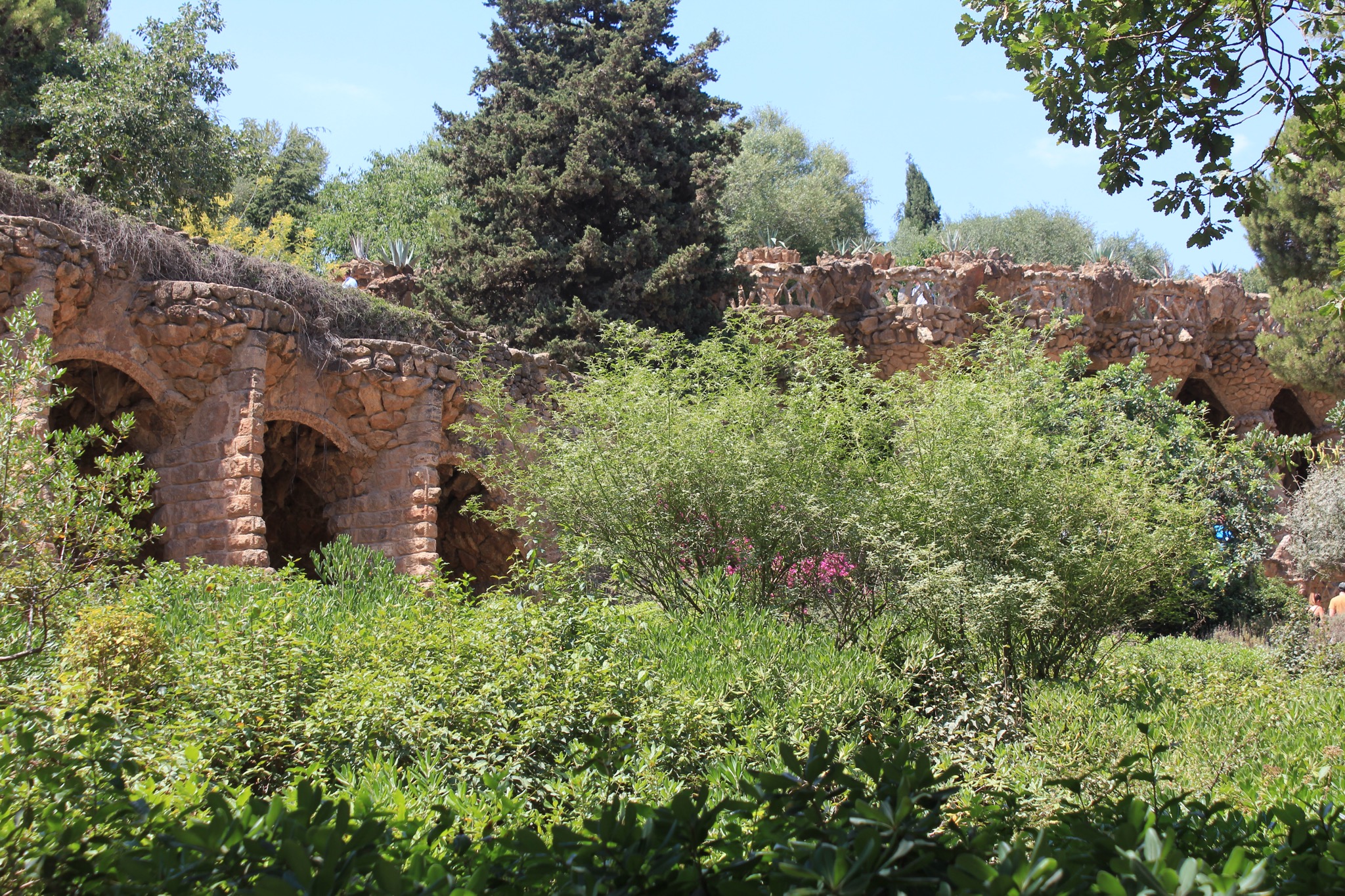
We enjoyed a delicious meal at a local all Vegetarian restaurant Teresa Carles (highly recommended!), and later we scarfed down Grilled lamp chops at Maccabi Kosher! Our group continued to Northeast Barcelona, seeing the great works of Antoni Gaudi, whose architecture defines much of the modern city. We passed La Pedrera, an undulating apartment block completed in 1912. This was Gaudi’s last civic work before dedicating 46 years of his life to the Sagrada Familia. We toured Parc Guell, a 14 year project by Gaudi in which the patron Eusebi Guell envisioned gardens, artistic villas and public spaces. This is home to famous mosaics, the most famous being a whimsical dragon. Gaudi’s perspective took into account that no two things in this universe are alike, and the variety of styles and colors incorporated into the park make for a magical experience.
We finished our touring for the day at the impactful Sagrada Familia. While the first stone was laid in 1882, the up and coming Gaudi took over as principal architect a year later and continued with the project until his untimely death in 1926. The church is filled with rich colors, mosaic tiling and gargoyles, as well as a helicoidal stone stairway. From inside and outside, and in spite of the fact that Gaudi has been deceased for the past 90 years as the church continues its construction, the project is totally Gaudi.
The project is financed solely by the millions who visit the sight (set to complete on the 100th anniversary of Gaudi’s death in 2026). No political or religious financial aid. This fact, alongside the other spaces Gaudi worked on throughout Barcelona, paint an inspiring tail- that creativity is meant for the masses- we all need colors and spaces for radical thought – from our apartments to our places of worship.
Tomorrow, Girona!



Looking forward- Mission to Spain 2016
Throughout the past few weeks, and over the next month, Europe will be focused on two events: The Brexit vote and the Euro Football Championships. Yes, the UK’s fallout will have many long term implications for Europe as well as our global economy, I do want to focus for a moment on football. Having been in Germany 4 years ago during Germany’s run to the finals while on our last Cantors Assembly Mission, I discovered that the UEFA Euro tournament, more than the Olympics, takes over every household, bar and street corner. Up until mid-day today, Spain, the two time defending champion (meaning no one else has one since 2004), lost in its Round of 16 battle, thanks to some gritty play by the Italian team. Now that Spain is out of it, the Cantors Assembly Mission can now FINALLY take center stage.
Although I don’t leave for our mission for another week, I did want to set the stage for a thought provoking trip. While writing my Germany blog, archived here, I brought up a recurring theme- the spirituality of a place. I have always believed that there was something unique to Eastern Europe; that even as things got bad, people stayed because beyond family and community (and in part because of them), there was a deep sense of spiritual home, even outside the Promised Land. Alongside plague and pogrom, Eastern Europe and Ashkenaz brought us Chazzanut and Chassidic masters. Both synagogue and the tisch uplifted us even in the darkest hour.
When looking at the Holocaust, we forget the communal life prior to those moments of devastation. And in Germany, we forget the role that Jews had played in the arts and sciences. As Professor Berk pointed out on our last mission, Germany was poised to rule the 20th century- culturally and politically…and Jews would be a part of it.
I say all of this in anticipation of our trip to Spain, a cultural center for the Jews prior to their expulsion in 1492. If our communal memory needs jogging to appreciate the gifts of Eastern European jewry that were lost only a century ago, we certainly need some extra jogging of our memory to recognize the contributions of Sepharad hundreds of years ago.
Whenever I have the joy of teaching Jewish history from 200CE- 1850 in Foundations of Judaism class, I try to focus on key dates, key individuals, and key takeaways. When teaching about the Jews of Spain, I reiterate every year that Jewish culture thrived under Islamic rule (and that we suffered under Christian rule), making a point to say that our modern sensibilities to the other faiths are clearly not passed down from aeons ago. I’m hoping that my simplifications will be tested as we learn about the history of Jews in Spain.
As an example:
Reading through old primary and secondary source materials from my undergraduate years at NYU, I stumbled on a collection of charters highlighted in Bob Chazan’s (chair of the department at NYU) book Church, State and Jew in the Middle Ages. Among the charters is one from King James I of Aragon, dated 1239. The introduction to the text states,
During the Thirteenth century, the Christian drive in Spain proceeded farther southward, bring new Jewish communities into the orbit of Christendom. After the conquest of Valencia, a charter was granted to the Jews of the area, extending to them physical protection and the legal status held by the Jews of Saragossa. A number of specific issues are singled out for special consideration. Jewish courts are firmly supported; the old principle of mixed testimony is reaffirmed; Jewish oaths are to be taken on the TORAH; cases are to be tried in the defendant’s court. Particularly interesting is the stipulation that Jews must not be held under arrest or forced to appear in court on their Sabbath.
It’s important to recognize that our modern understanding of anti-semitism, of other peoples, did not exist even a generation ago. The regulations outlined above seem “accepting” given the context of space and time (much more accepting that the edicts of the Visigoth king Recceswinth, who outlawed Kashrut, weddings, circumcisions, and the celebration of Passover back in 654). With that caveat, I’m hoping to learn a tremendous amount from our two guides. Professors Stephen Berk and Eliezer Papo. I’ve also been reading up on the earliest settling of Spain thanks to this online gem (with maps and even biblical references to Spain).
See you next week in Barcelona!
Our city, Our Jacksonville
The following ran as the Lead letter to the Florida Times Union. Tuesday, February 23, 2016.
A word of explanation (since the letter had to be trimmed to 350 words):
In supporting the expansion of our HRO, it goes without saying that I support the LGBTQ community. One need only to speak with members of the LGBTQ community who have been marginalized or discriminated against to see that this is a real issue. Police reports and court cases only tell part of a much grimmer tale. The goal of writing this letter is to create a conversation about moving beyond sustainability and about getting Jacksonville to thrive. It is about the symbolism of exclusion in an area of the country shrouded in racial and economic divide. If we want a “bold” city, we need bold and bright. We need them to want to move here, and return here. I welcome your thoughts!
Expanding Human Rights Ordinance viewed as key to city’s future
Last week, I ran back from a city council meeting and rally to find the welcomed site of my forward thinking congregation, the Jacksonville Jewish Center, collaborating and visioning with lay-leader and senior staff during our monthly board meeting. During this process of strategic planning, the congregation’s leadership is undergoing a conversation on what our synagogue will look like in 5, 10 and 20 years.Will newly minted plaques honoring bold leadership be filled or left empty? Will congregants find meaning in our worship services? Will people even fill the pews?
Throughout this exercise, I kept thinking to myself, “Will Jacksonville itself be a place that enables our congregation to thrive (and not just survive)?” Will movers and shakers, innovators and future collegians, want to come to a backwards Jacksonville when they can choose a forward thinking Charlotte or Nashville? Will housing, businesses, and restaurants aimed to revitalize our neighborhoods, exist in in a community that vilifies citizens for wanting the basic human necessities of food, shelter and self-worth? Would our Jacksonville born and raised want to stay in such an environment. The answer is NO.
The truth of the matter is that my place of employment, my house of worship, a house established over 100 years ago, would not be the thriving congregation I hope it to be in 20 years, if the Human Rights Ordinance is NOT expanded to include all of the citizens of Jacksonville. It is a human dignity issue. It is symbolic of who we are, who we want to be, and how we want to be viewed by the world. I am disgusted when fellow clergy use pulpit power to teach intolerance and spread hate of fellow human beings. Read the Human Rights Ordinance. Study its exemptions. Read the bible. Study all of its complexities.
March 7 will mark the 44th anniversary of East Lansing, MI passing the first non-discrimination ordinance to protect sexual orientation. Forty Four years. Over 200 cities have protections for all. Let us not be left behind for generations to come. I hope my children can grow up with a sense of pride for our city. I hope they will love living here BECAUSE it is Jacksonville, not in spite of it.
Sacred Conversations
Sunrise in Charleston, 6:13AM
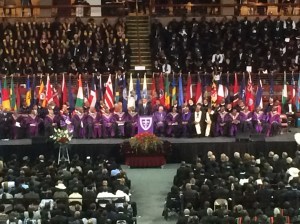
Hope pierces through the darkness. I arrived in historic downtown Charleston a half hour earlier, thinking I’d have time to catch the sunrise along the colorful Rainbow Row. Little did I know we’d create rainbows of our own later in the day. By the time I arrived, hundreds had assembled, from as early as 4:00AM, to join together as a community mourned its Reverend, Clementa Pinckney. Word had spread that only a thousand or so members of the general public would be allowed in to TD Arena (capacity of 5,400). Mother Emanuel AME congregants, AME clergy from around the county, dignitaries on the state and national level, would fill the remaining seats. I quickly found a spot in line to begin what was to be a five hour wait to enter the arena.
Who shows up before the crack of dawn? These weren’t people who wanted to catch a glimpse of President Obama, or the Reverends Al Sharpton or Jesse Jackson. The people who assembled came to mourn. They came dressed to go to church- to ask God for guidance, to ask their spiritual leaders for answers.
My day-trip to Charleston was as spontaneous as it gets for me. I’m not an impulse shopper or a last minute vacationer. But last week I began to wonder how I as a clergy person could carry out a sacred task of nichum aveilim, of comforting the mourners. How could i delve deeper than a few moments of self-reflection. I debated telling my family that our Fathers Day plans had changed, that it was more important for me to go bring hope and support to those who were now fatherless. In the end, with an opening in my schedule and the confluence of it being the day of Reverend Senator Pinckney’s funeral, I made the decision to make the four hour drive to Charleston. To be there. To be in the moment. To listen. I didn’t have answers other than the answer of the call to be there for one another in the most troubling of times. I reached out to clergy in Charleston and clergy from our own ICARE congregations- they appreciated my willingness to make the journey and to represent the Jewish faith and our coalition in showing solidarity. Was I invited? No. In a world where we often “pray by proxy,” being a morning drive away equaled an opportunity to pray together, to build relationships and to create a lasting memory.
Waiting in line for 5+ hours became the day’s greatest gift. Individuals came in their Sunday best- dresses, suits. People wore robes and sashes to represent their church affiliation. I wore a suit (until I convinced a gentleman in front of me that if he took his jacket off I’d do the same). I wore a kippah, as I do everyday. In Jacksonville, wearing my kippah by-and-large is a way for me to express my Judaism publicly. It is also an identifier- “there’s the Cantor” if someone had to double take my attire, new hairstyle or facial hair. The kippah is woven into my public and spiritual persona.
I waited in line three hours before someone asked me why I was there in Charleston that morning. This was aided by the fact that I said I was from Jacksonville, Florida, but more significantly by the fact that I wore a kippah as a member of the Jewish faith. The first person to ask me that question was a news reporter. The second person to ask me that question was a news reporter. The third and fourth persons to ask me that question were news reporters. Why would a Jewish clergy-person wait in line for hours to attend an AME funeral service for a pastor he never met, in a city he does not call his own?
I was glad to have those questions asked because it offered an opportunity to express my voice as a representative of my community and faith. But I was also glad that for the majority of my time in Charleston, I was just another person in line waiting to pay tribute to a remarkable man and to show my solidarity by my presence.
Those first three hours of standing in line were the most meaningful for me. You don’t wait in line for hours with a group of strangers without striking up conversation. Eventually, the talk shifted from the weather and the parking to something deeper. I mentioned that the last time I waited in line like this was for American Idol auditions a dozen years ago. You get to know your cluster of the line because you inherently share a common goal and interest. When the conversations shifted, I didn’t have to say “As a Jew” or “As a White American”- those were implied by my outward appearance. But my responses, my demeanor, and my sensitivity to the moment, impressed on those around me that I as a Jew, as a clergy-person, as a white american, cared deeply about the issue of racial discrimination, of fighting for rights for all.
I mentioned to the gentleman next to me that I spent the night at Quality Inn in what he described as the “booming metropolis” of Hardeeville, SC, population 4,291. He was from Harksville, NC, population 106. Next to us was the daughter of a Southern Baptist preacher who brought her daughter and mother to pay tribute to Reverend Pinckney. She mentioned her baptism having taken place a few miles from where we stood, creating what was the start of a number of “sacred conversations.” We talked about the power of water across faiths, how the full immersion in water is a metaphor for weaving God into our every being. There was Darrell, the diabetic (you learn that when you wait in the sun without food or drink for a few hours), who was also not a member of the AME church, but who grew up in Jasper County not far from where Reverend Pinckney had his roots. We talked about growing up in South Carolina- how it’s changed, how it must continue to change. He spoke of his love for Charleston- the city, its culture, its people.
As the sun began to pound the city street, volunteers began passing out waters. Umbrellas opened to offer shade to those who needed. Love filled the line. Dozens of reporters converged on us, hoping to poke and prod with pointed questions of why we were there? What were our thoughts and emotions about the past week?
News reporters are smart. They are calculated. I woman in front me wore a gorgeous yellow dress (pictured below).
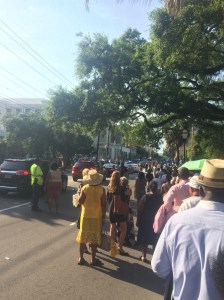 She was made for the camera. The reporters agreed. I was a well-dressed, not-yet-sweaty Jewish guy. It made for a good story. When they found out I was clergy from Jacksonville, Florida, it made for an even more compelling one. I mentioned my affiliation with the Jacksonville Jewish Center, with ICARE. I mentioned how I felt compelled to not only come to pay tribute to a great man, but to show my support for a community torn by tragedy, broken by the racial hatred of one man; whose hatred was fostered by so many others. I spoke of Reverend Pinckney’s openness to and support of the LGBT community (he was quoted as having said, ‘loving God is never separate from loving your brothers and sisters.’) I stated how we in Jacksonville still fight for a comprehensive Human Rights Ordinance; how I greatly admire how he guided his flock on and off the pulpit.
When the MSNBC correspondent asked how I answer those who ask “Where is God in a moment like this?” I responded humbly that we all have different perceptions of the divine. We live in a broken world. To me, that means that God isn’t perfect. At the same time, however, we are all created in the image of God. It is our responsibility to repair this world as much as we can. When it’s been asked, “Where was God during the Holocaust?” theologians like Martin Buber (in Glimpse of God) responded by saying that God hid his face, as in the story of Esther. Buber was right in one way- God looked away. As a collective created in his image, we all looked away. So when tragedy strikes, we must never look away again. We must never hide our faces. For injustice and intolerance are never polite enough to hide their cruel faces from our world.
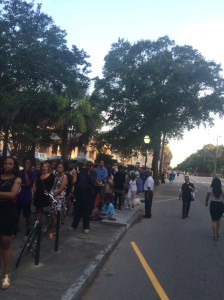

For a short while, the line clumped together as the crowds awaited entry into the TD Arena.

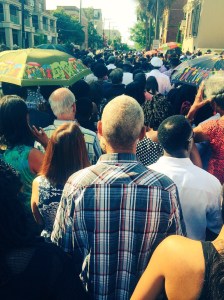
Voices rose up behind us. I thought the joyful sounds were rising to counteract any protestors that may have found their way into the crowd. I looked down at my phone- the Supreme Court had just announced its decision to making same-sex marriage a right across the land. The celebration outside would soon be mirrored by the celebration of a man who championed rights for all.
A few moments later, as we were about to make our way through the security checkpoint, I felt a friendly tug on my shoulders. For a half-second, I thought “I don’t know anyone here- who is tugging my shoulders?” It was Darrell. We gave a “bro hug”- one signifying we hadn’t seen each other in quite some time. Being separated for 20 minutes after standing together for 5 hours can do that to you. And so with an embrace of a stranger, the embrace of a man I met on a sunny morning on Meeting Street, Charleston S.C,
I entered the make shift sanctuary to remember a man I never met.

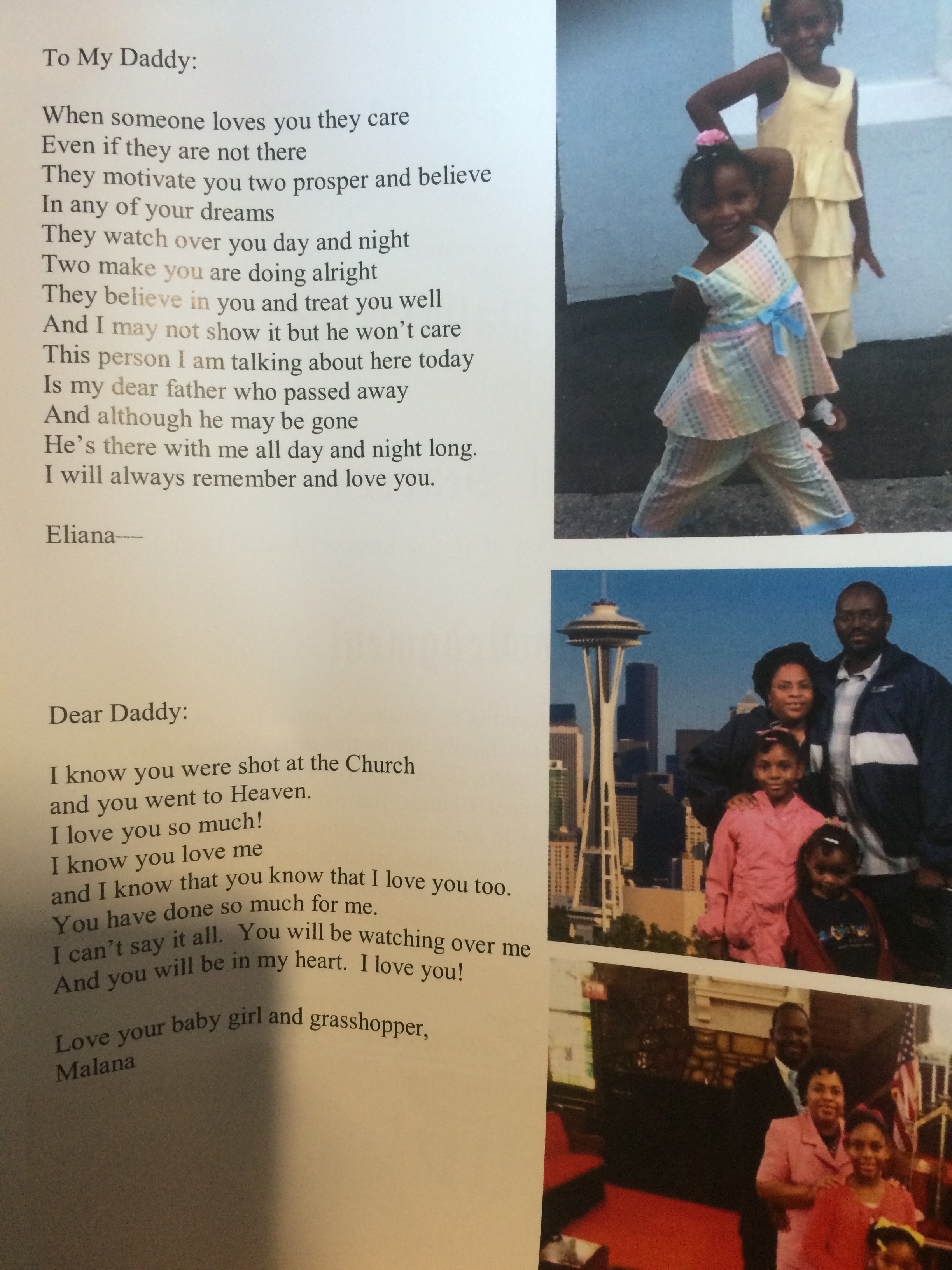
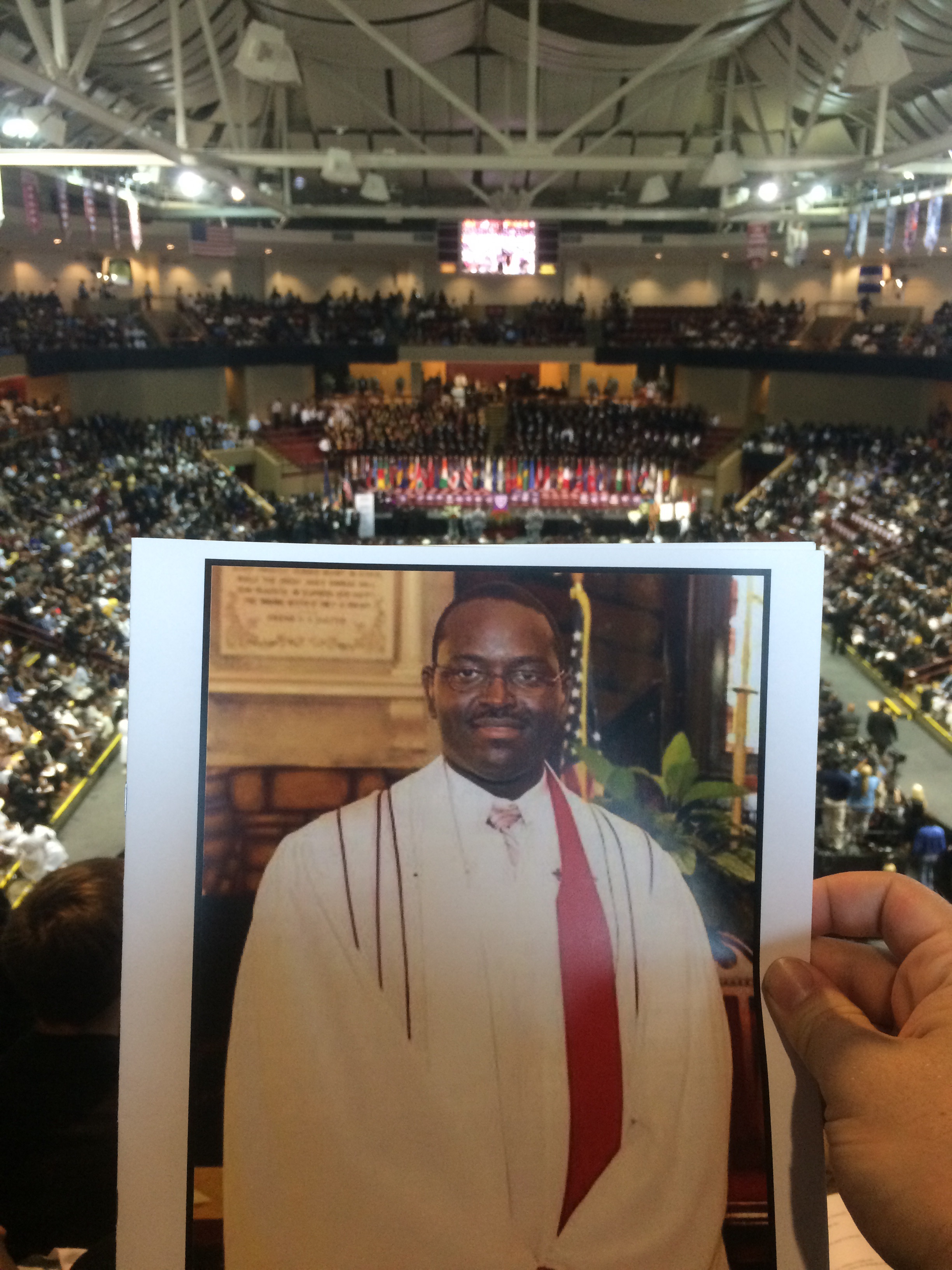
Funeral: “Handle our grief while holding on to faith”
After an hour of music brought to us by a chorus of combined choirs (I did surprise a few people when I began singing along to the Choir’s rendition of Total Praise, a JTS choir favorite thanks to Cantor Debbie Bletstein), the service began with the words from Psalm 118: “Zeh Hayom Asah Adonai , Nagila V’nism’cha Vo” This is the day that the Lord has made. Let us rejoice in it. Having only attended a handful of non-Jewish funerals, this was an experience filled with rowdy celebratory cheering. This was a celebration of life. For roughly five hours, God was praised, Reverend Pinckney was praised, and a community rejoiced in a life well lived. As the VIPs sat below us, I found great meaning in sitting next to a retired cop originally from Chicago, an associate Imam originally from India, and a reverend born and raised in Charleston. I was the rabbi (I didn’t go into the “kh” of Hazzan). We celebrated and mourned together. We weren’t VIPs, but we represented the thousands who waited outside who did not get in- the thousands who mourned and celebrated a great man and a great city.
Towards the end of the funeral, Bishop John Richard Bryant, a leader in the African Methodist Episcopal Church from Baltimore, referenced Psalm 118 again when he stated, “Historically, we are the stones that the builders rejected…but we keep rising.” A day of celebration- knowing of the SCOTUS decision, I took this quote to heart- that for too long we have limited minorities in this country. We have discriminated based upon gender, race and sexual orientation. Generations believed that these groups were the stones that the builders rejected. On Friday, emboldened by the work on the Supreme Court and the words of our President, we took a giant step towards building a sanctuary of hope and healing, of equality and understanding. A sanctuary in time and space solidified by and for all humanity.
My decision to attend Reverend Pinckney’s funeral was not influenced by the anticipated presence of our President, but it was forever shaped by his words and his song.
After the Lord your God you shall walk
Deuteronomy 13:5
The great sage Maimonides broadens the Talmudic view of this verse as an exclusive reference to the practice of lovingkindness. In his mind, “walk in his ways” refers to both the performance of acts of lovingkindness and the cultivation of moral dispositions, towards the development of a greater social harmony. As one eulogizer put it, Reverend Pinckney “walked the talk.” And so must we do the same. As President Obama mentioned that for too long we ignored these “uncomfortable truths.” We can no longer barricade ourselves behind preconceived notions.
Running to my car (Shabbat started at 8:11PM), I came across a group of protestors wearing t-shirts that read ‘get with it’ on the back, “God created Adam and Eve, not Adam and Steve” on the front. Seeing my kippah, it gave them the false assumption that I as a religious person would somehow nod my head in approval. I reassured them that this was not the case- God created all of us in his/her image. We are all God’s creatures and we all have the right to live and love in peace. I normally do not engage with people who have hate in their hearts, but having a morning to think and process, I could see no way in which I could not speak up.
Final Thoughts
Having visited Charleston a few times as a tourist, I never really got to see the grandeur of its people. Their love shown brightly during these troubled times. It reminded me of the love and support New Yorkers gave one another following the tragic events of 9/11. An hour after the second plane hit, I was racing to the closest hospital, Beth Israel, to give blood to those who were in need. The line stretched around city blocks. Eventually, we were told that they had as much as they could take. The staff said “come back next week, the week after. That’s when we need you.” Whenever tragedy strikes, the goodness and love of this great nation shine through. The goal is to keep that brightness so it does not whither over time. I never went back to give blood- days, weeks, years later. It’s time that we continue to fight for rights for all. Fight hate. Fight injustice. These demons never take a vacation. Our goal is to fight with every fiber of our beings. Each and every day. When the news reporters leave, when the story is elsewhere, we must continue to write the story of love and fellowship on the streets in which we live, in the places we know well and in the discomforting unknown spaces. Love comes from an ever-beating heart that needs us to supply blood. Not just today, each and every day.
*You’ll notice a lack of high quality photographs. While cameras were allowed, I felt that hiding myself behind a lens (which I often do) would limit the scope in which I could interact and converse with the masses as a person of faith and a person of sincerity.
An Honest Conversation
Yesterday, WalletHub, an online forum producing a number of “best of” lists, named Jacksonville as one of the top five Quintessential American Cities. Only four other areas more closely reflect what America looks like when it comes to factors such as sex, age, ethnicity, race, income, education, living situation, and home prices. I didn’t need a survey to come to the realization that Jacksonville is at the crossroads of America: a little bit country and a little bit not-so-country; at the bottom of the bible belt, so much so, that in spite of housing the University of North Florida, most Jacksonvillians would describe our city as South Georgia. I love the Southern hospitality of Jacksonville and the overall warmth of my synagogue community.
#3 on that list is Charleston/North Charleston, S.C. Alongside Savannah, GA, Charleston stands as a “holy city” in the development of the Jewish community in America and in the South in particular. On this occasion of it’s synagogue rededication following the great Charleston fire of 1838, Kahal Kadosh Beth Elohim’s Reverend Gustavus Poznanski was moved to say, “This synagogue is our Temple, this city our Jerusalem, and this happy land our Palestine.” The Jews of Charleston are woven into the fabric of its history. Jewish history overwhelms the area known as Historic Charleston- significant sites of old Jewish businesses and houses of worship remain visible through the notable architecture and plaques. 254 King Street, home to Jacob Tobias and the Sephardic congregation Beth Elohim Unveh Shallom in the 1780s, still stands today (as a Victoria Secret). Thanks to initiatives such as the Venice Charter, The historic district of Charleston looks and feels like a moment in time- its beauty and its complexities are intertwined.
From the onset, Jews had been welcomed, thanks to the civil and religious liberties that were afforded to them in South Carolina. Not all experienced such a warm welcome. Charleston, like Jacksonville, is an imperfect city. That’s what makes it “quintessentially American.” How we deal with the imperfections of this broken world is up to us. We can respond two ways:
1) We are all human. We all continue to grow and learn from infancy. There are those imperfections that we learn to love and appreciate in ourselves and in others. These are the imperfections that, coming from a divine spark, remind us that an All-knowing God isn’t always all-knowing. We react to the brokenness by loving more, by deepening our conversations with one another, if given the window of opportunity to do so.
2) “Radical” Amazement. Rabbi Abraham Joshua Heschel, the great theologian and civil rights activist, wrote,
Our goal should be to live life in radical amazement. ….get up in the morning and look at the world in a way that takes nothing for granted. Everything is phenomenal; everything is incredible; never treat life casually. To be spiritual is to be amazed.
Heschel wrote this in describing a spiritual connection to the divine, but for me, the words ring as a call to action. Never treat life casually. Never treat a broken world casually. It is time for new forms of radical thought. It is time to disassociate with symbols of hate and the “casual” racism we endorse every time we do not speak up.
Racism is an overcast over all we take for granted- our liberties, our sensitivities, and our tomorrows. The certainty of imperfect ancestors coupled with the uncertainty of our tomorrows gives us two options- certain action or uncertain complacency.
Heschel states elsewhere:
To act in the spirit of religion is to unite what lies apart, to remember that humanity as a whole is God’s beloved child. Racism is worse than idolatry. Few of us seem to realize how insidious, how radical, how universal and evil, racism is. Few of us realize that racism is man’s gravest threat to mankind.
We read stories of a KKK that has gone “family friendly.” Racism and discrimination are now sold in overt and covert sizes. The juvenility of free speech translates to misinformation and misguidedness. Nothing is free. Hateful free speech comes at an ultimate price.
This is who I am. I write this as a Northern transplant clergy-person serving a predominately White Jewish community. Growing up, I never thought of myself as “white.” Most of my friends and cohorts have and remain to be Jewish, of Ashkenazic descent. As a Jew, the classification of “hate Crime” still means a severe act of serious concern. I see last week’s atrocities as a hate crime, an act of terror, and a barbaric attack on a fellow house of worship.
This is who I am. My institution, and the institutions I frequent and support ,do not condone discrimination based upon race, ethnicity, gender or sexual orientation. They support and welcome all. But perception lags behind reality, because our communal reality includes individuals who do not support and who do not welcome. I find issue when individuals within these masses make statements and use language, subtly and not so subtly, condoning hate. This comes out of fear, and sometimes, it comes out of a “former-vernacular”, a situation in which one can “get away with” using the N-word when they think no one notices or takes issue. Terms like Shachor (Black in hebrew) and Schvartze (Black in yiddish) are used as “hidden language.” It’s time to take it seriously. It’s time to be unapologetic to this kind of rhetoric. We see the stain of racism in Israel, from the Ethiopian immigrant community to the undertones of Arab hating in the latest Israeli election. It’s only subtle until it permeates into the vernacular and into the impressionable minds of those who segregate themselves, who will always few the unknown as the “alien”, the “other.”Hateful speech becomes hateful action. Sometimes we wait only to realize there is no “subtle” disdain for others.
This is who I am. It is time for honesty. It is time for dialogue. It is time for a loving embrace of who we are and who want to be. But it is also time for radical movement- to chase hateful speech from our lips and derogatory rhetoric from the comment pages. It’s time to stop endorsing hate by standing idly by. Institutional racism still exists. Yet even as institutions change their tune, it’s up to those of us who dwell in the neo-institutional virtual world to help change the tune as well. I live in a quintessentially American city and a not so quintessentially American virtual reality. Charleston is a four hour drive from my front door, but racial discrimination is just a click away.
This Friday, I’ll be making the four hour journey to Charleston to honor the memories of the Charleston 9, brutally murdered last week:
Cynthia Hurd, 54, branch manager for the Charleston County Library System
Susie Jackson, 87, longtime church member
Ethel Lance, 70, employee of Emanuel AME Church for 30 years
Rev. DePayne Middleton-Doctor, 49, admissions counselor of Southern Wesleyan University
The Honorable Rev. Clementa Pinckney, 41, state senator, Reverend of Emanuel AME Church
Tywanza Sanders, 26, earned business administration degree from Allen University
Rev. Daniel Simmons Sr., 74, retired pastor (died at MUSC)
Rev. Sharonda Singleton, 45, track coach at Goose Creek High School
Myra Thompson, 59, church member
I’ll be there as a member of the Jewish faith representing a southern town that in many ways remains racially segregated. I’m searching for ways to connect, as a member of our local clergy caucus for ICARE (Interfaith Coalition for Action, Reconciliation and Empowerment) and as a concerned citizen who wants to express his grief. We will find moments for introspection and moments to hold hands in communal prayer. I want share the stories of our people- the stories we read in sequence over these past few weeks, of Korah, the out-of-turn adversary to Moses and Aaron; of the 10 scouts who were too scared to tell the truth of the Promised Land. I want to share that it doesn’t matter if you are the loudest or even a majority. It doesn’t matter if there are the giants of bigotry who intimidate and bully. It matters that you fight for a just and better world.
As with a journey to my ancestral homeland, when individuals take a prayer written on a small piece of paper to place in the cracks of the the Western Wall, I’ll be taking words of comfort and solidarity to place on the makeshift memorials of historic Charleston.
At the end of a Jewish funeral, two lines are formed as we create a pathway for the mourners to begin their grief amidst community. We offer words of condolence. We offer hugs. We offer shoulders to share the burden of grief as they begin a long road bereft of a loved one. May the support of many bring comfort to those who mourn, and may the lights of peaceful discourse, reconciliation, hope and healing shine upon all of us.
Combatting Hate with Joy
As Jews, we are keenly aware of the role symbols play in the celebration of our calendar. Our symbols have withstood the test of time, and although they have been reinterpreted and reinvented for modern day relevancy, their core purpose remains.
Not all symbols avoid the wrath of those who bastardize and reinvent, creating new brands that connote hate, exclusivity, and shameful acts of violence.
Derived from the Sanskrit meaning “good to be making,” this once was a symbol of eternal life, emblematic of the element of earth- a seemingly appropriate symbol for our harvest festival. It was a symbol of good luck. That all changed when the swastika was adopted by the Nazi Party in 1920. And now, the symbol of hate permeates our news feeds. Swastika found painted on a concrete wall in an enclosed courtyard of a Spokane Washington synagogue. On the same night, Swastikas are found plastered to the entrance of an Alpha Epsilon Pi Fraternity House at Emory University. We cannot wash away the fear we feel when Graffiti is on our walls and hateful speech fills the streets.
A few weeks ago, my sister, living on the Upper East Side of Manhattan, encountered a similar bout of hatred. Swastikas etched into the wall right outside her apartment door. The only Jewish person in her complex had been the victim of a hate crime. The Hate Crimes Division, of which there is only one in all of the five boroughs of New York, did their best to find the perpetrator to no avail. No cameras in her complex, no fingerprints on the etching meant no answers for the police or for my sister. Could it have been a delivery guy who got a bad tip? A disgruntled neighbor? Or was a deep hatred of Jews the real motivation? It is tough not knowing the circumstances surrounding the act. We are overwhelmed with what this symbol means given its associations for us as Jews.
Fear. Angst. These feelings are compounded.
We hear of rallies across the globe, acts of ignorant masses. Anti-Semitism is an object in our rearview mirror, much closer than it once appeared. Vandalism, and more specifically hate crimes, rob us of our choice to freely express our Judaism lovingly and outwardly. We are intimidated. We second-guess. We fear the unknown motivations. We shutter ourselves because these cowardly defaming acts etch themselves in our memory.
As Jews it is our obligation to erase the negative imagery of the swastika, to focus on all of the positive reminders we are instructed to use so that we may practice Judaism to the fullest extent- the reminders of tefillin, of tallit. The minhag of kippah. The reminder of mezuzah as we enter and leave a space. The mitzvah of Sukkah- reminding us that even in the darkest of moments, we can find shelter in each other and in the divine. We show our true selves in our response to the darkest of moments.
Here’s a first hand account to a Sukkot experience, some 70 years ago, at a time and place where Swastika reigned supreme:
“Hassag. It was called a labor camp, but it was a slaughterhouse- no more, no less. We were the remnants of the Chenstochover ghetto. Our families had been sent to their death. Only a few remained- like limbs torn from their bodies, writhing in pain, living a life without life…
Sukkot, the festival which brings farmers and city-apartment house dwellers alike into temporary huts, somehow found its way to Hassag. We discovered an unused corner between two factory buildings. Lumber was piled up, as if in storage, for the sukkah walls, and somewhat above these walls, branches were unobtrusively stacked for the sukkah. We slide in and out of this temporary dwelling with our treasured crusts of bread, thinking of the protective booths in the wilderness.
So we had our Sukkot in those stolen moments, for the experience of eating in the sukkah, no matter how makeshift it was, was a genuine experience…”[i]
Even in the ghettos of the Shoah, Jews felt an obligation and spiritual connection to Jewish practice. As we approach each day knowing that hate crimes and anti-semitism are rising up again, we cannot retreat to the ghettos of our inward selves, fearful of our outward Jewish expression. We may think IF YOU BUILD IT, THEY, the anti-semites, the haters, WILL COME. How do we combat this?
Ecclesiastes states, “lakol zman v’et lchol cheifetz, tachat hashamayim”-a season is set for everything, a time for ever purpose under heaven. A time to be born, a time to die. A time to laugh, and a time to cry.
Our poet, King Solomon, prescribes a formula to overcome adversity. We combat loss with a search for meaning. We combat hate by fostering love. We combat those who break down by building up. We battle hatred and ignorance, key ingredients meant to break us as proud individuals and communities, by building up…
To paraphrase the Modizbozer Rebbe:
On Rosh Hashana, Yom Hazikaron, our day of remembrance, we pray with our minds
On Yom Kippur, our Day of Atonement, we pray with our hearts
On Sukkot, Chag Ha’asif, the in gathering festival, we pray with our hands
On Simchat Torah and its energized Hakafot, we pray with our feet
Zman Simchateinu, our time of happiness encompassing both Sukkot and Simchat Torah, is linked to our hands and our feet.
One way to combat outward expression of hate is by utilizing these outward actions that express our joy for Judaism. For the observance of Sukkot is the most outwardly expressed moment on the Jewish calendar. Whereas some holidays are reserved for synagogue or the home, by erecting a Sukkah, however temporary, we acknowledge God’s role in our lives and proclaim who we are as individuals by building a sukkah in public view. The sukkah symbolizes God granting us a sukkat shalom, a shelter of peace by protecting and providing. The pride we feel is coupled with an even deeper humility, knowing that the fragility of the sukkah mimics our own temporary place in this world. It is a sentiment expressed in our reading of Kohelet on this Shabbat Chol Hamoed:
Chapter 2 Verse 11:
“Then I looked on all the works that my hands had wrought, and on the labour that I had labored to do; and, behold, all was vanity and a striving after wind, and there was no profit under the sun.”
We enter this world with empty hands. We leave this world with empty hands. But what we do with those hands while inhabiting this world is what matters. What we build for one another matters. We can raise our hands to give up. We can raise our pointed fingers to others. Or we can raise our hands to build a joyous experience for one another. Graffiti and slander may fill our minds with scary thoughts, but our hearts and our hands have an obligation, to ourselves and to the Jewish people, to continue expressing our Judaism outwardly- beyond this building, beyond the inside of our homes. It is not a moment of despair. It is not a moment for irrational behavior. It is a moment to show that pride and joy in Judaism can overwhelm those who wish to instill sadness and unrest in our lives.
Like the Sukkah, life is fragile. Life is temporary. And yet we still build a Sukkah knowing that in few days we will disassemble it. No matter how fragile and temporary life is, we still must live it. Fully. We must build a life filled with love of Judaism. We must continue to build a Jewish home with the openness of a sukkah, knowing that God is a shelter of piece.
If you build it, they- the informed neighbors, the future generations, will come. If you don’t build it, they- the hateful, will have won. As a people, our Sukkah has weathered storms far greater than the ones we see today. Even when the Sukkah falls, it has always been a mitzvah, an obligation, to put it back up. Let us continue to weather the storm. May God bring us peaceful skies in the year ahead and all the years to come.
[i] Goodman, Philip The Sukkot/Simhat Torah Anthology (Holiday Anthologies Series)

Of Rice and Men
When I hear inappropriate comments, when I see unspeakable acts, when I read inconsiderate posts, my initial thought is clear: turn down the mic, turn off the camera, and deactivate the account.
Mics. Cameras. Twitter.
These are the arenas where hatred plays its dirty cards. Even without these forums, bigots, sexists, and imbeciles continue to whisper their inappropriate comments. They continue to act out their evil impulses in private.
But just as the Ice Bucket Challenge teaches the uninformed the difference between ALS and ASL, the fact that so many faces in the media limelight are on camera, mic-ed up, tweeting about their lives, means that we have fuel to ignite a fiery conversation about race, sex and other social stereotypes. It’s an uncomfortable feeling when these stories come to light. By rolling the tape, predators are caught red handed. They are the idiots caught on camera, but they represent a greater number of similar idiots who share the same views and practices. It is through our own uneasiness with this public display of insensitivity that we have the forum to have a strong public display of action to inspire change in the masses.
Looking over the news of the past week, the blunders of men reads like a Buzzfeed article or quiz entitled “Which athlete/racist/abuser/bigot am said the following?”
The case of Ray Rice brought to light the inactions of the District Attorney and the Judge who approved the pretrial intervention. #BlundersofMen.
The case of Ray Rice brought Floyd Mayweather, along with his $30 Million weekend payout, into the conversation, where he reminded us that his history of domestic assault is a “matter of opinion.” Having these opinions caught on tape shows the growing need for action- the banishment of a sport like boxing, the banishment of fighters like Mayweather. #BlundersofMen
The case of Ray Rice brought us sobering statistics of domestic violence, forcing an eye-opening conversation that a woman is five times more likely to be the victim of domestic abuse than become a CEO of a Fortune 1000 Company. #BlundersofMen
The case of Ray Rice brought us a conversation of moral equivalency started by Ray Lewis and continued by supporters of Adrian Peterson’s actions when it came to his 4 yr old child. The “it was ok a generation ago” doesn’t fly. There are many things “ok” a generation or two ago that we’d like to keep banished forever. It is our collective responsibility to support those in need. As the hashtag shows support Columbia studentEmma Sulkowicz and other victims of rape, we must all #carrytheweight. #BlundersofMen
The case of Ray Rice ignited the twitter hashtag #whyistayed, shedding light on the complexities of domestic abuse. #BlundersofMen
Kanye West made his way into the conversation by calling out two indidivuals who were unable to give him a standing ovation at his concert. It didn’t matter that one was in a wheelchair and the other had a prosthetic. What mattered was the insensitivity of West, the ego of West, and classlessness of West. We are all created in the image of God. We weren’t created to stand for Kanye, and I know I won’t stand for him. #IDon’tStandForKanye.
My heart aches for those who experience these acts of hatred and bigotry. Being mic-ed up, these villains are responsible for their actions. They represent a much larger group of villains that do not view their perspectives or actions as abuses. This week, the #blundersofmen share the names Rice, Mayweather, Peterson and West. Next week, the blunders may not have the same name recognition, but our responsibility to aid those in need, to call out hateful speech and action, should not change. Even when the mics aren’t on. Even when the cameras are no longer rolling. We are compelled to denounce these actions, to raise the bar for human decency, to continue honest dialogue so we foster a stronger community for all. May we combat the negligence and the abuses with the courage and strength of our hearts and character.
Summer Song Sadness
Last week, the NY TImes ran an article highlighting the beautiful (and I use that word deliberately) work of summer camps like Eden Village in holding to a strong “No Body Talk” directive.
On Friday afternoon, when the campers, girls and boys from 8 to 17, are dressed in white and especially polished for the Sabbath, they refrain from complimenting one another’s appearances. Rather, they say, “Your soul shines” or “I feel so happy to be around you” or “Your smile lights up the world.”
Summer camps are magical. For those who have attended, we see them as our reason for trucking through the rest of the year. They are our respite, our utopian bubble where initiatives like the “No Body Talk” rule can actually work. They are our Shabbat, a re-energizing and reimagining sanctuary in space and in time.
In the camp world growing up, our “songs of the summer” consisted of a myriad of Israeli techno hits. Oh to be at camp again. What’s competing for airplay right now? Robin Thicke’s misogynistic “Blurred Lines” is being followed this summer by an even creepier “Get Her Back” single in which sexism spews from both lyric and video. No I don’t want it. Jason Derulo, who has finally retired saying his own name in every song, has followed up his filth ridden “Talk Dirty” with an even more offensive body-image destroying song “Wiggle.” These are two of many examples of utter trash that makes its way into the charts, on to our playlists and and into the way we speak of and act around others.
For those of us who are unable to spend our summer at Eden Village, we can still aim to create a summer filled with love and respect, from the lyrics we create between one another to the lyrics we listen to all summer long. When we skip out on such language, sexism and filth, we send a message to music executives that catchy melodies must be accompanied by creative lyrics. For they know that the modern music world, and its ability to skip over such trash, stands on 3 things: iTunes, Pandora and Spotify.
Sanctify This Day

There are three forms of sanctity in this world: sanctity of time, sanctity of humanity, and sanctity of space. As people around the world light a yellow candle in commemoration of this Holocaust Memorial Day, the three forms collide.
By igniting a flame, we create a sacred moment to reflect and to remember. Our task is to remember every day, so that faces take the place of statistics, so that our family story serves as caveat to our history books. This is the sacredness of time.
By igniting a flame, we recognize the millions of souls whose dreams and aspirations were extinguished by the Nazi regime. We tell their stories. We share with others.
By igniting a flame, we memorialize the sacred spaces of our past: the spiritual centers for European Jewry for hundreds of years; the places marked by death that, while troublesome, are holy places because our loved ones are buried amidst the ashes. We mark sacred space in the present, in order to create a legacy built upon love to those who perished.
May we all find sacred moments, communities and spaces, so that we may continue to learn, to grow, and to heal.
Between the Bookends
Since the time of the prophet Ezra some 2,500 yrs ago, the Jewish people have been furnished with a musical liturgy rich in oral tradition. Within this tradition, two groups emerged- the fixed (nusah) of our prayers as well as the molded trope systems, known as cantillation, which define the way we chant biblical verse.
When the Masorites codified the cantillation systems a thousand years ago, the symbols and names to identify a musical phrase were intended to be easy and straightforward- Sof Pasuk meant “end of the verse”; Etnachta from the root lanuach, to rest, the name given to the trope found in the middle of a verse, a place to pause both thematically and musically. Whether we are reading torah or haftarah or megillah, these cantillation marks act the same way. The trope symbols are as much musical notation as they are punctuation, accentuation and interpretation of the words they pair up with.
The trope “Zarka” appears almost 700 times throughout Tanakh. In most of our cantillation systems, Zarka, taken from the Aramaic word meaning “scattering”, moves note by note in an identical “scattering” motion.
[audio http://dl.dropboxusercontent.com/u/16898739/Recording%2010.mp3 ]
Keep that melody in mind for a moment.
Parallel to the development of our sacred cantillation system is our synagogue-chanting mode, the nusah, defined by distinct musical scales combined with the use of traditional phrases within a given scale. There are only so many scales in use within traditional Ashkenazic worship, and so we look to the musical phrases to lead us to where we are in the religious calendar. To hear the melody for High Holiday Maariv– we know it is the High Holiday season. We don’t think “oh yes that’s a major scale.” We identify with a certain season, a sentimental connection to a time of year. To hear “Shabbat minha” it is suddenly Shabbat afternoon. Our festival davening, filled with numerous musical motifs, is defined, in essence, by 4 notes. These are the four notes that complete most phrases within festival nusah. Our opening and closing phrases share the same simplified nusah. Take the last paragraph of the Kedusha prayer, in which we transition to our festival nusah: “Ldor Vador” to open, and “Hakadosh” to end our paragraph.
Each paragraph of our Festival liturgy is often bookended by the same few notes.
[audio http://dl.dropboxusercontent.com/u/16898739/Recording%2011.mp3 ]
The scattering Zarka. What does it mean to have our fixed liturgy begin and end with the same musical phrase?
17th Century Rabbi Samuel Archivolti articulated the connection between music and text:
“There are two categories of song. The first category is a melody, which is composed to fit the words in consideration of their ideas. For by melodic changes we are able to distinguish between pause and continuation, a fast tempo and a slow one, between joy and sadness, astonishment and fear, and so forth. And this is the most excellent type of melody in music, for not only does it consider the ear’s pleasure, but also strives to give spirit and soul to the words that are sung. This type of song was used by the Levites (in the Temple), for it is the only way they could have arranged their music, and it is the type fit to be written for songs in our sacred language.”
So we return to the simplicity of our opening and closing Zarka. “Ldor Vador“- from generation to generation,
“HaKadosh” – the one who is holy.
The musical motifs that define our nusah, the set ways of our liturgical lives, were once described to me by Cantor Simon Spiro as “Slalom Posts”- as a slalom skier descends the mountain, the objective is to go from post to post. What he does in between swiping each post is entirely up to him. This musical freedom is the journey we can take between Ldor Vador (generation to generation) and Hakadosh(holiness)- how do we as individuals and as community bring “Generation to Generation” to “holiness”? It is up to us to treat generations before with holiness just as much as generations to come! Our task is to fill that space between the opening and closing of our lives with holy music.
This task is brought to light through melodic intervals that define this holiday.
Today we continue to celebrate Chol Hamoed– the period in between the very much defined bookends of this holiday- On one end, we have our seders and the recitation of the Tal prayer. On the other, the Yizkor memorial service, reminding us not only about our redemption from slavery to freedom but of the necessity to remember all those loved ones who have journeyed with us.
Chol Hamoed– often mistranslated as “intermediate days”, is rather the mixing of two worlds- the holy and the every day. For as the name implies, Chol is the ordinary and profane, while Moed is an appointed time or place of meeting.
One way to experience these middle days is as a twice a year event- to taste a little of the holiness of yom tov in the aura of the weekday. Or we can extend this metaphor to the ways in which we live throughout the year- making holiness the norm of practice. We mark the Yom Tov bookends in big ways, acting holy when we are surrounded by pomp and circumstance, by ritual, by community and those we love. These liminal moments are part of our collective Jewish and family calendar. What is even more difficult is living a life of Chol Hamoed– adding sanctity to the mundane every day motions.; adding “Moed”, set time during our ordinary day to appreciate the joy in our lives, to sojourn in a special space with the divine.
Zarka: trope, and by extension Nusah, are able to transport us to the space between. A paragraph like Ldor Vador that recite multiple times a day has new meaning when we add the festival flavor to it. The nusah uncovers this idea of “bookends”- that we begin and end in a similar fashion, but what we do in the middle is what matters most. May we take the journey between the fixed points of release and return, and fill it with the coloratura of action and interaction, of holy being and holy doing, of loving others and loving ourselves. As we continue to travel from slavery to freedom, may we find each ordinary day to be that much more extraordinary.


 Hazzan Jesse Holzer