Author Archives: Hazzan Jesse Holzer
8th Grade Tanakh- Fantastic (Jew)Duo
Our First Competition in our Fantasy Jewish Draft is in the World Jewish Tag Team Competition. Feel free to read more about the history of the WWE tag teams here.
Ranking my top 3 dynamic duos, we have
1) Ax and Smash (Demolition) with the longest reign
2) Earthquake and Typhoon (Natural Distasters) with the best place to win a title (Worcester, MA)
3) British Bulldog and Owen Hart
Let’s get to the matchups. Each student was able to write “Pros” for their own selections and “cons” for other competitors. One key ingredient to Tag Team success is communication. I’ve created the seating at random so that two teams receive a first round bye.
The first round byes are
(1) AL’s team of Bar Kochba (led rebellion, deemed a “hero”, archer) and Ishmael (also an archer, fiery heart, survived in harsh places like the dessert)
(2) JK’s team of Cain (strength and knows how to hunt, but lacks moral fiber) and King Solomon (prophet, war leader, wise man, but may not have been the best of the best when it comes to Kings of Israel)
Round 1
(3) JP’s team of Josephus and Ramses II
Josephus Pros: Defeats Roman Army, Trickster; Ramses II Pros: power, trash talker, “magic”
Josephus Cons: “Betrayal” Ramses II Cons: doesn’t play well with others
VS
(6) AK’s team of Judah Ibn Tibn and Saadya Gaon
Judan Ibn Tibn Pros: Awesome Name
Saadya Gaon: Linguist- good trash talker, “just awesome”
Next matchup:
(4) RM’s team of Cyrus the Great and Sascha Barron Cohen
Pros: (Cyrus the Great)-military experience, persian king, strong (Sascha Barron Cohen)- trash talker, funny, man of many disguises
Cons: (Cyrus the Great)- compassionate (Sascha Barron Cohen)- doesn’t play well with others, inconsistent (with his quality of movies), wild
VS
(5) RS’s team of Eliezer and Hillel ben Elyakim
Pros: (Eliezer)- has endurance, lives in rough terrain (Hillel ben Elyakim)- learned from the best-Rashi, writing skills make him a great smack talker
Cons: (Eliezer)- lives in shadow of Moses
Second round:
RM(4) vs AL(1)
JP (3) vs JK (2)
Finals
JP (3) vs AL (1)
In the finals, the tag team of Bar Kochba and Ishmael use their archery skills to take out Josephus and Ramses II. Both of JP’s teammates ended up tricking each other rather than the other team. That’s what happens when you have trust issues!!
Mazal tov to AL on his victory in our first installment of Tag Team Jewo!
8th Grade Tanakh Class-Fantasy Draft
As a Tanakh teacher for the Martin J. Gottlieb Day School, I have the privilege of teaching 8th Graders the Book of Esther. The Megillah is chanted on the holiday of Purim (meaning lots), given its name because of the “lots” that Haman drew to find the day to massacre the Jewish people. In the spirit of “lots”, our class recently conducted a Fantasy Draft with 3 separate categories: Biblical figures, Rabbinic Figures, and Miscellaneous Jewish Figures throughout History.
Team JP:
Biblical: Moses, Jonah, Pharaoh, Josephus, Sarah
Rabbinic: Rabbi Lubliner, Hazzan Holzer, Rabbi Lief, Rabbi Gaffney, Rabbi Nuri
Miscellaneous: Stephen Spielberg, Mark Zuckerberg, Golda Meir, Hank Greenberg, Omri Casspi
Team JK:
Biblical Isaac, King Solomon, Ruth, Cain, Leah
Rabbinic: Shammai, Shimon Bar Yochai, Ramban, Rabbi Fisch, Rabbi (Rafi) Cohen
Miscellaneous: Rachel’s Dad, Woody Allen, Harrison Ford, Kenny Bernstein, Bob Dylan
Team AL
Biblical: Abraham, Isaiah, Joseph, Miriam, Ishmael
Rabbinic: Maimonides, Rabbi Yehuda, Bar kochba, Abraham Joshua Heschel, Menachem Mendel Schneerson
Miscellaneous: Albert Einstein, Theodore Herzl, David Ben Gurion, Red Auerbach, Billy Joel
Team AK:
Biblical: Aaron, Mordechai, King Saul, Esther, Tzipporah
Rabbinic: Rashi, Yochanan ben Zakkai, Judah ibn tibbon, Saadya Gaon, Hillel II
Miscellaneous: Adam Sandler, Natalie Portman, Anne Frank, Mark Spitz, Daniel Radcliffe
Team RM:
Biblical: King David, Joshua, King Hezekiah, Cyrus the Great, Samuel
Rabbinic: Hillel, Rabbi Gamliel, Shimon ben Gamliel, Yochanan ben Nuri, Hazzan Mizrahi
Miscellaneous: Jesus, Sandy koufax, Sascha berrin Cohen, Dolph Schayes, Amare Stoudamire
Team RS:
Biblical: Jacob, Noah, Elijah, Eliezer, Malachi
Rabbinic: Akiva, Yehuda III, Joseph Caro, Hillel ben Elyakin, Rabbi Zalmen
Miscellaneous: Ben Stiller, Barbara Streisand, Scarlett Johanssen, Rivka Cohen, Burt Hofner
Taking suggestions for possible battles each of these 3 teams can compete.
Inclusivity in Action: Opening the Gates for Prayer and Community this High Holiday Season
ver the summer, I, along with 300 members of a Cantors Assembly Mission, traveled throughout Germany exploring Jewish life before, during and after the Shoah. One stop of significance was in the Berlin suburb of Wannsee. A villa with a view of the Wannsee beach hosted the Nazi’s Wannsee Conference in January 1942. The conference dealt with the “Final solution to the Jewish question.” Heinrich Himmler led a discussion on “Who is a Jew?” to determine who would be spared and who would be massacred. Millions perished because of a need for a supreme and exclusive race. It is a reminder to love and appreciate each day we have as a Jewish people in spite of this vicious plot to end those days. Some might find it a stretch, but I find these proceedings at Wannsee to be the most welldocumented case of bullying in modern history. How can one compare bullying on the playground to the massacre of the Jewish people? Even on the playground, the bully loses a sense of right and wrong; the crowd loses a sense of right and wrong, while the victim questions their self worth and whether or not they belong anywhere. Creating such an arbitrary exclusive group harms everyone. It
Shuts the lines of communication, and inhibits growth and development within a community. The Jewish community, in its own right, is often seen as an exclusive fraternal order, when in fact, it is inherently inclusive. A few thousand miles away from our Germany mission, two very important initiatives were taking fold in the Jacksonville community. The Galinsky Academy, the educational arm of the Jacksonville Jewish Center, was planning to unveil its Community of Kindness program to combat bullying and raise selfesteem in the student population. The Center created a Keruv task force so that its community could be more inclusive of interfaith families. These are hot button issues within the community at large. Inclusion, in all its shapes and forms, is a call to action for both those on the outskirts looking in and those on the inside of the bubble. How can we be a better we this new year? As we approach the High Holidays, we can often get caught up in the individualized moments – asking God for forgiveness for things I have done. But the High Holiday season is filled with a mixture of both “me” and “we” moments. It’s an opportunity for personal introspection, within the context of community. Even our liturgy reflects this “we” sentiment. Even in the most individual of tasks, we mark the occasion by saying Shehechiyanu, “Blessed is the one who has kept us alive.” We recite Avinu malkeinu, our parent, our sovereign. Those on the outside proclaim Ki anu rayatecha, “We are your beloved.” Let us as a community return with v’ata dodeinu, “You are our beloved.” It is the season of reflection. May we be inclusive not only in thought but in practice, in our literature and in the way we speak to one another, so that the term, all-inclusive, isn’t just reserved for a vacation getaway, but a way of life for our community. And so when we reach Neilah (literally “the locking of the gates”) on Yom Kippur, typically the last chance to ask God for forgiveness, may we close the doors of the ark knowing full well we do not need to ask for forgiveness for the greatest of High Holiday transgressions – having a closed door. May we all as individuals find the season to be personally meaningful. May we open our hearts and souls to the message to live Judaism in whatever shape or form works for us. No matter which prayer center you frequent this season, may you find it respectful of your core values, spiritually relevant and inclusive of all. May we all have that Shehechiyanu moment when we realize we have reached the day when we sustain and keep Judaism alive by leaving the door wide open to all forms of Jewish experience.
Parshat Shoftim: the story, the whole story and nothing but the whole story
“He hath disgraced me, and hindered me half a million, laughed at my losses, mocked at my gains, scorned my nation, thwarted my bargains, cooled my friends, heated mine enemies; and what’s his reason? I am a Jew. Hath not a Jew eyes? Hath not a Jew hands, organs, dimensions, senses, affections, passions? Fed with the same food, hurt with the same weapons, subject to the same means, warmed and cooled by the same winter and summer, as a Christian is? If you prick us, do we not bleed? If you tickle us, do we not laugh? If you poison us, do we not die? And if you wrong us, shall we not revenge?
If we are like you in the rest, we will resemble you in that. If a Jew wrong a Christian, what is his humility? Revenge. If a Christian wrong a Jew, what should his sufferance be by Christian example? Why, revenge. The villainy you teach me I will execute, and it shall go hard but I will better the instruction.”
These are the famous words of Shylock from the Merchant of Venice. Shylock had experienced discrimination at the hands of Antonio. He asks why can’t he be allowed to exact revenge in response to his own maltreatment? In a matter of moments, we jump from sympathizing with the victim Shylock to finding no excuses for an individual who wants to behave as poorly as his aggressor. Senseless bigotry is the kickstarter to a back and forth barrage of hateful words and actions. The origin of this cycle, discriminating because of race or creed, is nothing new to us. We might associate this discrimination with decades ago or miles away, but we unfortunately are not immune to these events within the Jewish world.
Travel from Shakespeare’s 16th century tragic comedy to the non-comedic tragedy of this past week. Downtown Jerusalem’s Zion Square hosted a convention of sorts. Dozens of Jewish youth convened together to attack 3 Palestinian youths, shouting “Death to the Arabs” along with other racial slurs. One of those attacked, 17 yr old Jamal Julani, fell on the floor, and his attackers continued to beat him until he lost consciousness. The mob turned on Jewish first responders. Some in the angry crowd did not understand why the medics were shocked by what they found. As one eyewitness put it:
“When one of the Palestinian youths fell to the floor, the [Jewish] youths continued to hit him in the head, he lost consciousness, his eyes rolled, his angled head twitched, and then those who were kicking him fled and the rest gathered in a circle around, with some still shouting with hate in their eyes.” Haaretz quoted the main suspect — a 15-year-old boy — as saying of one of the alleged victims: “For all I care, let him die. He’s an Arab. He cursed my mother. He can die.” Were these youth egging on their attackers? Maybe. That’s no justification for the actions and remarks that ensued.
Jamal Julani’s wounds may physically heal, but these actions reveal a growing epidemic. I’m appalled at this story. In my mind, I say to myself in not so pleasant terms, “Seriously?”
Pointless, senseless, and immoral acts of violence and hatred. Somewhere along the line someone was given the green light- that this opinion, these actions are not only valid and acceptable, but preferable! We must watch our tongues: Not only for how we speak to our loved ones but in what words we use to describe those outside our circles. When we speak ill of those on the periphery, those who are marginalized, those on the other side of the fence, we breed hatred and bigotry. We foster an unending cycle that clouds our sense of right and wrong.
The way we speak to and about each other is not only a lesson for those in pre or elementary school. Today, we turn the television stations to find politicians spewing hateful speech against one another. Even those who refrain from derogatory speech find ways to manipulate words to delegitimize the other. We see the political “savviness” of selecting sound bites that destroy your opponent’s credibility. Topics twisted and turned. We make issues such as “rape” as political platforms rather than cries for help to protect against indecency and injustice.
When the story is manipulated, when we only hear or learn part of the story, this inhibits our ability to find the truth. This turns on the green light to bigotry. Who are we to be judge jury and executioner when we can’t see the whole picture?
It is important to read all the lines and everything in between them. This is no new concept. It’s a way to read both situation and text for as long as we know of. When reading our ancient texts we must pay special attention to details. It’s our responsibility to investigate why every word, every syllable, every trope, is in a specific location.
In our Torah portion this week, we are given an outline for our judicial and political system. We are given details for a king, priests, Levites, and prophets. We are given detailed instructions to appoint magistrates and officials to help keep us in check. We are given more laws to help regulate our society. Each of these laws is a sound bite. We may naturally pick and choose the words to quote; find the words that help prove our point. We may think we are dealing with a laundry list of laws, a hodgepodge of unorganized regulations. If we only listen to one section, one paraphrasing, we might miss the original context. We might miss the meaning.
I’ll give an example:
Verse 20:13-14 “And when the Lord thy God hath delivered it into thine hands, thou shalt smite every male thereof with the edge of the sword: But the women, and the little ones, and the cattle, and all that is in the city, even all the spoil thereof, shalt thou take unto thyself; and thou shalt eat the spoil of thine enemies, which the Lord thy God hath given thee.”
Mass Murder. Spoils of war. Sounds like a brutal society. Sounds like a good platform for war, a great sound bite for religious fanatics on any side. So then where’s the humanity in a time of war? With context, the text describes the Israelite kindness even in wartime. War is a last resort. Israel must offer peace to every city attacked. They must conduct themselves with reason and mercy. Is this humanity according to modern standards? Maybe not. But in seeing the whole story, we can see war as the very last resort. Israel is no longer the aggressor.
Later on in our parsha, we encounter Arei Miklat, the cities of refuge, for those who may have unintentionally killed another person. These cities were intended to ban those who desire “blood revenge.”
Today, we speak of war as if it is exclusively a matter of physical altercation. As we see every day, there are wars of words. There are those who are still “out for blood” both literally and figuratively. Are we part of the mob out for “blood?”
As we begin this season of repentance and reflection, it is also the season of name-calling, the season of beat-downs- both political and physical in nature, the season of taking a sound bite and reframing it for political gain or to justify the unjustifiable. This is an ugly time on the calendar, but this season arrives with an opportunity that most will undoubtedly pass up on- to listen up. To read the entire text, turn on both channels, to listen to what’s being said. For the opportunists, the Bullies and bigots will only stand down only if others are standing up, using every peaceful and respectful option possible, to repair our relationships with our adversaries, to repair this system of attack vs. attack, to repair our world.
Our Torah reading states, Tzedek, Tzedek Tirdof– “true justice you shall pursue.” We say tzedek, “justice”, two times, for there is always more than one side to anything. Justice has more than one side. Above all, we must see the value of human life, of responsible behavior, of peaceful interaction. We must hear the story, the whole story, and nothing but the whole story. It is only then, that we can live in a just and right world filled with openness and respect.
Shabbat Shalom
CA Mission Sermon: Understanding the Magnitude of the Moment
In this week’s torah portion we learn about inheritance- the daughter’s Zelophechad wanting to inherit land, and Joshua inheriting the leadership of the Jewish people. These inheritances are new and out of the ordinary. They remind us that there is more than one shade of inheritance. Inheritance is something we receive from both family AND community. What are the kinds of things we inherit from family AND community? It’s not just inherited land or leadership, as we find in this week’s parsha- there are inherited traits, inherited traditions. Focusing on inherited traditions from family and community, what is OUR responsibility to preserve THESE inheritances.
I have distinct memories of my childhood: Friday night, guests visiting our home for Shabbat dinner. There’s awkward point in the midst of our introductory blessings, during the Kiddush, when I place my hand on my forehead and pray that my father does not embarrass us with his “family” version of the Friday night Kiddush. He insisted that this was in fact the right way to chant, and the Jewish masses had it all wrong.
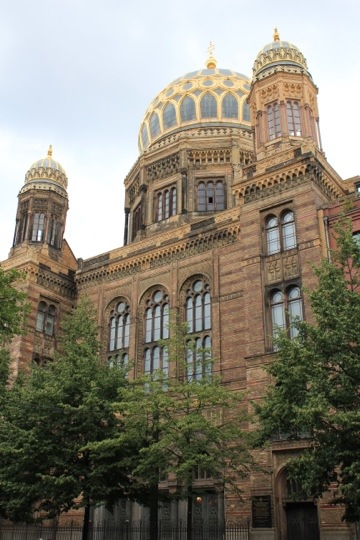
Fast-forward to Cantorial School, year one. The following piece of sheet music is placed in front of me during a Nusah practicum class. The setting for Kiddush was composed by mid to late 19th century German composer Louis Lewandowski. Father to many familiar melodies from our Shabbat and Holiday services, Lewandowski was given the title “royal musical director” and was later appointed choirmaster in the Neue Synagogue of Berlin, for which he composed the entire musical service.

Following class, I frantically called my dad to let him know that the way he chanted Friday night Kiddush was in fact same way the composer has it written down in front me. What a great “you were right” moment for a father and son! But the message of this piece goes much much deeper. For this isn’t a Holzer family tradition, this is a set composition, each word given specific notation by its composer because those words needed to come alive in a particular way.
There are two words that stick out as being variants to what we might call our “standard” Friday night Kiddush melody. Even for those who don’t read music, it’s easy to pick out that the words: “zikaron”, reminder, and “zecher”, remember. For Shabbat reminds us of both creation (zikaron l’maaseh v’reishit) and the exodus (zecher l’tziat mitzrayim)- so that we remember both the awesomeness of creation AND the difficult journey to freedom.
The musical irony is that time has simplified these two phrases, as if they were forgotten to the masses. But the music has the power to drive the meaning of the text. Lewandowski wanted us to focus on remembrance. My father chanting that second phrase, “zecher l’tziat mitzrayim” sticks out for me because we should remember the entirety of the exodus- the struggles and hardships, to better acknowledge and appreciate the journey to freedom.
Lewandowski- great Jewish composer from Germany; Zikaron, Remembrance: These were some of the thoughts and questions going through my mind as I prepared a few weeks ago for our Cantors Mission to Germany.
How do we remember, and how much do we choose to remember? To give proper kavod to those who were lost, its important to view the entirety of German Jewish life- past, present and future. While there are many lessons and experiences to share in the coming months, there are two stories in particular I’d like to share with you all this morning, to give you a sense of the importance of both personal and collective memory for us as a people.
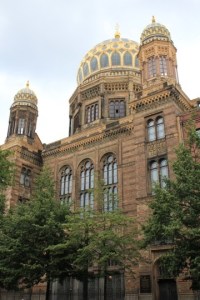
We journey back to 1938, to the Neue Synagogue. This is Lewandowski’s home from 50 years earlier, a place where his choral works inspired the melodies that are the cornerstone of our musical liturgy. It was one of the most notable centers of Reform Judaism in the world. On Nov 9, 1938, “Kristallnacht”, the Neue Synagogue was set ablaze, Torah scrolls desecrated, f
urniture smashed and other combustible furnishings piled up and set on fire. The main sanctuary that once seated 3,000 people will not be restored.
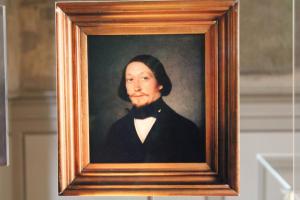
Today, services are held at the Neue Synagogue, though most of the restored areas are used for a museum. Members of the Cantors Assembly Mission visited on the Jewish tour of Berlin. The museum includes ritual artifacts and photographs from the German Jewish community. The group finally entered a cavernous entryway into what used to be the main sanctuary. In the far corner there is a glass case with a book open to the title page “Kol Rina Utefillah”, Bote and Bock Publishing. Published in 1882, this is one of two volumes of Louis Lewandowski. To the right is a picture of a young Lewandowski. In this holy space are the composer, his brilliant work, and the spot where it all first came together. This alone is a spiritual experience- how often do we get to see an artist, their canvas, their inspiration, and their studio.
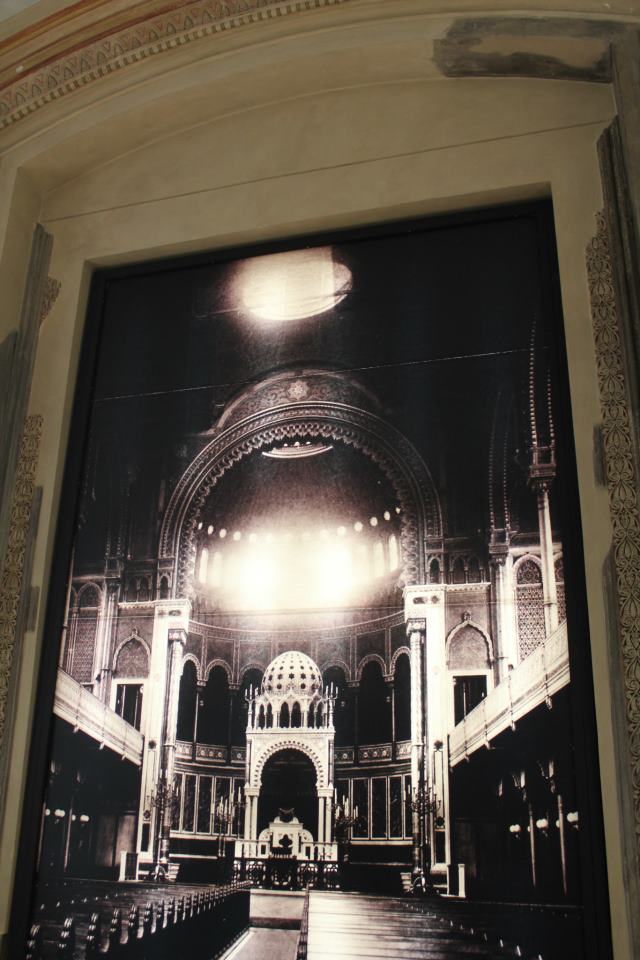
As I look to the center of the room, there is a black and white picture of the old sanctuary plastered on the wall. One can only imagine what was once there but no longer. It’s within this context that a few cantors begin an impromptu chanting of Lewandowski’s “Tzadik Katamar”, which you all know from Friday night. More and more join in his choral setting, creating a 4 part harmony, as the sound reverberates off the walls. Normally, we might hear a piece of music that takes us back to when we first heard it- where we were, what we were doing. Imagine a melody transporting us to a time and place when the melody itself was first heard, connecting us to place and people. I close my eyes, having the context of this music, this man, and this space. I picture the sanctuary alive and booming from seams because of this melody. The group understood the magnitude of the moment and embraced it. Imagine if we could understand the context of where we are, where we’ve been, what we are doing and why? Think of where we are today- where we’ve all come from; our own personal exoduses to reach this place, this day. If we embrace those moments, we can create such powerful experiences.
To look up on the bimah and be reminded of all it took for EACH of us to be there. That’s a lot to take in, but it is a powerful message about the space we create together.
Story #2:
Having met with members of the German Jewish community as well as political and religious dignitaries, I believe that Jewish life is thriving in Germany. I’ve debated whether or not our group did enough outreach and interactive dialogue with the local communities, but I think that our goal was not only to see German Jewish Life, but to bring Jewish life to Germany. This was accomplished through our Shabbat morning service dubbed “Shabbos at the Ritz.” This four hour service was led by 45 cantors- you could have called it the great cantorial duel. Having only a page or two of liturgy to work with, each cantor found ways to weave in cantorial pieces, congregational melodies, and choral works. Many of the melodies were unfamiliar or written just for this service, but the kehillah of over 300 embraced these new melodies. Everyone was singing and dancing. It had to be the most energetic and musical 4 hr, Shabbat experience I’ve ever had. It’s not every day that I get to spiritually journey to 45 different cantors’ synagogues (it would normally take years for me to physically travel to all my colleagues’ synagogues) and so I’ve returned with a number of melodies I hope to introduce in the near future. Here’s one in particular that stood out. It’s always a thrill when a congregation can hear a melody being sung by its composer, some learning the melody for the first time. Ofer Barnoy, the composer, led us in his L’dor Vador two weeks ago. Let’s sing!

From Generation to Generation- it is our responsibility to have what Lewandowski so emphasized: “zikaron”, reminders. If we don’t embed these stories places and people into our personal memory, they will not find traction in our collective memory. The charge “never forget”- often associated exclusively with the Holocaust, does in include the honoring of the memory of those individuals who were lost, but at the same time, we must recognize the and remember the culture that may still be preserved. May the melodies we sing unlock that collective memory. May the music on the page and in our hearts continue to be that anchor to our history and people. Let us never forget the magnitude of being here today, the greatness of being in this community, of having the freedom to shout God’s praises each and every day. Shabbat Shalom
Cantors Assembly Mission to Germany: Final Thoughts

When I first began posting videos of our trip to Germany, YouTube required me to fill in what “category” these videos fell under. Without hesitation, I selected not “music”, not “entertainment”, but “education.” I was struck by one of Professor Berke’s final statements of our Germany mission: “Write and recall.”
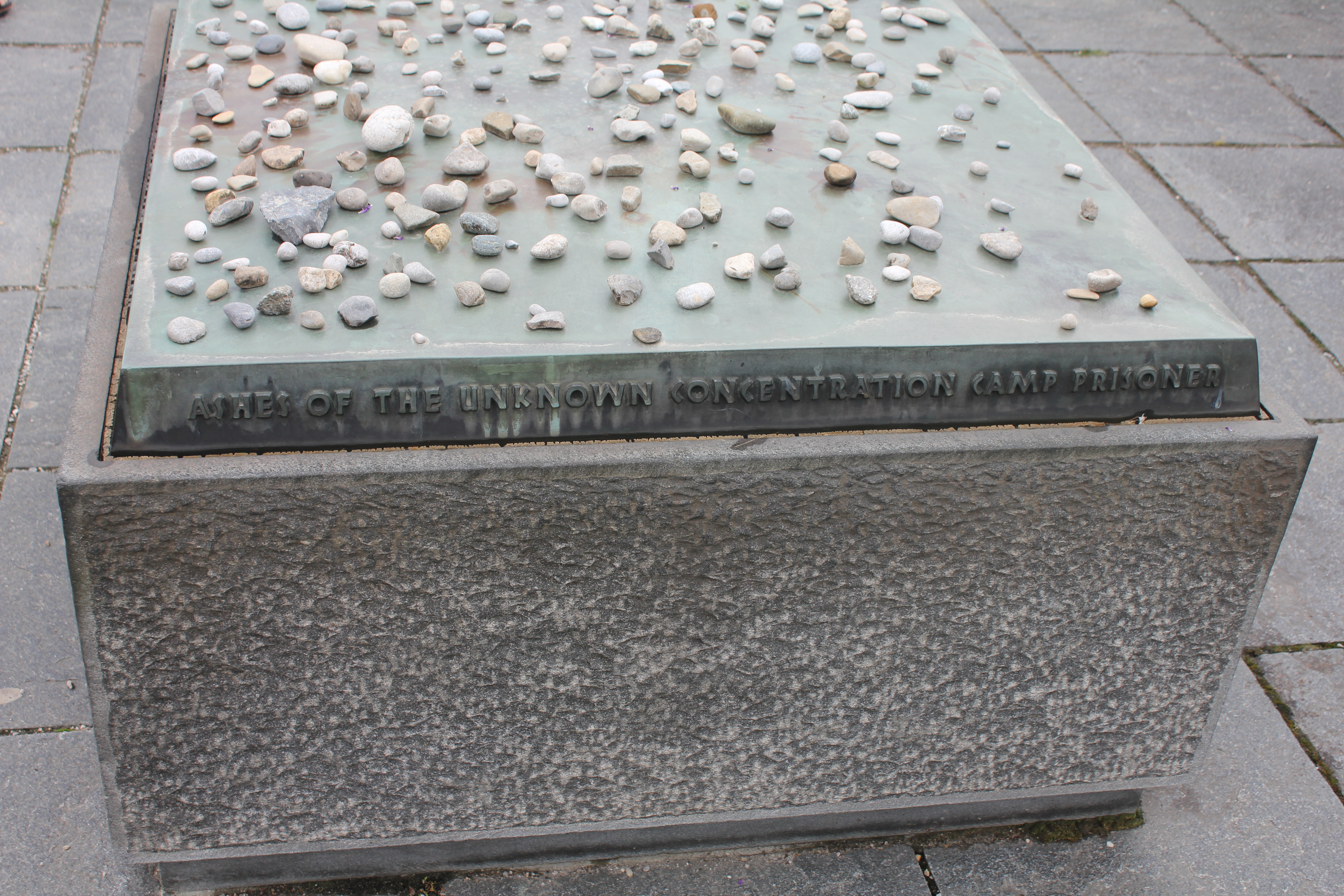
Write and recall. The goal of this blog is not to write and pack up these memories in a photo album. This is something to revisit often to remind ourselves “never again.” The photo above was taken at Dachau Concentration Camp, where barracks holding thousands of captives once stood. I’ve heard the concept of “out of the ashes” something is reborn. I know that flowers may bloom in dark places. Yet I am struck that this plant grows amid the ROCKS and stones of Dachau. In Judaism, we place rocks (as the symbol of God, “Tzur”, as our rock) on the gravestones to remember loved ones and teachers. Flowers, while beautiful, whither away over time. But in remembering, marking these places and this moments as holy, we make sure that this sapling will grow to be “k’erez bal’vanon yisgeh”, thriving like a cedar of Lebanon.
Judaism is not pediatric. This is not something we should expect our children or grandchildren to do unless we live Jewish lives, visit these memories, these places, and recall what happened there. For me, these rocks that fill the roads of Dachau are there for a reason. They are there for Jews and non-Jews alike to pick up, mark the moment and remember what happened during the Shoah. Lo Tishkach, you should not forget. May this musical journey inspire others to visit places of horror AND places of hope, placing a rock on the grave of the unknown, so that while their names may not be known, their memories WILL be for a blessing.

Cantors Mission to Germany: Day 8
Our final day in Germany begins with a 2 hr drive to Salzburg, Austria, home to Mozart and the Sound of Music. After visiting some of the locations of major events in the movie, we start our Mozart tour, viewing his hang out spots, his home, and his birthplace. Amid the windy streets and open markets, it really feels like a quaint European city. I really feel like I’m in Austria (whatever that means- guess you have to visit to find out!).
One of the cool, unexpected highlights of the excursion is finding our way into the Cathedral for a 1pm concert delivered by two teen choirs from Australia/New Zealand. As a side note, while in Germany, I have seen a lot of teenage choirs traveling throughout Europe. What an experience that must be!
Prior to our last concert held at the gorgeous Hercules Hall (entitled “From Mahler to Mack the knife”), we are treated to a concluding message from Professor. This is a unique opportunity to see how Professor Berke’s reflections align with my own over these past few days. Before we get to that, I was thinking of some of the highlights of our trip:
- A whirlwind musical journey to 45 synagogues (through 45 cantors) during our “Shabbos at the Ritz” Saturday morning service
- Having congregants exposed to the inner workings of the Cantors Assembly, the fun we have, and the music we create. On Tuesday night, for example, we had a late night promenade concert (normally we have 3 or 4 during a convention, following a regularly scheduled evening concert..these normally don’t START until midnight). While we normally have a separate space for this, we were situated in the lobby of the hotel. I must make note that there was a large Arab contingent here at the Sofitel (the menus/info in each room were translated first into Arabic, then French, then English). It was awesome to have for us to lead Israeli dancing and to get the whole lobby clapping. It was amazing to see 4 or 5 Arabic women dressed in traditional clothing clapping their hands to Bashana habaa!
- Those “you had to be there” moments- Munich Memorial & Tzaddik Katamar at the Neue Synagogue. It’s interesting that we sang Lewandowski’s Tzaddik Katamar 4 times on our trip: Friday Night at the Concert Hall, Sunday at the Neue Synagogue, Tuesday at the Ohel Jakob Synagogue in Munich, and at our closing concert at the Hercules Hall. Nothing compared to the energy and reverberation of our experience at the Neue synagogue, in the face of where the sanctuary once stood. It was also the most impromptu of them all. The music of Lewandowski is important, but the words are just as important to this mission (see final post).
Now on to Berke’s lecture. Again we begin with a discussion of why didn’t people do more to stop these atrocities: the role of the Vatican, as the Pope never uttered a word to oppose the Nazi state; the role of FDR, or lack thereof.
Berke suggests four lessons we can learn about/from the Holocaust:
- Beware of racism (in any form)
- Evil triumphs when good men and women say nothing; it must be stopped wherever it is, even when there’s a price to pay
- Today we cheapen words like “hero” and “heroism”. An athlete may do something extraordinary, but they aren’t a hero. We know what heroes are from World War II- righteous gentiles; survivors who saw things that no one should see, lost families, spit in the face of history and created new lives.
- History is not stagnant. It is fluid, always changing. Do not fight old battles- we are not at war with Germany or with Christianity.
I nod my head as Berke reminds us that it would be a serious mistake to think that this trip would be about the Holocaust. This again goes back to my original “between the clouds and the earth” comment in my opening blog. It’s important to appreciate German Jewry before the Holocaust because it reminds us of all the history that was lost, and all the potential history that could have been made- future doctors, politicians, thinkers; future mothers, fathers, brothers and sisters. On the other end of the spectrum, I had hoped to get a sense of what’s going on in Germany today. I had hoped for more dialogue and interaction with the local Jewish communities (a la Musical Outreach Initiative), but nonetheless, I feel strongly that a) Jewish life has returned and b) Germany is fully recognizing the horrors that were committed here, and feels a sense of shame and remorse.
As we reflect on July 4th, it’s crazy to think of all of the changes here in Europe. Europe has turned a corner- no passport checks, as people begin to think of themselves as European, not just German. As Germany quickly re-established itself as a world leader, they realized that national power and prosperity are based on history, enlightenment and the sciences, areas that were decimated and neglected during the war. The “east Jews” who were frowned upon in the early 20th century are now the ones rebuilding Germany, as 150,000 Russian Jews have made their way to Germany.
Note- I’ll be posting my pictures to facebook and most of the videos on YouTube and/or Facebook
Cantors Mission to Germany Day 7
Our morning begins with a trip to Dachau, not more than a 30 minute drive from downtown Munich. Dachau Concentration camp was the first to open in Germany in 1933, the only fully functioning camp for the 12 yrs of the Holocaust. While the site had a crematoria and gas chamber, the majority of those who perished in the camp (some 40,000) died of disease and malnutrition. Hundreds of individuals would be crammed in a barrack like sardines. What is interesting about the camp is the staging- two barracks were “recreated” since the original barracks were destroyed (they had been in poor condition following the war and they did not create the museum until 1965.) Having visited places like Majdanek, where barracks/gas chamber/crematoria remain intact, it’s difficult to visit a camp where it seems like there was some form of coverup (where intentional or not). The platforms remain from each barrack, stones fill the roads and the barrack platforms.
We daven Shaharit and hold a memorial service, filled with songs and texts recognizing those were lost. Following a tour of the rest of the camp, we convene again for a moving el malei rechamim, a prayer in memory of those who perished in the Shoah. As the signs say throughout the camp, “never forget.” We opened with an important reading written by reuven Hammer:
The ark of the Torah, of faith, of learning stands empty and bereft.
WE have come here to remember those who cannot be forgotten.
WE have come to speak of that which cannot be spoken; but cannot be left unsaid.
WE know how to remember the dead we have known.
WE know how to commemorate the death of one person.
But all of us are mourners; all of us recall not one but six million ones.
Not only those we have known, but those no one can know, the names that are forever lost…
Our next event takes place at the Jewish Museum/Community Center in the heart of historic Munich. The fact that this building is here, in such a central location, is a testament to the Jewish community’s revival. Hazzan Elliot Vogel conducts a moving memorial to the 11 victims of the ’72 olympics- Rabbi Laura Metzger reads a biography of each victim as a member of the Cantors Assembly holds a poster-sized photograph of each of them. It is pointed out that 20 million minutes have passed since the ’72 olympics, yet all we ask for is one minute of silence to recognize the innocence that was lost. Again, the ceremony is filled with musical renditions that enhance the moment. This is a different moment than the one we experienced at the memorial site the day before, and yet it is just as important.
Finally, we have our 2nd to last lecture by Professor Berke. Some food for thought:
1) It is estimated that there were over 20,000 concentration camps during the Holocaust, some that held 4 or 5 prisoners, others that held 500,000. While some may have been more gruesome than others, each was inhumane, each was an abomination, each destroyed innocent lives.
2) During the Euthanasia campagain from ’38 on, 300,000 handicapped were murdered. While the Catholic church was silent when it came to the Jewish plight, they did help stop the Euthanasia campaign.
So two questions- why didn’t the German Jews pick up on the changing of the times and why did Germans do very little to stop these atrocities?
Part 1: German Jews. If you want to understand the Jewish behavior at the beginning of the Holocaust, it is the fundamental inability to believe. As stated earlier, this was the century that was supposed to be Germany’s century. Anti-semitism always existed…This perspective was met with a large group of German Jews who fled Germany before and during the difficult years.
Part 2: Germans. It’s difficult to see how the population can go from anti-semitic bullying to torture and unthinkable acts against other human beings. One of the most salient aspects of the Shoah is that Hitler transforms from “settling accounts with the jews” in his pre-war rhetoric to “we must deal with jews for what they are doing to us now” (autumn of ’41). Everything was blamed on someone else, and everyone marched towards their fuhrer. There’s an assimtry between those who focused on destroying the Jewish population vs. focusing on the war efforts. It seems illogical when fighting a war to focus your efforts on everything but your front line.
In any event, even for those who wanted to save Jews (righteous gentiles not withstanding), it was not their first or second priority. How can the Germans do this?
1) Ideology from 1933 changed
2) Battalion 101- An order is an order? They felt it was better to be a policeman in Poland rather than die on the eastern front.
3) Downright anti-semitism. Berke brings up two examples – one quote that Jews were the gangrene of society, and that it was important to remove the limb…The other is a story by Primo Levi: In 1945, Levi had been collecting ice from outside his barrack so he would have some water to drink. A guard knocked the cup over, spilling all of the water on the ground. Levi asked “Why did you do that?” The guard replied, “Here there is no why!”
With all these backdrop from Professor Berke, it makes it more and more difficult to see how this can magically disappear overnight with one or two generations. That’s for tomorrow’s blog. Here’s a clip from the Cantor at the adjacent Ohel Jakob synagogue
Cantors Mission to Germany Day 6
After a late morning chartered flight, we arrive in Munich around 11am. Our checked luggage was driven overnight, so we are able to pick up with a panoramic view of Munich right away! We spend most of the day at Olympic Park- viewing the olympic pool, the walls recognizing all the champions of the ’72 olympics, and finally a memorial to the 11 Israeli athletes murdered at the ’72 games. While the Olympic community has yet to recognize this tragedy at any of the games (and has concluded it will not make a moment of silence recognizing the 40th anniversary), it is important to recognize that this memorial is forever linked to the Olympic park.
As I mentioned in an earlier post, sometimes we don’t have the words to properly express a moment. Music and its counterpoint, silence, serve as ambassadors, awakening the soul to a new realm of being when words don’t do the moment justice. A somewhat impromptu el malei takes place as members of two of our buses are gathered around the memorial. A todah rabah to Hazzan Bob Scherr for chanting so beautifully, and allowing that space, in that time, for a moment of silence. Having just viewed a short documentary on the bus about the Munich games, the moment was so fresh in our minds.
So where’s the video? I finally realized that if these moments were such “it” moments, I probably would forget to video them because I’d be engrossed in the moment . That’s ok- means we had an experience that cannot be recreated in video or in blog form.
We made our way to the hotel, a few blocks from the old city center. I came to Munich once- as a layover on a Pizmon Musical Outreach Mission six years ago. At the time, I found the places we visited in our short time there (mostly in the historic district) gave me the creeps. There was an eeriness to the fact that Germany recreated historic Munich for the ’72 Olympics (it had been decimated in WWII)- as if to say “lets forget what happened; we’ll rebuild and go on with our lives). Having spent a few more days in Munich, I do believe I’ve softened that sentiment to some degree. We’ll explore more of historic Munich on Tuesday.
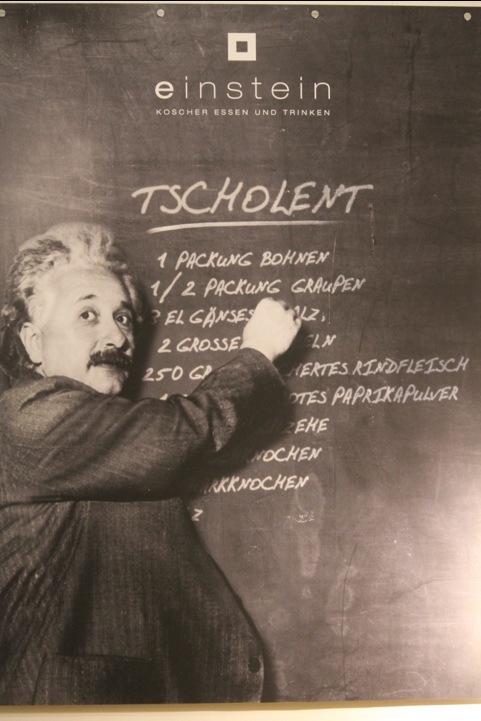
PS- I was 1 for 1 this evening as Einstein’s (pronounced Aynshtayn) was an amazing kosher restaurant. The shnitzel/morrocan skewers/cholent/brisket clearly made up for the friday night fish dinner.





Cantors Mission to Germany Day 5
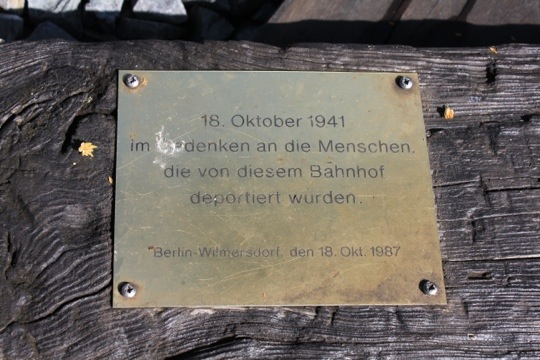
Day 5 begins with a trip outside of Berlin to two sites of major discomfort- the site of the Wannsee Conference (a gorgeous riverfront villa) and the Gleis 17 Memorial. I’m attaching a few photos for some perspective. One of the photos is a picture of a Birch tree, planted in the last year or so. The sapling was taken from Birkenau (the death camp in Poland…”birkenau” means birch). I also videoed a small section of the deportation spot to get a tiny sense of how many Jews were deported from this location.
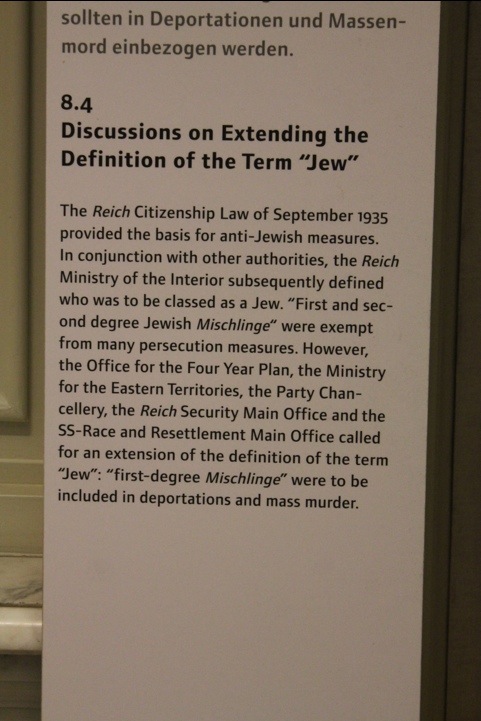
The Wansee Papers, documenting the Nazi plan for the final solution for the “Jewish problem” are located at the villa. It’s an uncomfortable feeling reading the papers and being surrounded by hundreds of panels of information on how the Nazi regime went about their business. As I read through the panel on “who is a Jew?”(photo attached), I’m thinking of the horror that Heinrich Himler sought out- he wanted everyone and anyone affiliated with a Jew to be sent off to their death. This is a strange juxtaposition to an email I’ll receive later in the day from Rabbi Lubliner, a draft of a mission statement on Keruv for the JJC. In one case, the Nazis expanded the definition of who is a Jew in order to exterminate them. In the other, we find ways to involve more and more people in Jewish life in order to help the Jewish people grow and thrive….
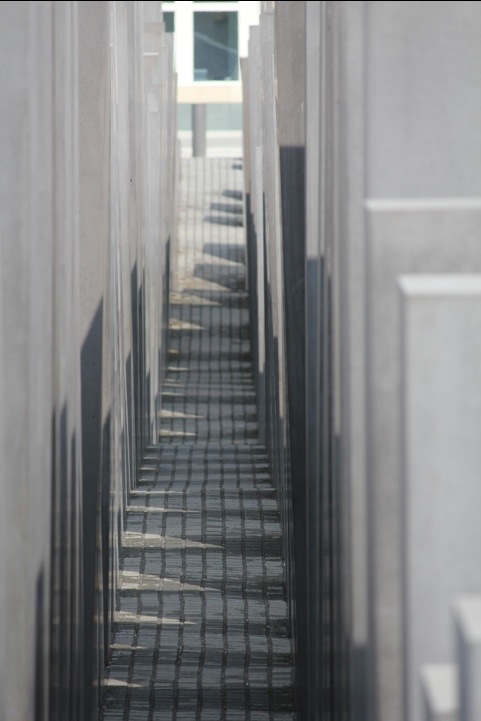
In the afternoon, we travel back to the center of town to visit the Holocaust memorial. Well over 2,000 cement structures cover this enormous park in the heart of Berlin. To think how awkward/interesting this would have been had Germany won their semifinal (the final took place sunday evening, viva espana)! Unfortunately, we don’t have the time to run downstairs to the museum, where a serene place is where 6million names are read (taking years to read).
Prior to our interfaith concert at the Berliner Dom (some tracks made it to facebook), we make our way to the Neue Synagogue, whose sanctuary was destroyed in the Holocaust. As we gazed upon a photo of where the sanctuary once stood, in a hall with amazing acoustics, understanding the immense sensitivity of the moment, a group begins to sing Lewandowski’s Tzaddik Katamar (I happened to be standing in front of a picture of a young Lewandowski as well as his collection of sheet music) After getting a bit choked up, I did manage to record a few measures.
This is the power of our mission- music can transform place, time, and person. It was a special moment more than any to date on this special trip.
The site of our Interfaith Concert, the Berliner Dom, is massive. The Dome itself is literally centimeters wider than St. Peters at the Vatican. This magnificent concert (a link to the choir to follow) in a Lutheran church, with a public embrace of the German President and the Chair of our mission, Cantor Nate Lam, cannot be appreciated enough! While some of the dignitaries spoke in German, one leader of the Evangelical church did speak in English. I became somewhat frustrated when he said that Germany is “good at remembering the dead, but how good are we in sharing and celebrating life?” I agree with the question to some degree, but feel that you should never assume people will remember, especially if, as he described it, people feel “forced into public routine of guilt.” This is the climax that Germany is at- to need to remember, but the yearning to move on.
Following our interfaith concert, we make our way to the Topography of Terror Museum (there happens to be one in both Prague and Munich). It was a bit much for me to re-read many of the panels describing the rise of anti-semitism. There were even interactive exhibits where one could hear Adolf Hitler’s speeches. The thought of hearing that man’s voice in this place, gave me the creeps. I was comforted to some degree in watching the hundreds of non-Jewish visitors to this and other site who literally read every panel as if they were learning and grappling with this information for the first time. To some degree, I wanted to rush back to the Holocaust memorial to sit in a room, close my eyes and listen to the names of those lost. I’m happy to say that when I’ve become frustrated or emotional from some of what we’ve seen or discussed, I’ve found moments where i can reflect, moments when I can remember…













 Hazzan Jesse Holzer