Author Archives: Hazzan Jesse Holzer
Cantors Mission to Germany Day 4
A Shabbat full of music, meaning and ruach!
I had the privilege of participating in our morning Shabbat service that we entitled “Shabbos at the Ritz”. You can guess which hotel we were at! This was an opportunity for FOURTY FIVE cantors to participate in our minyan. Each cantor, as you can imagine, made their section of the liturgy uniquely theirs while bringing in new and innovative melodies. It was a chance to see what melodies and styles our own congregants responded to. The kahal was also privy to a wonderful d’rash/interactive dialgoue with the wife of one of our CA officers, Rabbi Laura Metzger. Many commented on how well the red heifer story was explained. To really understand these stories, we have to live them; we have to experience them. This had to be the most musical, most inspiring 4 hour shabbat service I’ve ever attended.
In the evening we walked to the Jewish Museum of Berlin, which happens to be the most visited museum in the entire city (and there are hundreds of museums here). Since Shabbat didn’t end until almost 10:30, we get another talk by Professor Berke plus a private tour of the museum followed by a latin flavored Melava Malka concert. Shavua tov indeed!! A few points to ponder from Professor Berke:
1) One must understand the appeal AND the the fear of communism
2) In WWI, German soldiers were convinced they could have won the war without the depression (finding both a political and economic scapegoat)
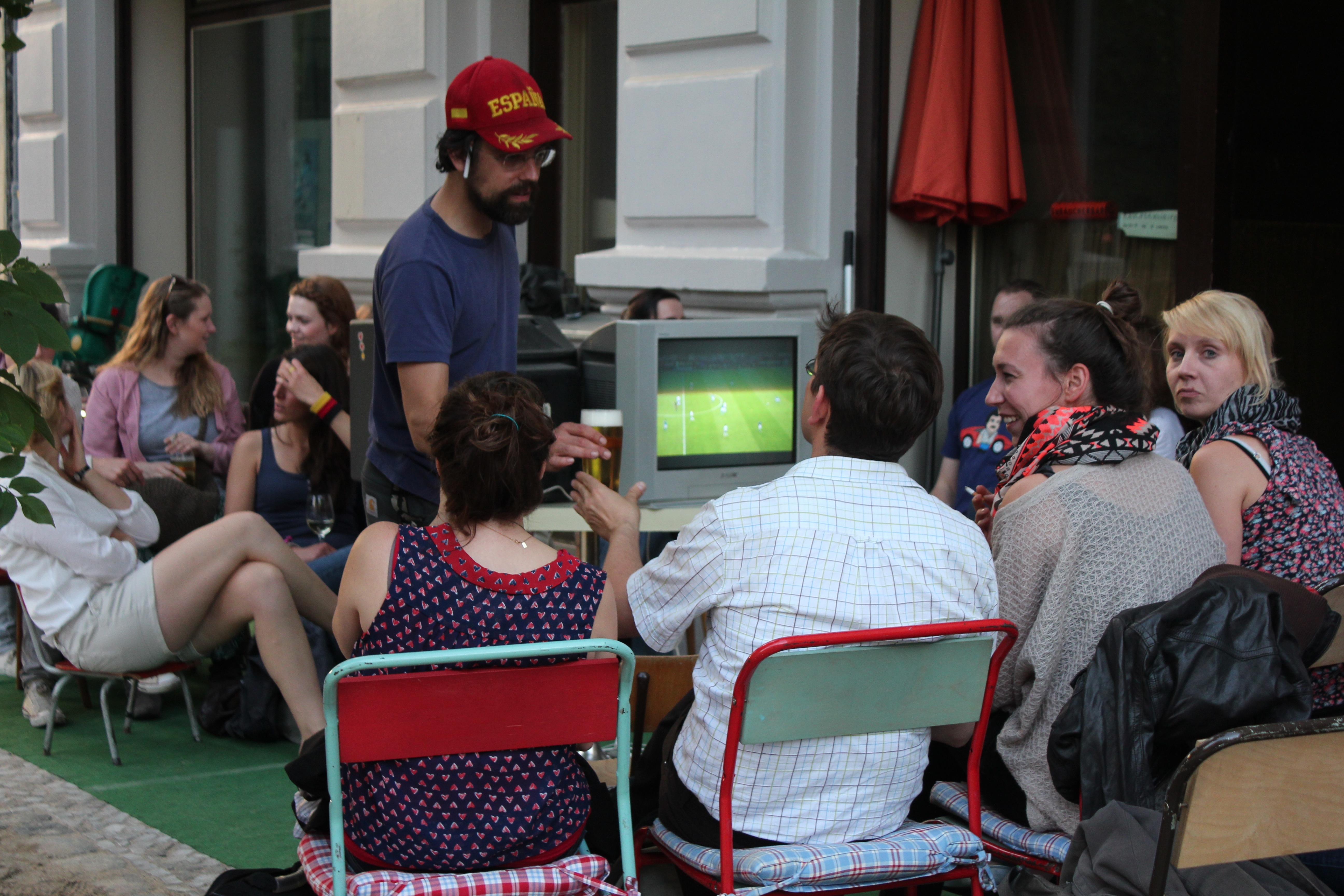
3) From WWI to 1920 to 1928, the rate of mark to dollar went from 4 to 1 to 8 to 1 to 12 to 1 to, eventually, one BILLION to one dollar. Germany’s unemployment rate was hovering around 25% (for context, spain, winner of this year’s Euro cup, suffers a similar unemployment rate).
4) Anti Semitism in the bar is one thing, but in the hands of the elites is another (fyi we’ll travel to Munich where Hitler famously used the beer halls to spread his rhetoric)
Cantors Mission to Germany Day 3
What a whirlwind of experiences and emotions these past 3 days. I’ll be posting each day’s activities and reflections in separate blog posts.
Day 3: We begin our day with the 2nd lecture by our scholar Stephen Berke. Professor Berke beautifully illustrates the timeline leading up to World War I, and will eventually tie in the years of the Nazi regime. The holocaust was not a moment without context, and German Jewry’s response to the rise of fascism must be viewed without the context of Germany’s history.
A few major points brought up by Berke:
1) Moses Mendelssohn, father of the Enlightenment and affiliated Jew, had only 4 of 56 descendants who identified as Jews by 1850 (most notably, his son Felix converted).
2) Similarly, Henirich Heiner converted to get a university position (non were offered to Jews at the time), to which he remarked “God will forgive me, it’s his job.”
3) So what was Germany like before WWI? To give context, we again think about the National Liberal Party- was it more “liberal” or more “national”? “National” meant the people wanted a constitution. Bismarck, the “blood and iron” chancellor, was the 1st conservative to play the national card by creating the 2nd Reich. For Jews, they had their bumps in the road in the late 19th century. It’s important not to romanticize, for while there were no legal restrictions for Jews in the 2nd Reich, they still had their limitations. Jews felt that anti-semitism was a vestige of the medieval period. Even in 1873, when a depression cripples the economy in large part to a Jewish financier’s ponzi scheme (sound familiar), there is no violent act against the Jewish population. They feel more German than Jewish. In 1890, they may have classified themselves as “Germans of the Mosaic personality- ours happens to be Jewish.”
4) Again, personalities- they are just as important to the historical narrative as any other factor. Often we minimize the role of the individual- saying that if Person A didn’t invent blank, Person B would have figured it out. This point, reiterated during Saturday night’s lecture, is a difficult one when we consider that if there was no Hitler, there would have been no Holocaust. To think if Hitler had been accepted into art school or had received a harsher punishment for his treasonous actions, he may not have been in a position to become Fuhrer of Germany. As Berke summed up, history is not mathematics, chemistry or physics. For as much as Germany was the pinnacle of a civilization at the turn of the 20th century, for Germans AND German Jews, as much as the 20th century may have appeared to be the century of the Germans (and not the Americans), history weaves its way in many directions because of unknown or alien forces.
This point is reiterated by our next presenter, Ms. Emily Haber, German State Secretary. Her first few minutes were heartfelt and emotional, as she put everything out on the table- no “one story for this group, another for another group”. As Germany looks to repair its image in the Jewish world, Ms. Haber pointed to individuals in government as forces of friendship. While she toed the party (or often the EU) line, Ms. Haber appeared a genuine friend of both the US and Israel (little known fact- her 50th birthday present was a trip to Israel).
Our next presenter, US Ambassador to Germany, spoke again of the friendship with Germany and its support of Israel. His ironic factoid of the morning is the fact that the Israeli Ambassador’s residence in Berlin is the former Nazi Affairs Clubhouse.
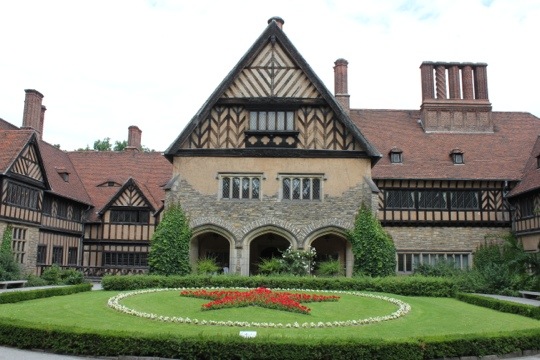
After a morning of politics we head to our day tour of the neighboring city of Potsdam. We cross the Glienicke Bridge, a famous exchange point for Soviet spies during the days of the Cold War. We visit the Cecilienhof Manor, site of the famous 1945 meeting between Truman, Churchill, and Stalin. We learn a little more about Federick the Great as we travel to the Sanssouci Palace and Gardens.
In the evening, we take over the Berlin Concert hall (a little factoid- since many of these halls/institutions were created during the Cold War, Berlin now has 3 opera houses, 2 concert halls, 2 national museums and 2 zoos- with each receiving 30% support by the government). This is chance to sing with a wonderful local choir, as well as utilize the wonderful organ. Cantors received many of the pieces beforehand to help bring the choral singing to the pews. We sang many pieces whose composers wrote specifically for the German population or were of German descent themselves. What a venue!
Services conclude close to midnight. A Shabbat Shalom- a peaceful shabbat, and what will become a Shabbat Shaleim, a complete day of rest and meaning.


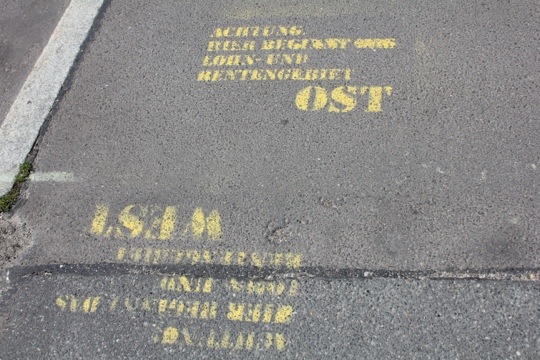



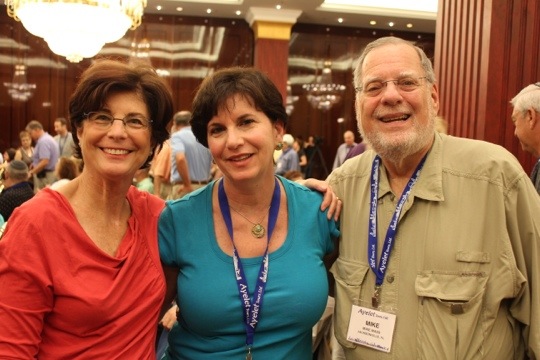
Cantors Mission to Germany Day 2
Since the mission didn’t go into full gear until the evening, this morning began with a 9:30am breakfast, where I was joined by Dan and Cindy Wohl (for context, all of our Jacksonvillians took different flights at different times, and I’m glad everyone got a few extra days in the explore other cities/countries). I had accomplished most of what I wanted to during my long walks/bus and subway trains of yesterday. One item not on our CA mission agenda was the Kaiser-Wilhelm Gedachtnis Kirche, one of the most haunting symbols of Berlin. Following 7 bombing raids in 1943, the ruins of the tower were left as a memorial. This happens to be fairly close to Kurfurstendamm, a trendy area with great architecture and fun shops. One of the more trendy streets in Kurf. is Fasanenstrausse, home of the Jewish community house. Housed where the Charlottesburg synagogue once stood (destroyed on Reichskristalnacht), only the portal remains. I arrived via bus to Breitscheid Platz and could not for the life of me find the church. I finally took out my guidebook where I had a picture of the church and the surrounding buildings. Finally I realized that the modern building in front of me was actually scaffolding! The church is undergoing repairs!! The symbol, the memorial, is being prepared. I’m still digesting how I feel about it. Needless to say, 0-1. I make my way over to the Jewish house looking for Gabriel’s, a great fleisch restaurant…until this past January! 0-2!! Thank heavens for Bleiberg’s, a kosher dairy restaurant a few blocks away!
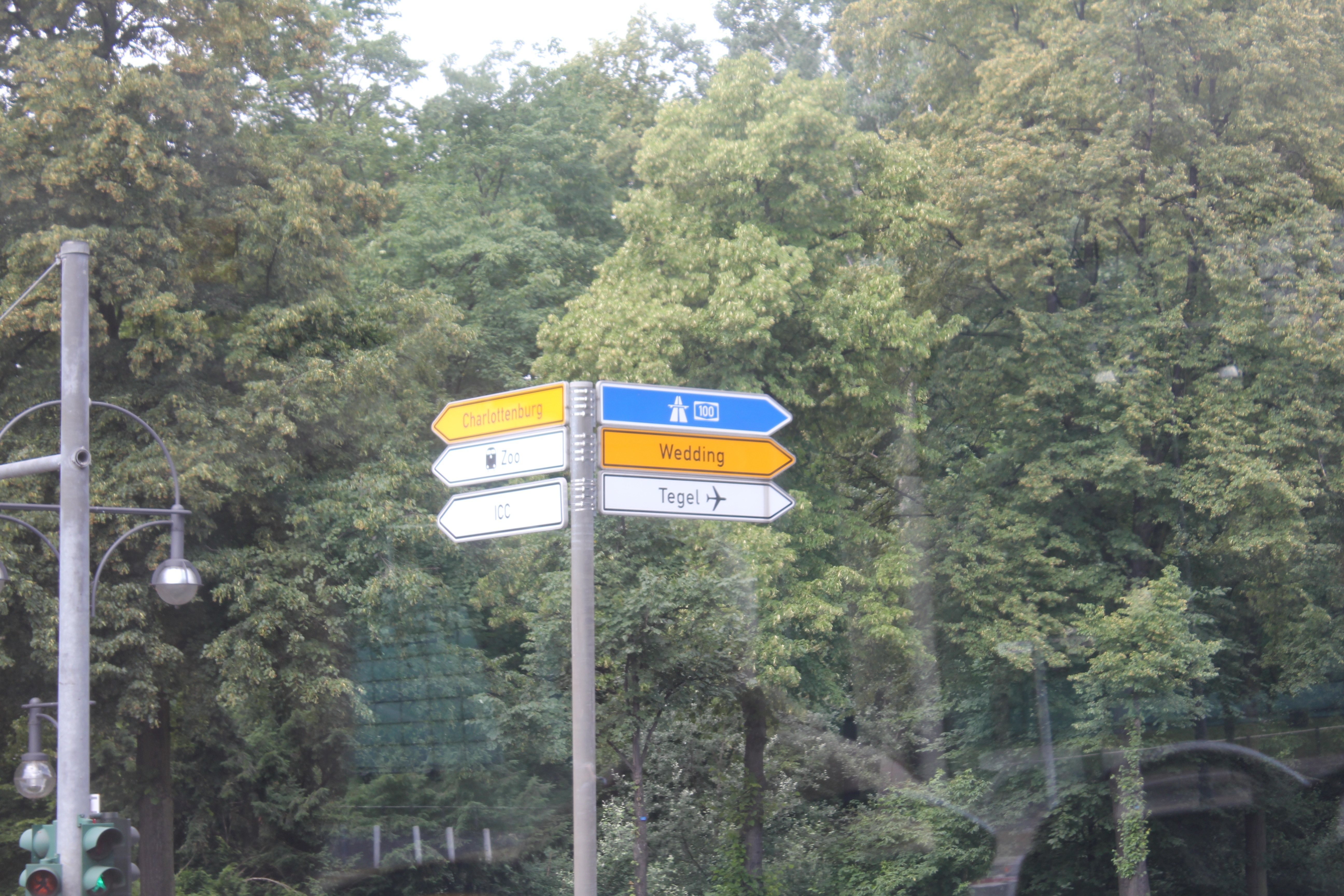
The mission begins in the late afternoon as we travel far north and east from central Berlin to a gorgeous synagogue (again, pictures to come later). Our beautiful Maariv service was preceded by our Scholar-in-Residence, Professor Stephen Berke, who points out some amazing and important anecdotes to lead us through our mission. A few to ponder:
-From 1819 to 1933, there was NO violence against the Jews in Germany. Anti-semitism yes, violence no. I always think about while people didn’t leave (and actually a large percentage of Berlin Jews did leave).
-Frankfurt 1948- an anthem used by the liberal national party, eventually picked up by the Nazi regime as their anthem (the swastika too is an adapted symbol). The anthem was originally meant as a “we are the world” anthem of the liberal agenda- but liberalism could not deliver, dooming the Jews of Germany.
Germany was home to the Third Reich, but it was also home to Moses Mendelssohn and the Haskalah, Reform Judaism and some of the most important Jewish music that we still use today. I’m looking forward to taking a whirlwind tour of past, present, and future with the Cantors Assembly.




Cantors Mission to Germany Day 1
Our plane arrived from Newark an hour early, 7:30am local time Wednesday. We fly through customs and are at our hotel within the hour. Checking our bags at the hotel gives us a little time to search the local area. Our hotel is situated a block away from the Kulturforum, a museum of 13th-17th century artwork. For those Albrecht Duhrer or Rembrandt fans out there, this is a must see. A 3 day museum pass gives access to many of the main attractions throughout Berlin. Using this newly found treasure, I make my way across the square (where one could find the Berlin Philharmonic) to find a collection of 750 exhibits at the Museum of Musical Instruments (even have pictures of Frederick the Great’s harpsichord!). I’ve fought through the jetlag (watched 3 somewhat decent movies on the plane, including the movie “Footnote”) to make my way on a M200 bus through the heart of Berlin. I make my way to Museum Insel, home to many of the top museums in the country as well as the Lustgarten and Berliner Dom (the largest dome in Europe, just a few centimeters larger than the Basilica at the Vatican). As a side note, I do not find myself in away uncomfortable wearing my kippah here in Germany. When I visited Eastern Europe (primarily in high school), the thought never donned on me to wear a kippah (I was probably too obsessed with my hats anyways). While my kippah is always on wherever I am in Jacksonville, my travels often have me putting on a hat instead. Here, I feel that the kippah is not only a reminder to me of my relationship with God, but in some ways, a reminder to those around me that “yeah, I’m here.” Food for thought
After touring the Pergamon Museum (amongst others), I make the hour plus walk back to the hotel. I travel down Unter de Linden, originally a royal birdle-path linking the Stadtschloss (the king’s residence) and Tiergarten. This leads me to Brandenburg gate. For context, Germany did not become a country until the late 19th century, and Berlin as a city now encompasses smaller municipalities, amongst them Mark Brandenburg. The Brandenburg Tor (gate), built in 1789-91, has been the backdrop of many events in the city’s history. Today, The Tiergarten side was covered with Euro 2012 glitter, a backdrop to a public viewing party (as of this blog post Germany was defeated by Italy in he semifinal). Immediately to the south one finds the Holocaust memorial (more on that on friday). Like many places of the Shoah, Germany struggles to recognize what took place in the past while becoming a new, more tolerant Germany of today. My bus stop at the Philharmonic had a little blurb about 20,000 homosexuals who were sent off to their death from that very place. Germany does not hide these things- if anything it sometimes seems like too much. In viewing pamphlets from our hotel, the top 2 tours of Berlin are the “Third Reich” and “Concentration Camp” tour. To think that Brandenburg Gate may have been a place of celebration tonight right on top of the Holocaust memorial. What a strange site that would have been!
Overall it was jam packed first day in Berlin. Our mission begins officially on Thursday evening at the Synagogue Rykestrausse, restored to its original form when it was built 100 yrs ago.



Un-expectations: Germany Mission Preamble
My journey to Germany begins with a pitstop in Newark, NJ.
The city comes to mind with a recent posting that I read on CNN.com. The opening title, “A rabbi, a Mormon and a black Christian mayor into a room..” assumes either a comedy routine or that this is somehow the most unexpected of partnerships (ironically espn.com, my other frequent source for news, posted an article on their website “Punch line: A priest, an architect and a dentist walk into a meeting…and decide the future of college football?”) The moral of both stories is simple- expect the unexpected. As I spoke with many congregants over the past few months about joining me on this mission, many concerns came to mind, and in the end there were those who may have felt uneasy about coming along for the journey. Germany has made significant strides to repair its relationships around the globe- one could argue that Germany is one of Israel’s top allies and one of the more liberal countries in the world (editors note- roughly 500,000 people will have visited Germany in the past week for their LGBT festivities). Who knows what kinds of partnerships we will form over the next week- expect the unexpected.
Having visited Eastern and Central Europe numerous times (and Munich for a day- that’s for a later posting), I’ve often felt moved by what I experienced there. These places hold so much history for Ashkenazi Jewry as well as a deep rooted spirituality as the centers of Ashkenazi Jewry for hundreds of years. What was it about these places, these communities, that made people stick around for so long? In searching for this spiritual moment, I have to be careful to lose any sense of expectations and become a sponge of information and emotion. “Take it all in” and later, have a chance to reflect on what has just taken place. We’ll be performing important work- not just musically but socially, with members of the interfaith community as well as the local, now vibrant German Jewish community.
While we will only be there for week, its important to experience Germany through many lenses: through the lens of the past- Germany Jewish history and its peak, as well as the atrocities of the Shoah; and through the lens of the present and soon to be future- of a Jewish community craving knowledge of its heritage and a German community that does not want to forgot, but learn from its actions.
Flying over Newark, I was privy to a wonderful view: sitting next to the left wing, we flew below the clouds as we descended towards the runway. The clouds appear all in one straight line above us, the cars and buildings become more and more recognizable as we get lower and lower. The words “DO NOT STEP OUT OF THIS” appear on the wing itself. What great advice! This is an opportunity to look at this Germany mission from the middle- at times it’s important to look up at the heavens- the lost souls of the Holocaust, of a rich Germany history; and at times to look below at the important work being done to help a new community grow. What a gift- to not step out of this experience but to step right into it. I look forward to sharing my thoughts upon my arrival tomorrow in Berlin!

Heat Wave: NBA Finals and Parshat Korach
It’s never safe to get your playoff picks from a torah portion.While various parts of our texts have a clear message, others remain ambiguous. Two weeks ago, before the NBA Finals, we read about the Israelite movement in Parshat B’ha-alot’cha. When a cloud covered the tent of meeting, the Israelites moved. When covered in a pillar of fire, the Israelites encamped. It was difficult to discern the message- which is the more powerful metaphor- to move when the weather isn’t so clear (cloudy), when the path is difficult and uncertain, or that God dwells in the place of fire- aka God is fire. Both are powerful messages, yet neither tells us who will become NBA Champion, even if the cloud sort of reminds me of Thunder (and we did encounter Thunder a few weeks back as a symbol of God) and we have the Heat on the other side (think pillar of fire). Both finalists mentioned/referenced, but no clear cut winner.
Bringing us to this week’s parsha. At first glance, one might mistake Korach for Kerach (same route), aka Ice. Naturally, we think this must not be the Heat’s week. Korach, however, leads an unsuccessful rebellion. Ice is not champion, so we look to something that can thwart ice- HEAT (check out this debate on heat vs. ice)! I hate to say it, but this is Miami’s week. We will see for certain if they can finish the job tonight. Otherwise, we get into next week’s torah portion- Chukkat (pronounce the “ch” as “l’chaim”), which could be confused for “chucking it”, something the Heat fans often worry about with regard to the Heat’s offense “chucking” the basketball. Heat in 5.
The language of love in Jewish education
In the spirit of last year’s “Song of the Week”, I wanted to share some reflections on an all-time favorite Israeli song and the important educational message it provides.
Abanibi, pig-latin (or treif latin) for Ani ( each syllable of the word is repeated with a bet replacing the consonant) is a song that takes the hebrew phrase Ani Ohev Otach (I love you) and transforms it to Abanibi Obohebev obotabach. Winner of the 1978 Eurovision Contest, the song highlights the way that children relate to love. For our purposes we can listen to the song as a model for how we can understand love as teachers, parents, administrators and supporters. The words are as follows:
I love, I love you**
I love, I love you**
When we were children,
we never spoke of love (except secretly)
To whom were we “nice”?
Only to uncles and aunts.
And the poor girls suffered,
the sweet ones only were hit.
And what we truly felt,
we whispered only in “B-language”
.
[“baby talk”}
Love, it is a beautiful word
A beautiful prayer, a language
Love, it is good to me
It will overcome all
And we will speak the language of love.
I dream, and three words appear
And what is the world? Only three words
And this is how I feel now
Truly just as then –“B-language”
We must recognize that many times, our students are often speaking in another language- they want to express themselves and it’s up to us to support them and to decipher what they are looking for. There is love and appreciation there – we just have to find it. On the other hand, as supporters of education, our love must ALWAYS be clear. We cannot imply love and support, we have to show it in everything we do: love of all of our schools, our students, our teachers. In expressing this greatest form of appreciation, we empower students and teachers alike, letting them clearly know that they have the support to do amazing things.
This d’rash was shared at the opening Galinsky Education Cabinet meeting, June 2012
Theatrical Theology
The bible always seems to make for great theatre- from the sibling
 rivalries to the awe-inspiring powers of an Almighty, the torah pulls out all the stops when it comes to pomp and circumstance. This week’s parsha, B’ha-alot’kha speaks on a variety of topics- the lighting of the m’norah, the consecration of the Levites, Pesach Sheini, clouds and fire, silver trumpets, incessant complaining and blasphemy by both the common citizens and the greatest of leaders. At first glance, the torah portion is all over the place. However, this grab-bag of topics includes within it one powerful message: symbols that call us to action:
The m’norah reminds us to be a “or lagoyim”, a light to the nations. The purifying of the Levites symbolizes the reverence we should all have to God. Pesach Sheini (for those who were unable to make it the first time around) is a symbol of second chances. The tabernacle, covered in fire when it rested and a cloud when in transit, uses these physical affirmations of the divine in an unorthodox way. We might think that the fire is a call to action and a cloud (of uncertainty) is an indication to stop and rethink. But this is an act of faith- when clouds gloom over, THIS is the time to act. The silver trumpets, the music in the air a la “Torah on Taps”, means that we should all listen more carefully to the signs and symbols around us. Finally, the riffraff (asafsuf in hebrew, quite possibly the greatest hebrew word ever) as well as Miriam and Aaron’s questioning of Moses reminds us to be humble, happy with our lot, and mindful of the gifts that not all have.

What are the symbols in our own lives that harken us to action? There are so many symbols in our tradition that do more than induce fond memories. These symbols in our every day lives can add purpose by acting as an agent for good deeds throughout the world.
Counting The Jewish Athlete (H)Omer Revisited
Last year I compiled a list of the days of the Omer corresponding to famous Jewish athlete jersey numbers. If I had not done so, we would be celebrating Lag Ba’omer as Larry Bird Day and not the greatest #33 Jewish athlete of all time, Gabe Kapler.
Here’s my post from last year:
A few thoughts:
a) A real discredit to those athletes who play sports without official jersey #s- shout out to Swimmers Dara Torres/Mark Spitz/Jason Lezak/Lenny Krayzelburg (amongst others), Gymnast Kerri Strug, Tennis stars Andy Ram and Shahar Pe’er, and Figure Skaters Sasha Cohen/Sara Hughes/Oksana Baiul/Irina Slutskaya
b) How could I omit two great QBS #18 player, Sage Rosenfels and #9 Jay Fiedler My apologies
c) Another omission at #10, Nancy Lieberman
d) Where’s the Jewish hockey presence? Lacking at #23 was Mathieu Schneider
e) Sid Luckman at #42!!!
MJGDS 50th Anniversary & Parshat Emor: Bein Kodesh L’chol
This week’s torah portion, Emor, outlines the special holidays in the Jewish Calendar: Shabbat, Rosh Hashana, Yom Kippur, Pesach, Shavuot and Sukkot. We are also given an explanation of the omer (grain) offering that inspires the counting of the Omer- 7 weeks between the 2nd day of Passover (our liberation from Egypt) to Shavuot (the receiving of revelation at Sinai). All of these yearly events (and in Shabbat’s case, weekly) deal with the Sacredness of time. We can only appreciate these “holy”days, however, by understanding the regular, the mundane days; the work days. Bein Kodesh L’chol is recited after each of these holidays as part of our Havdalah (separation) ritual. We can’t have holy without the ordinary. And so the most difficult part is to transition from holy and awesome; to get back to work!
Each of these major Jewish holidays deals with the “day after” in a different way. After Rosh Hashana, we encounter The Fast of Gedaliah and the 10 days of Repentence- a time for introspection and reflection. After Yom Kippur, we are charged with having that renewal of faith and community charge us forward for the new year. In every holiday mentioned in this week’s torah portion, we use the spices- the sweet memories of our holiday experience, to inspire our daily lives.
This morning we begin the difficult transition from our sacred experience from this past weekend to the holy and important work we must do from here on in. What an amazing weekend! Such LOVE permeated our building- alumni, students, faculty, supporters. One could argue that we could’ve just sat here all weekend and the love would be felt by all, but the events were perfectly orchestrated, the remarks poignant, and the music breathtaking. (For those who missed out on an amazing celebration at last night’s gala here’s a taste of the spices that occurred- feel free to sing along).
Today is a day we are charged with taking all of those good feelings, having marked this weekend as a holy one for our congregation and community, and spring forward to go back to work. If we ever question why we do what we do, we can look to this weekend for guidance and inspiration. The sweetness that we shared will continue to enrich our schools and our community for years to come. Yasher Koach and I feel so blessed to be a part of this holy community!


 Hazzan Jesse Holzer